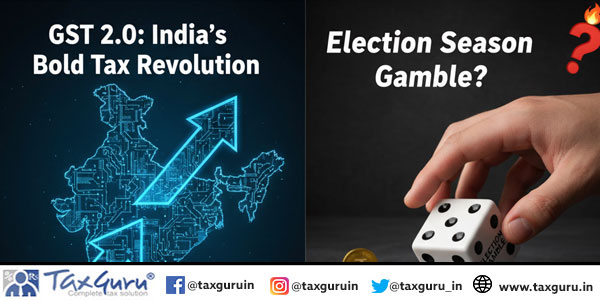
It’s September 2025, and if you thought Indian taxation had finally settled after the GST storm of 2017, think again. A fresh wave has hit—the so-called GST 2.0. On paper, it’s all about simplifying slabs, making refunds quicker, reducing the pinch on household essentials, and giving a boost to businesses. On the ground though, people are asking—is this really reform, or just some clever election-time sugar coating?
Walk into a supermarket today, and you’ll notice something odd. The same shampoo that cost you more last month suddenly feels a little cheaper. The snacks you pick for your kids? Down in price too. And while consumers are quietly happy, political observers are whispering: this timing couldn’t have been more perfect.
What’s Different This Time?
Back in 2017, GST came as India’s “One Nation, One Tax” dream. But in reality, it brought with it a puzzle of four slabs—5%, 12%, 18%, and 28%. Add to that endless exemptions and quirky rules, and suddenly nobody knew whether a chocolate-coated biscuit was a luxury or a necessity.
Now, GST 2.0 (rolled out on September 22, 2025) tries to clean up this mess. Instead of four, we now have three slabs—5%, 18%, and a brand-new 40% reserved only for the “sin and luxury” items.
So, goodbye to the confusing 12% bracket and the often-debated 28% rate. Essentials slide down to 5%. General goods largely settle at 18%. And if you’re planning to buy that luxury SUV or still can’t quit cigarettes—well, brace yourself for the brutal 40% hit.
The Good News for Ordinary Folks
The changes aren’t abstract. They’re visible in your cart:
- Personal care items like soaps and shampoos now sit comfortably in the 5% basket.
- Packaged foods—from butter and cheese to namkeens—have become lighter on the wallet.
- Baby care products, healthcare essentials, education supplies, even farming equipment—either exempted or taxed way less than before.
- Even small cars and electronics that were choking under 28% are now at 18%, giving that long-postponed TV or AC upgrade a little nudge.
For households, this translates to savings. For businesses, especially FMCG and auto sectors, it’s a potential demand boom.
The Flip Side: What’s Costlier Now?
Of course, someone’s gotta pay. That’s where the shiny new 40% slab comes in.
Luxury cars, private jets, certain fizzy drinks, and, of course, tobacco products are now slapped with ultra-high taxes. The government calls it progressive taxation; critics see it as moral policing dressed up as fiscal reform. Either way, the message is clear—if you splurge on indulgences, you’ll fund the price cuts for everyone else.
Why Roll It Out Now?
Economically, India has been battling stubborn inflation, unpredictable global commodity prices, and sluggish consumer demand. Lowering taxes on essentials should, in theory, cool inflation by around 1.1% and give industries a push.
But politically? The timing speaks louder than the policy. Just before the festive season—and just before elections—people are suddenly paying less on goods that hit their pockets daily. It’s not just a tax reform; it’s also a sentiment reform.
The government, meanwhile, strengthens its “pro-people” image, projecting fairness by easing the burden on the middle class while taxing the rich harder. And when even opposition-led states sign on through the GST Council, the optics of unity and stability seal the deal.
Who Wins, Who Loses?
- Winners: Consumers, MSMEs, exporters, and industries like FMCG, autos, healthcare—basically anyone who thrives on mass demand.
- Losers: Luxury buyers (cry me a river), state governments facing short-term revenue gaps, and businesses scrambling to re-code their billing systems overnight.
More Than Just Numbers on Paper
GST 2.0 isn’t only about rates. The government is promising faster refunds, easier registrations, GST tribunals finally kicking into gear, and even pre-filled returns to reduce errors and harassment.
Sounds great, but execution will decide the real story. Will prices actually fall at the retail level, or will companies quietly keep the margin? Will states survive the immediate revenue dip? Will small businesses adapt smoothly? That’s where the cracks may show.
Final Thoughts: Tax Reform or Political Chess?
In many ways, GST 2.0 is both a relief and a gamble. Relief—because essentials are cheaper, compliance looks smoother, and businesses have hope. Gamble—because it’s timed with surgical precision to influence voters.
For families in crowded markets, it’s a sigh of relief. For policymakers, it’s a balancing act between growth and revenue. And for analysts, it’s another reminder that in India, economics and politics don’t just run parallel—they collide head-on.
So as we head into the festive lights and the election rallies, GST 2.0 isn’t just a reform. It’s a story—of cheaper groceries, costlier luxuries, political calculation, and India’s never-ending experiment with balancing money and power.
References
- Ministry of Finance, Government of India: GST Reforms 2025 Official Notification
- Vision IAS: GST Reform 2025 Review
- Ujjivan SFB Blog: GST 2.0 Explained
- Drishti IAS, The Hindu, Swarajya Magazine: Political and Economic Analysis on GST