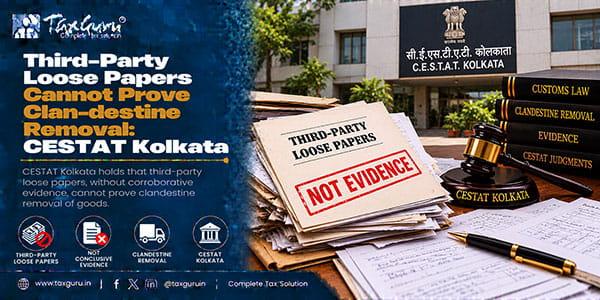
Krishna Gopal Rathi Vs Commissioner of C.G.S.T. and Central Excise (CESTAT Kolkata)
The Customs, Excise and Service Tax Appellate Tribunal (CESTAT), Kolkata, partly allowed an appeal challenging the imposition of penalty under Rule 26 of the Central Excise Rules, 2002, in a case involving alleged issuance of invoices without actual supply of goods and facilitation of irregular CENVAT credit. The appellant, a director of a registered dealer engaged in supplying TMT Bar cutting/MS round cutting, was penalized ₹10 lakh by the adjudicating authority, which was upheld by the Commissioner (Appeals).
The investigation revealed that the dealer issued invoices describing goods as “TMT Bar Cutting/MS Round Cutting” while purchasing TMT Bars/MS Round, allegedly to pass on fraudulent CENVAT credit. The transactions were found commercially non-viable, as high-value materials were shown as scrap yet sold at higher prices than finished goods. Further, the dealer lacked infrastructure, including sufficient space and electricity, to undertake cutting operations. Verification of transport details showed that several vehicles mentioned in invoices did not exist or were denied by owners, indicating absence of actual transportation. Statements recorded during investigation, including that of the appellant, suggested that transactions were paper-based without physical movement of goods.
The appellant argued that goods were actually supplied and used by the buyer, that vehicle discrepancies did not conclusively negate transportation, and that no concrete evidence proved non-supply. It was also contended that the buyer had paid duty on final products, that the goods were defective and suitable for melting, and that penalty should not be imposed, particularly when dues were settled by the manufacturer under a scheme. The appellant further argued that Rule 26 was not applicable and that no mala fide intent was established.