Of all the entrepreneurial ventures, starting an export business often carries a unique allure. You’ve probably heard the stories—people who began with a small local product and suddenly found themselves fulfilling bulk orders for international clients, achieving global reach, and tapping into exciting new markets. The narrative is one of rapid scaling and impressive success. But what these highlight reels rarely capture is the intricate and demanding framework of paperwork, compliance, and procedural groundwork that quietly holds the entire enterprise together. As a Company Secretary, I work at the intersection of business ambition and legal reality, frequently guiding small businesses and first-time exporters. And a pattern has become painfully clear: most entrepreneurs only start asking critical legal questions after their first consignment gets stuck at a port, racking up charges and jeopardizing a new client relationship.
Let’s save you from that frantic, expensive phone call. Building a successful export business isn’t just about finding a buyer; it’s about building a compliant, frictionless pipeline to deliver your product.
Step One: The IEC Code – Your Passport to Global Trade
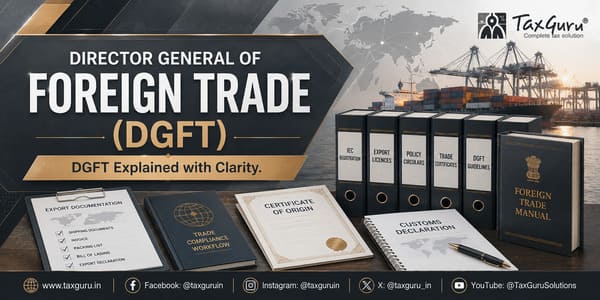
Before you can even think about shipping, you need an Importer Exporter Code (IEC). Issued by the Directorate General of Foreign Trade (DGFT), this ten-digit code is the fundamental prerequisite for engaging in international trade from India. Without an IEC, you legally cannot export or import anything. Think of it as your business’s passport; it’s the primary identifier for your company in all export-related transactions, from customs clearance to bank remittances.
The application process is online and appears straightforward, but precision is key. You will need:
- The PAN of the business entity (not your personal PAN).
- Proof of address for the business premises (like a utility bill or rental agreement).
- A cancelled cheque bearing the printed name of the business entity.
- A Digital Signature Certificate (DSC) or Aadhaar-based e-verification for authentication.
One small mismatch—a slight variation in the company name between the PAN card and the bank account, for instance—can trigger a query from the department, delaying your approval unnecessarily. Getting this foundational step right the first time is a non-negotiable part of setting a professional tone for your business.

Step Two: ICEGATE – The Digital Gateway You Can’t Ignore
Many new exporters get their IEC and believe they are ready to ship. This is a common and costly misconception. The next crucial step is registering your business on ICEGATE (Indian Customs Electronic Gateway). This is the national portal of Indian Customs that facilitates all digital interactions for trade. If the IEC is your passport, ICEGATE is the visa and immigration counter.
This is the platform where all critical export documentation, such as the Shipping Bill (the primary document for customs), is filed. It’s where you handle e-payments for customs duties (if any) and track your consignment’s clearance status in real-time. If you are not registered on ICEGATE, and your Authorized Dealer (AD) Code (your bank’s branch code) is not registered at the port of export, your shipment will be held up. No matter how perfectly packaged your product is or how eagerly your buyer is waiting, a lack of ICEGATE registration creates a hard stop at the customs barrier.
The Hidden Layer: Licenses and Registrations No One Warns You About
Beyond the IEC and ICEGATE, a layer of specific compliance awaits, determined entirely by the nature of your product. Missing even one of these can result in non-compliance, seizure of goods, and legal penalties.
- Goods and Services Tax (GST) Registration: This is non-negotiable. For export, you can either export under a Letter of Undertaking (LUT), which allows you to export without paying IGST, or you can pay the IGST and later claim a refund. An active GST registration is essential for either route.
- Registration-cum-Membership Certificate (RCMC): Issued by the relevant Export Promotion Councils (EPCs) or commodity boards, the RCMC validates you as a registered exporter for a specific product line (e.g., APEDA for agricultural products, AEPC for apparel). It is often mandatory for claiming export incentives and benefits under the Foreign Trade Policy.
- Product-Specific Approvals: If you are exporting food products, an FSSAI (Food Safety and Standards Authority of India) license is mandatory to ensure your products meet health and safety standards. Each product category may have its own governing body, and it’s your responsibility to identify and comply with them.
Final Thought: Build Your Foundation Before Building Your Empire
Don’t treat legal compliance as an administrative hurdle to be cleared at the last minute. It is the silent, powerful engine that keeps your international trade moving without friction. Proactive compliance builds trust with buyers, ensures smooth cash flow by avoiding payment holdups, and protects your business from crippling fines and reputational damage.
If you’re feeling overwhelmed by the acronyms and procedures, that’s a good sign—it means you recognize the complexity. Don’t wait until a shipment is stuck in limbo or a frustrated buyer cancels an order. Start early, get your documentation in order, and ask the right questions from the outset. That proactive investment in clarity is what separates the fleeting success stories from the enduring global businesses.
*****
DISCLAIMER: This article is based on the relevant provisions and to the best of my knowledge at the time of preparation of this article and moreover in no event author shall be liable for any direct and indirect result from this article and this is only a knowledge sharing initiative provided solely for information, this article is not a professional advice or recommendation.
AUTHOR: CS JINAL SHAH, Company Secretary in Practice from Ahmedabad, Gujarat and for any query feel free to contact me on [email protected] or 9173610133.