
Courts: ITAT Pune
Find latest ITAT Pune judgments, orders and case laws on income tax covering assessments, deductions, transfer pricing, capital gains, TDS, reassessment and penalties.

AY 2015-16 Reassessment Notice Issued After 31 March 2022 Is Time-Barred: ITAT Pune
BSNL VRS Compensation Is Retrenchment Compensation Exempt U/s. 10(10B): Pune ITAT
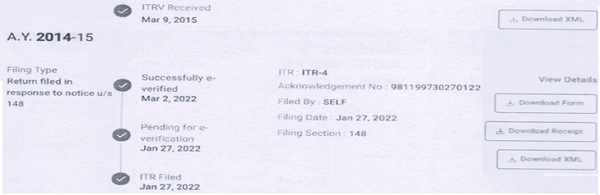
Reassessment Held Invalid for Non-Issuance of Section 143(2) Notice: ITAT Pune
Pune ITAT Remands Capital Gains and Section 54F Dispute for Fresh Verification
Pfizer Ex-Gratia Payment as Capital Receipt, ITAT Pune Deletes Addition
Voluntary Ex-Gratia Under Pfizer Scheme Is Capital Receipt: ITAT Pune
ITAT Pune Deletes Tax on Pfizer Ex-Gratia Received Under Financial Scheme
Voluntary Separation Ex-Gratia Not Taxable as Salary: Pune ITAT
ITAT Deletes Addition on Pfizer Ex-Gratia Payment Treated as Capital Receipt
ITAT Deletes Addition on Ex-Gratia Received Under Voluntary Retirement Scheme
Pune ITAT Quashes Reassessment Over Factually Incorrect Section 148 Notice
Pune ITAT Restores Foreign Tax Credit Claim Despite Incorrect Form 67 Disclosure
Pune ITAT Restores Section 40(a)(ia) Disallowance for Fresh Adjudication on Section 194Q TDS Liability
Pune ITAT Reduces Gross Profit Rate from 10% to 7%; Arbitrary Estimation Rejected
ITAT Pune judgments and orders cover a broad range of income-tax controversies involving individuals, businesses and corporate taxpayers. This TaxGuru page compiles decisions relating to assessments, additions, deductions, exemptions, business income, capital gains, transfer pricing, international taxation, TDS, reassessment, unexplained income, penalties and procedural issues. Chartered Accountants, advocates, companies and other tax professionals can use this collection to research ITAT Pune precedents and follow developments in direct tax jurisprudence. The page includes recent and significant earlier Tribunal decisions published on TaxGuru for convenient income-tax case-law research.

