
Courts: NCLT
Read latest NCLT judgments and orders on IBC, insolvency, liquidation, company law, mergers, oppression, mismanagement and corporate disputes.
Company Law
Company Law
NCLT Directs Meetings for Siemens Energy Companies’ Amalgamation & Capital Reduction
Corporate Law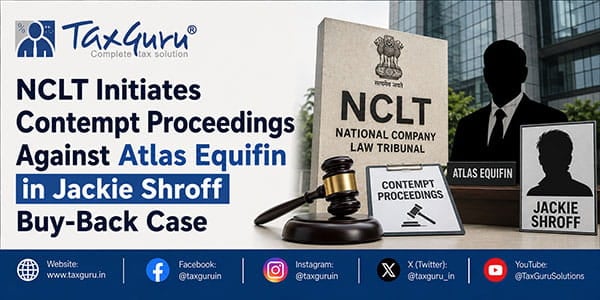
Corporate Law
NCLT Initiates Contempt Proceedings Against Atlas Equifin in Jackie Shroff Buy-Back Case
Company Law
Company Law
NCLT Approves Amalgamation of Ten Adani Power Subsidiaries Under Sections 230-232
Corporate Law
Corporate Law
NCLT Ahmedabad Initiates CIRP Against Varidhi Cotspin Over ₹43.39 Crore Default
Corporate Law
Corporate Law
NCLT Allows Financial Creditor Claim for Commercial Unit Given Against Service Dues
Corporate Law
Corporate Law
NCLAT Allows Claim on Uninvoked Corporate Guarantee in CIRP Under IBC
Company Law
Company Law
NCLT Allows Impleadment of Partnership Firm in Section 213(b) Investigation
Company Law
Company Law
NCLT Approves Fybros Moddular-Balar Marketing Amalgamation Scheme
Company Law
Company Law
NCLT Allows ACC-Ambuja Cements Amalgamation Scheme Under Sections 230-232
Company Law
Company Law
NCLT Allows Enertech-IRM Energy Amalgamation Scheme Under Sections 230-232
Income Tax
Income Tax
NCLT Dismisses ₹975 Crore Income Tax Claim Filed After 1305-Day Delay
Corporate Law
Corporate Law
NCLT Rejects APS Infra Resolution Plan Over PUFE Recovery Clause, Orders Liquidation
Corporate Law
Corporate Law
DRT and SARFAESI Proceedings Do Not Extend Limitation Under IBC: NCLT Chandigarh
Corporate Law
Corporate Law
NCLT Rejects Section 9 Plea Due to Pre-Existing Dispute Over Service Deficiencies
NCLT brings together judgments and orders of the National Company Law Tribunal published on TaxGuru. Decisions may involve corporate insolvency resolution, liquidation, applications under the Insolvency and Bankruptcy Code, mergers and amalgamations, oppression and mismanagement, restoration of companies and other proceedings under company and insolvency laws. Companies, creditors, insolvency professionals, Chartered Accountants, Company Secretaries and advocates can use this archive to research NCLT decisions and follow developments affecting corporate insolvency and company-law proceedings.

