
Courts: NCLT
Read latest NCLT judgments and orders on IBC, insolvency, liquidation, company law, mergers, oppression, mismanagement and corporate disputes.
Company Law
Company Law
Subhash Chandra Insolvency: NCLT Says Repayment Plan Can Bind Dissenting Creditors
Corporate Law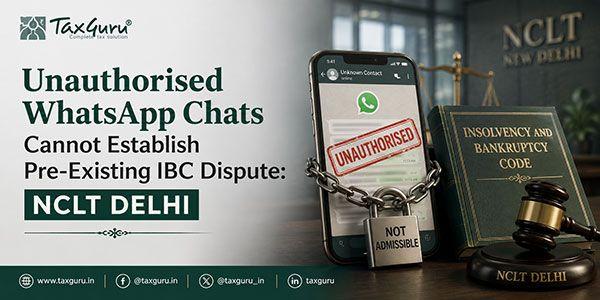
Corporate Law
Unauthorised WhatsApp Chats Cannot Establish Pre-Existing IBC Dispute: NCLT Delhi
Company Law
Company Law
NCLT Sanctions Aureustech Systems Merger With Happiest Minds Technologies
Corporate Law
Corporate Law
NeSL Record Not Mandatory to Establish Financial Default Under IBC: NCLT Cuttack
Company Law
Company Law
NCLT Delhi Approves Ambrosia Corner House Merger With Kafila Hospitality
Company Law
Company Law
NCLT Ahmedabad Sanctions Edme-UIB Insurance Brokers Amalgamation
Corporate Law
Corporate Law
NCLT Ahmedabad Orders Return of 124 EVs to Resolution Professional During CIRP
Corporate Law
Corporate Law
NCLT Orders Liquidation of M.I. Buildtech as No Resolution Plan Was Received
Corporate Law
Corporate Law
NCLAT Dismisses DoT Appeal Against Rolta India Resolution Plan Over Unchallenged Claim Rejection
Company Law
Company Law
NCLT Chennai Directs Meetings for Renault Nissan Demerger Scheme
Company Law
Company Law
NCLT Delhi Dispenses Shareholder Meetings in Jakson Demerger Scheme
Company Law
Company Law
NCLT Directs Creditor and Shareholder Meetings for Avinya-PPAP Amalgamation
Company Law
Company Law
NCLT Delhi Sanctions Western Up Tollway Capital Reduction and Reorganisation Scheme
Corporate Law
Corporate Law
NCLT Orders Rao Edusolutions Liquidation Despite 1.5-Year Delay in Filing Application
NCLT brings together judgments and orders of the National Company Law Tribunal published on TaxGuru. Decisions may involve corporate insolvency resolution, liquidation, applications under the Insolvency and Bankruptcy Code, mergers and amalgamations, oppression and mismanagement, restoration of companies and other proceedings under company and insolvency laws. Companies, creditors, insolvency professionals, Chartered Accountants, Company Secretaries and advocates can use this archive to research NCLT decisions and follow developments affecting corporate insolvency and company-law proceedings.

