The global discourse on Indigenous rights has evolved significantly over the last century, shifting from paternalistic protectionist policies toward a framework grounded in self- determination, cultural integrity, and participatory governance. Today, the frontiers of Indigenous rights lie at the intersection of international law, state policy, environmental governance, and the growing recognition of Indigenous knowledge systems as indispensable to sustainable development. These frontiers are not merely legal or political boundaries but dynamic spaces where Indigenous communities assert agency amid rapid globalisation, climate change, and resource-driven conflicts. Historically, Indigenous peoples were dispossessed through colonisation, assimilationist policies, and the erosion of customary land rights. In response, international law has progressively created norms and standards that affirm their distinct status. The UN Declaration on the Rights of Indigenous Peoples (UNDRIP, 2007) represents a landmark achievement, recognising rights to lands, territories, resources, cultural practices, and self- determination. Similarly, ILO Convention No. 169 (1989) underscores the principles of consultation and participation, mandating prior and informed consent on matters affecting Indigenous communities.
Yet the frontier today goes beyond merely codifying rights; it centres on implementation and enforcement. Despite robust global frameworks, many states hesitate to recognise the full extent of Indigenous autonomy, particularly regarding control over natural resources. Conflicts over mining, infrastructure development, and conservation projects continue to place Indigenous peoples at the frontline of environmental and human rights struggles.
This tension between state sovereignty and Indigenous self-governance reflects broader debates on development paradigms and distributive justice. Another emerging frontier is the recognition of Indigenous knowledge systems holistic ecological understandings passed through generations. As climate change intensifies, global institutions increasingly acknowledge that Indigenous stewardship is central to biodiversity protection. Research indicates that territories managed by Indigenous communities often exhibit stronger ecological resilience, lower deforestation rates, and sustainable land-use practices. The challenge lies in integrating this knowledge without appropriating or diluting its cultural foundations. Rights to intellectual property, cultural expressions, and community-based data governance are becoming vital aspects of Indigenous rights discourse.
The digital era has introduced further complexities. Digital mapping, AI-driven documentation, and genetic databases present opportunities for preserving cultural heritage but also risks of exploitation, surveillance, and the misappropriation of biologicalresources. The emerging field of Indigenous data sovereignty asserts that Indigenous communities must control how their data is collected, used, and shared extending the scope of self-determination into the technological domain.
Gender justice forms another critical frontier. Indigenous women often face intersectional discrimination from both external institutions and internal patriarchal norms. Empowering Indigenous women in leadership, customary governance, and resource management is increasingly recognised as central to strengthening community resilience and ensuring equitable rights protection.
Legal pluralism also marks a transformative area. Many states now experiment with integrating customary law within national legal systems. While this supports cultural autonomy, it also raises questions regarding harmonisation with constitutional rights, especially in relation to gender equality and criminal justice. The frontier thus lies in designing frameworks that respect customary practices while upholding universal human rights standards.
Finally, political representation and governance remain fundamental. Movements worldwide from the Sámi Parliaments in Scandinavia to Māori co-governance in New Zealand demonstrate innovative models of Indigenous political empowerment. These structures offer templates for balancing Indigenous sovereignty with state authority, though meaningful inclusion requires sustained political will and resource support. In conclusion, the frontiers of Indigenous rights encompass diverse and rapidly evolving terrains: environmental justice, digital sovereignty, gender equity, legal pluralism, and participatory governance. The future of Indigenous rights depends not only on progressive legal frameworks but on transformative political action, respectful partnerships, and reaffirmation of Indigenous leadership in shaping sustainable and equitable societies. As global challenges intensify, safeguarding Indigenous rights is not simply a matter of justice it is essential to the survival of cultural diversity and ecological balance worldwide.
Summarised Bullet Points
- Indigenous rights have shifted from protectionism to recognition of self- determination.
- Key frameworks like UNDRIP and ILO 169 establish global standards but implementation remains weak.
- Land and resource rights are the central and most contested frontier.
- Indigenous peoples are crucial to environmental protection and climate resilience.
- Traditional ecological knowledge (TEK) is valuable but often unrecognised or misappropriated.
- The digital era introduces new concerns about Indigenous data sovereignty.
- Indigenous women face intersectional discrimination, making gender inclusion a major focus.• Customary law and legal pluralism challenge states to balance cultural autonomy with human rights.
- Emerging models of political representation and co-governance expand Indigenous autonomy.
- Cultural preservation languages, heritage, rituals remains threatened by globalisation and exploitation.
Frontiers of Indigenous Rights in India: Background and Analysis
The protection and promotion of Indigenous rights in India stand at a crucial intersection of constitutional law, human rights, and developmental policy. India is home to more than 104 million Indigenous people, officially recognized as Scheduled Tribes (STs) under the Constitution (Census of India, 2011). These groups have distinct cultural, linguistic, and territorial identities, with historical ties to their ancestral lands and ecosystems. However, centuries of colonial exploitation followed by post-independence industrialization have deeply affected their social, economic, and political status. The evolving legal landscape surrounding Indigenous rights in India reveals a gradual shift from welfare-based protection to rights-based empowerment, grounded in the principles of self-determination, ecological justice, and participatory governance.
The Constitution of India provides the foundational structure for safeguarding the rights of Indigenous communities. Articles 244(1) and 244(2) establish the Fifth and Sixth Schedules, which recognize the unique needs of tribal areas and provide mechanisms for self governance. The Fifth Schedule applies to mainland tribal regions and entrusts the Governor and the Tribal Advisory Council with significant powers to prevent the alienation of tribal lands to non-tribals. The Sixth Schedule, applicable to the northeastern states, goes further by establishing Autonomous District Councils (ADCs) with legislative, executive, and judicial powers. These Councils can make laws on land, forest management, and cultural preservation, embodying a constitutional model of decentralized autonomy (Baruah, 2020). Moreover, Article 46, a Directive Principle of State Policy, obliges the state to promote the educational and economic interests of Scheduled Tribes and protect them from exploitation. Together, these provisions reflect the constitutional intent to preserve Indigenous identity while enabling their integration within the broader framework of Indian democracy.
Two landmark statutes
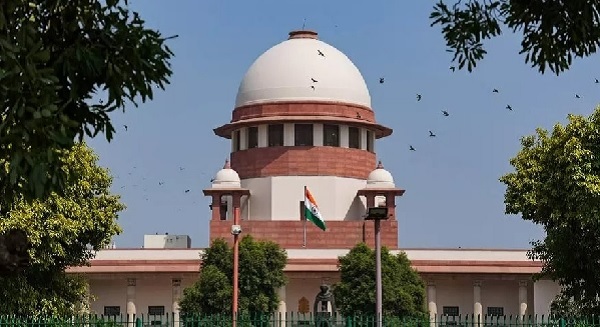
The Panchayats (Extension to Scheduled Areas) Act, 1996 (PESA) and the Forest Rights Act, 2006 (FRA) have expanded the frontiers of Indigenous rights in India by emphasizing autonomy, community ownership, and participatory governance. The PESA Act recognizes the Gram Sabha (village assembly) as the nucleus of local governance in Scheduled Areas. It empowers tribal communities to manage community resources, approve or reject development projects, and resolve disputes according to customary laws. Complementing this, the FRA aims to correct historical injustices caused by colonial and post-colonial forest policies that had alienated Indigenous communities from their traditional lands. Indian courts have played a vital role in interpreting and expanding the meaning of Indigenous rights. In Samatha v. State of Andhra Pradesh (1997), the Supreme Court ruled that government land in Scheduled Areas cannot be leased to non-tribal persons or private companies for mining. Similarly, in the Niyamgiri judgment (Orissa Mining Corporation v. Ministry of Environment & Forests, 2013), the Court reaffirmed the principle of community consent by holding that mining in sacred tribal lands could not proceed without approval from the Gram Sabhas.
This case operationalized the concept of Free, Prior, and Informed Consent (FPIC) within India’s domestic legal framework (Mohanty, 2015).
Despite a robust legal framework, the realization of Indigenous rights remains fraught with obstacles. Administrative and bureaucratic barriers, development-induced displacement, weak political representation, and environmental pressures continue to hinder progress. The evolving frontier of Indigenous rights in India thus lies in balancing state sovereignty with Indigenous autonomy, ensuring ecological sustainability, and embedding customary institutions within the democratic framework.
The frontier of Indigenous rights in India signifies an ongoing legal and moral transformation. From constitutional safeguards to landmark judicial rulings, India’s legalsystem has recognized the intrinsic connection between land, identity, and culture for its Indigenous communities. Yet, the challenge lies not in framing new laws but in ensuring their effective and participatory implementation. True justice for Indigenous peoples requires moving beyond protective paternalism toward genuine autonomy, ecological stewardship, and recognition of Indigenous legal traditions as integral components of India’s democratic fabric.
Key Argument Points
- Constitutional Framework: Fifth and Sixth Schedules institutionalize self-governance and land protection in tribal areas.
- Statutory Recognition: PESA (1996) and FRA (2006) empower Indigenous communities through decentralized governance and land rights.
- Judicial Precedents: Samatha (1997) and Niyamgiri (2013) upheld the principles of collective ownership and FPIC.
- Implementation Gap: Bureaucratic inefficiency, weak enforcement, and competing laws hinder effective realization.
- Evolving Jurisprudence: Shift from welfare to empowerment, integrating Indigenous law and ecological values into national policy.
- Future Path: Harmonize development with Indigenous participation, legal pluralism, and climate justice.