

Articles by this Author
Goods and Services Tax
Goods and Services Tax
West Bengal AAR Denies Reclaim of Reversed ITC Despite Retrospective Section 16(5) Amendment
Income Tax
Income Tax
Concessional Tax Rate Cannot Be Denied Solely for Form 10-IC Late Filing: ITAT Delhi
Corporate Law
Corporate Law
Bombay HC Sets Aside Rejection of VAT Appeal Delay Plea as COVID Orders Extended Limitation
Corporate Law
Corporate Law
Delhi HC Rejects Clarification Plea as Earlier Bail Order Was Already Unambiguous
Income Tax
Income Tax
CAM Charges Attract TDS Under Section 194C and not Under 194J: ITAT Delhi
Corporate Law
Corporate Law
NCLT Rejects Section 95 Petition Due to Non-Invocation of Personal Guarantee
Income Tax
Income Tax
ITAT Deletes TDS Demand as Seller’s PAN Was Regularised Within CBDT Timeline
Corporate Law
Corporate Law
NCLT Rejects CIRP Plea as Alleged Operational Debt Was Based on Unreliable Documents
Income Tax
Income Tax
Income Tax Refund Interest payable up to actual date of refund issuance: ITAT Delhi
Income Tax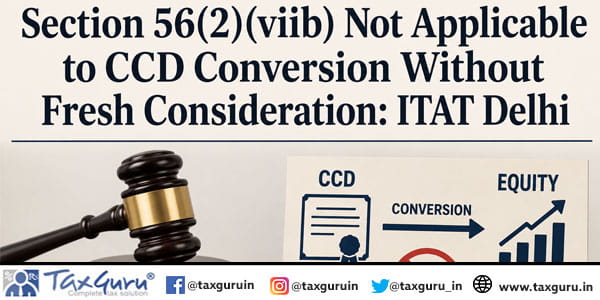
Income Tax
Section 56(2)(viib) Not Applicable to CCD Conversion Without Fresh Consideration: ITAT Delhi
Corporate Law
Corporate Law
Anticipatory Bail Rejected in Liquor Policy Case Due to Serious Allegations of ₹3,200 Crore Kickback Conspiracy
Income Tax
Income Tax
Reassessment Beyond Four Years Invalid Without Finding of Failure to Disclose Material Facts: ITAT Delhi
Income Tax
Income Tax
AO cannot introduce a new addition while giving effect to appellate order: ITAT Chennai
Income Tax
Income Tax

