The Indian Cyber Crime Coordination Centre (I4C) has issued an advisory warning about a surge in ransomware attacks targeting Chartered Accountancy (CA) firms and consulting organizations in India. These attacks primarily focus on Network Attached Storage (NAS) devices, which serve as centralized storage systems for critical business data. Cybercriminal groups exploit internet-exposed NAS management interfaces, unpatched vulnerabilities, weak credentials, or lack of multi-factor authentication to gain access. Once inside, attackers steal sensitive client data, encrypt all storage volumes including backups, and demand ransom while threatening to publicly release stolen information (double extortion). Such incidents can lead to complete loss of financial records, operational disruptions, exposure of confidential client data, reputational damage, and potential legal and regulatory consequences. To mitigate these risks, I4C recommends restricting internet access to NAS devices, implementing multi-factor authentication, applying firmware updates and security patches, maintaining air-gapped backups, enabling monitoring and alerts, and reporting cyber incidents promptly through the National Cyber Crime Reporting Portal.
Indian Cybercrime Coordination Centre (I4C)
ADVISORY
Ransomware Groups Targeting NAS Devices used by CA and Consulting Firms
Executive Summary: Indian Cyber Crime Coordination Centre (I4C) has observed a surge in ransomware incidents targeting Chartered Accountancy (CA) firms and consulting organizations in India, as reported on the National Cyber Crime Reporting Portal (NCRP). Threat analysis indicates that ransomware groups are conducting targeted cyber-attacks against Network Attached Storage (NAS) devices, leading to complete encryption of organizational data, data theft, and extortion threats.
NETWORK ATTACHED STORAGE (NAS): OVERVIEW & RISK
Network Attached Storage (NAS): Network Attached Storage (NAS) is a dedicated file storage device connected to organization’s network that provides centralized data access to multiple users and client devices. It functions like a private, on-premises cloud for storing and sharing critical business data.
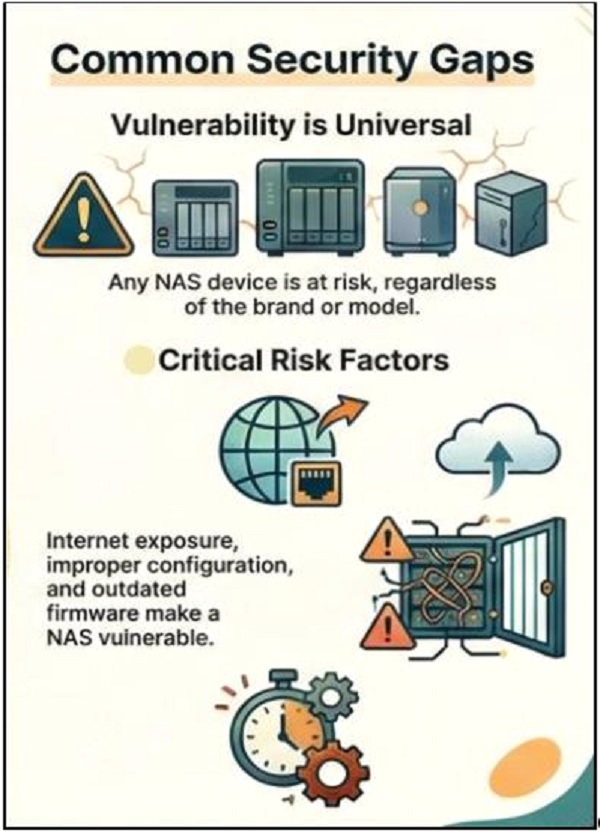
Why NAS Devices Are Prime Targets
A compromised NAS can lead to total loss of both primary data and backups, making recovery extremely difficult. For this reason, ransomware groups actively and systematically target NAS devices. Any NAS that is internet-exposed, misconfigured, or running outdated firmware is vulnerable regardless of the vendor or model.
MODUS OPERANDI
- Reconnaissance: Automated scanning identifies internet exposed NAS management interfaces
- Initial Access: Exploitation of unpatched vulnerabilities, weak credentials, or missing MFA
- Data Theft: Exfiltration of sensitive client data before encryption
- Encryption: Deployment of ransomware across all volumes and backups
- Double Extortion: Ransom demand with threats to publicly release stolen data
POTENTIAL IMPACTS
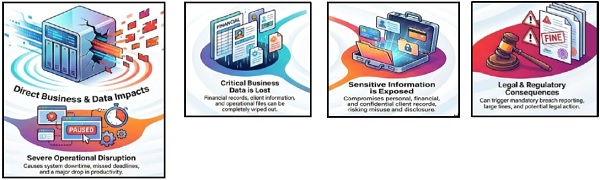
- Loss of Critical Business Data: Complete loss of essential business data, including financial records, client information, and operational files stored on NAS systems.
- Operational Disruption: Severe disruption of business operations and client services, resulting in system downtime, missed deadlines, and reduced productivity.
- Exposure of Sensitive and Regulated Information: Compromise of personal data, financial data, and confidential client records, increasing the risk of data misuse and unauthorized disclosure of the information.
- Financial Loss and Reputational Damage: Significant financial losses arising from ransom demands, recovery and remediation costs, prolonged business interruption.
- Legal and Regulatory Implications: Mandatory breach reporting, regulatory noncompliance, potential penalties, and exposure to legal action.
 NAS SECURITY RECOMMENDATIONS
1. Safeguard Internet Exposure
- Access to NAS may be restricted to limited set of IP or network; to reduce attack surface.
- Multi-Factor authentication may be introduced.
2. Emergency Security Updates
- Default passwords may be changed.
- Apply all available firmware and security patches
- Disable unused accounts, services and legacy protocols (FTP, Telnet, SMBv1)
3. Backup Protection
- Implement offline, air-gapped backups (physically disconnected)
- Use immutable backup solutions (cannot be encrypted or deleted)
- Test restoration procedures monthly
4. Monitoring & Detection
- Enable comprehensive logging on NAS, firewalls, and authentication systems
- Configure alerts for failed logins, unusual access, and large data transfers
5. Incident Response
- Maintain forensic expert and legal counsel contacts
- Isolate affected systems immediately (do NOT power off)
- Report any cybercrime incidents on https://cybercrime.gov.in or call at 1930
VENDOR SECURITY ADVISIORIES:
SOLUTION: Ensure timely implementation of security updates as per vendor advisories.
QNAP: https://www.qnap.com/en/security-advisory
Synology: https://www.synology.com/security/advisory
Follow I4C’s Social Media handles – CyberDost on
Source: Indian Cybercrime Coordination Centre (I4C)