Relying on its earlier ruling in the assessee’s own case, the Tribunal held that gross profit should be estimated at 0.40% rather than 2% of turnover. The order emphasised consistency in estimation across assessment years.
The Tribunal condoned a 60-day delay after accepting explanations relating to migration of the ITAT portal and the death of a family member. The registration dispute was thereafter heard on merits.
The Court held that common trade parlance and industry understanding treated the goods as plastic sacks rather than textile products. This finding supported classification under HSN 3923.
The Punjab and Haryana High Court held that retrospective GST registration cancellation cannot be sustained without specifically informing the taxpayer through a proper notice. The Court set aside the cancellation order for violation of natural justice principles.
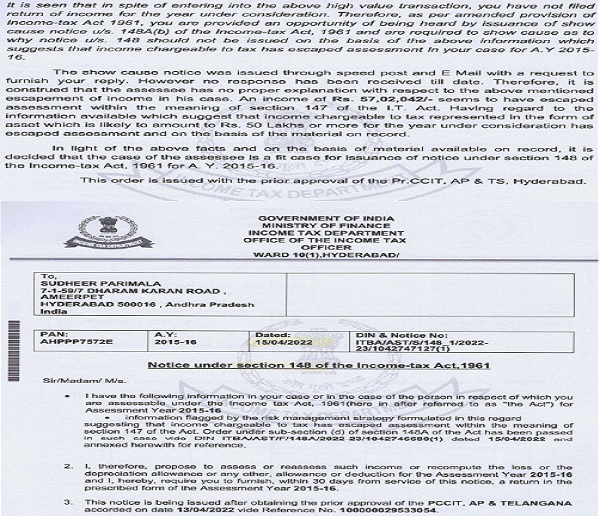
The Gujarat High Court set aside reassessment proceedings after finding that the Income Tax Department relied on an undated and uninvestigated complaint. The Court held that reopening based on conjectures and unsupported material could not be sustained.
The Tribunal held that leasehold rights transferred with land and building fall within the ambit of Section 50C. The matter relating to reassessment validity was sent back for fresh adjudication.
ITAT Mumbai held that Form 3CL issued by DSIR could not be treated as additional evidence during rectification proceedings since it had already been sent to the jurisdictional Assessing Officer. The Tribunal restored the issue for fresh quantification of deduction under Section 35(2AB).
The Orissa High Court set aside GST demand and rectification orders after finding that the taxpayer’s reply and request for personal hearing were ignored. The Court held that failure to consider the reply violated principles of natural justice.
High Court held that GST authorities must consider CBIC circular clarifying implementation of Section 16(5) before sustaining denial of input tax credit for delayed return filing.
NCLAT held that a joint venture arrangement did not prevent insolvency proceedings where separate agreements clearly imposed supply obligations and payment responsibilities between parties. Tribunal ruled that unpaid supply dues constituted operational debt under IBC.