The guide explains practical steps to identify MSME-registered vendors despite no official lookup system. It highlights documentation-based verification as the most reliable approach.
The issue was fragmented regulations on NRI debt investments. RBI consolidated and updated directions to streamline compliance under FEMA.
Companies that settle all MSME dues within 45 days are not required to file MSME Form 1 under original provisions. The rule focuses on delayed payments rather than routine reporting. Maintaining prompt payment practices avoids compliance burden.
Refunds under customs law are allowed only when the claimant proves the duty burden was not passed to another. Courts have held that failure to establish this results in denial of refund and credit to the Consumer Welfare Fund.
The requirement to file MSME-1 arises only when payments to Micro and Small Enterprises remain outstanding beyond 45 days. The framework clarifies that timely payments eliminate the filing obligation, making it a conditional compliance requirement.
Reimbursements are taxable if they form part of consideration under GST valuation rules, regardless of their label. Only limited cases meeting strict pure-agent conditions qualify for exclusion.
Supreme Court held that borrower doesn’t possess any legal right to a personal hearing by banks before classifying their account as fraud account. Accordingly, the civil appeal is partly allowed.
The court recognized cryptocurrency as property, but lack of statutory clarity leaves companies uncertain about holding, accounting, and liquidating crypto assets.
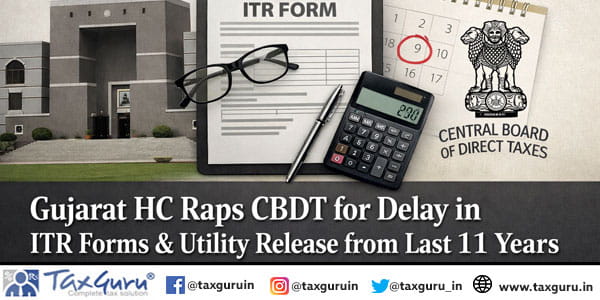
The Court found CBDT failed to follow its 2015 directive on timely ITR utility release. It ordered an affidavit with corrective steps, highlighting systemic lapses affecting taxpayers.
The Tribunal invalidated reassessment proceedings since the Section 148 notice was issued after 01.04.2021, making it time-barred. The ruling reinforces strict limitation compliance for reopening cases.