Income Tax : The FAQs explain the revised CBDT guidelines on compounding offences under the Income-tax Act effective from 17 October 2024. They...
Income Tax : The article explains who can file appeals before the Income Tax Appellate Tribunal, the orders that are appealable, applicable tim...
Income Tax : The Tribunal held that additions cannot stand without a clear link between seized material and the assessee. It ruled that third-p...
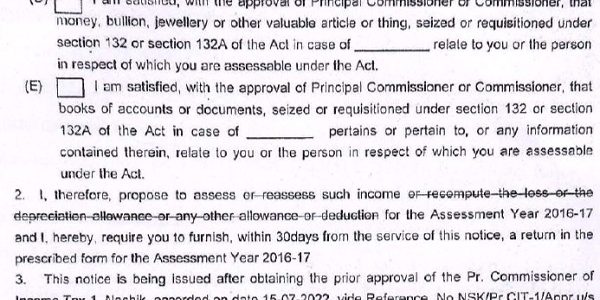
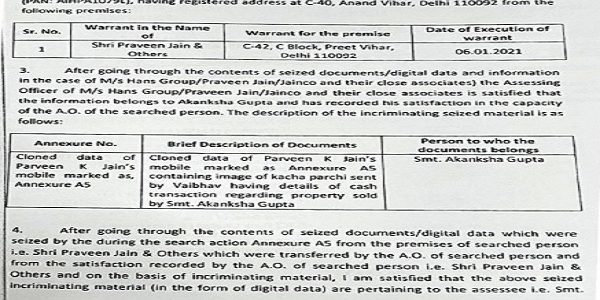
Income Tax : Judicial rulings clarify that satisfaction for initiating action against other persons in search cases must be recorded promptly. ...
Income Tax : CBDT's new Compounding of Offence Guidelines (2024) simplify the process but maintain strict compliance rules. Learn about eligibi...
Income Tax : Learn about the new block assessment provisions for cases involving searches under section 132 and requisitions under section 132A...
Income Tax : Gujarat High Court held that rejection of a Vivad se Vishwas declaration was invalid because final assessment arose from survey pr...
Income Tax : The Tribunal held that an addition under Section 69 could not be sustained solely on the basis of a seized loose sheet without ind...
Income Tax : The ITAT held that assessments under Section 153A were invalid because no search warrant was issued in the assessee’s name. As t...
Income Tax : The ITAT Hyderabad held that the assessment orders were time-barred under Section 153 despite the DRP process. Both assessments we...
Income Tax : The ITAT held that limitation under Section 153B had to be computed from the searched person's last panchanama, making the assessm...
Income Tax : Central Government has decided to extend the time limits to 30th June, 2021 in the following cases where the time limit was earlie...
Income Tax : Availability of Miscellaneous Functionalities related to ‘Selection of Case of Search Year’ and ‘Relevant Search...
The Tribunal ruled that recording satisfaction under Section 153C is not a mechanical exercise and must clearly establish the relevance of seized material to the assessee’s income.
The Hyderabad ITAT held that only the actual period lost during the limitation period can be excluded under Explanation-1 to Section 153. It ruled that the assessment order passed beyond the permissible period was invalid.
The Tribunal ruled that the Revenue must establish a direct connection between seized material and the assessee’s taxable income before invoking Section 153C. Mechanical initiation of proceedings for multiple years was declared invalid.
Hyderabad ITAT held that a notice issued under Section 148 after six years from the end of AY 2015-16 was invalid. The Tribunal ruled that the amended 10-year reopening provision cannot revive already time-barred cases.
ITAT Delhi held that penalty under Section 271AAC cannot survive once the underlying Section 153C assessment is quashed. The Tribunal deleted the penalty after noting that the quantum assessment itself no longer existed.
ITAT Delhi held that electronic evidence seized during search proceedings cannot be relied upon without mandatory certification under Section 65B of the Evidence Act. The Tribunal ruled that initiation of Section 153C proceedings based on uncertified electronic records was invalid.
ITAT Delhi held that a satisfaction note under Section 153C must clearly state how seized material bears on the assessee’s income determination. The Tribunal quashed the assessments after finding the statutory requirement was not properly recorded.
The Tribunal quashed the assessment after finding that the statutory conditions under Section 153C were not properly satisfied. It held that defective recording of satisfaction vitiated the entire proceedings against the third party assessee.
The Mumbai ITAT held that additions under Section 69 cannot be sustained merely on the basis of uncorroborated excel-sheet entries and third-party statements. The Tribunal deleted the alleged on-money addition in the Rubberwala Group matter.
ITAT Delhi held that assessments under Section 153C were invalid as the Assessing Officer failed to record satisfaction in terms of the amended statutory requirement. The Tribunal quashed the assessments for lack of proper jurisdictional compliance.