Follow Us:

Case Law Details

Case Name : Sahithi Marketers Vs Superintendent of Central Tax (Telangana High Court)
Related Assessment Year :
Become a Premium member to Download. If you are already a Premium member, Login here to access.

Sahithi Marketers Vs Superintendent of Central Tax (Telangana High Court)

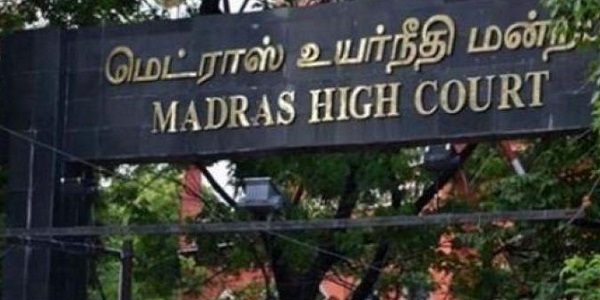
The Telangana High Court, in the case of Sahithi Marketers vs. Superintendent of Central Tax, declined to entertain a writ petition challenging a GST assessment order and its summary. The petitioner raised three main arguments: that the summary order (Form GST DRC-07) was time-barred, the original order lacked a legal basis, and the summary order had no physical or digital signature.

The respondent’s counsel countered these claims, stating the Order-in-Original was dated April 24, 2024, and was therefore within the extended limitation period of April 30, 2024. They also asserted that the order was issued under the correct legal provision (Section 73 of the GST Act) and that the summary order’s lack of a signature was not prejudicial as it was a summary of the valid, physically signed original order.

The court referenced the Supreme Court’s precedent in CCT v. Glaxo Smith Kline Consumer Health Care Limited (2020). The Supreme Court had previously held that while High Courts have wide powers under Articles 226 and 227, they should not disregard statutory appeal periods. The court noted that a writ petition cannot be used to bypass the prescribed appeal process after the statutory and extended limitation periods have expired.

Based on this precedent, the Telangana High Court found that the petitioner had an alternative, efficacious remedy of appeal under the GST Act, which was not availed within the stipulated time. The court dismissed the writ petition, stating that entertaining it would be contrary to the legislative intent behind the statutory provisions. The court clarified that the Order-in-Original was validly passed and the summary order’s lack of signature did not negate the original order’s legal standing. The court also noted that the petitioner could pursue a statutory remedy if the law allowed for it, but the writ petition was not the correct course of action.

FULL TEXT OF THE JUDGMENT/ORDER OF TELANGANA HIGH COURT

Sri Mohammed Rafi, learned counsel representing Sri Shaik Jeelani Basha, learned counsel appearing for the petitioner and Sri Dominic Fernandes, learned Senior Standing Counsel for CBIC, for respondent Nos.1 and 3.

2. Heard on admission.

3. The petitioner takes exception to the summary of the order in Form GST DRC-07, dated 03.05.2024, and the Order-in Original (0.I.0.) dated 24.04.2024 (Ex.P.2).

4. Learned counsel for the petitioner raised three fold submissions. Firstly, it is submitted that GST DRC-07, dated 03.05.2024, is barred by time. The time was extended by Notification No.56 of 2023 upto 30.04.2024 and DRC-07 is passed thereafter. The second argument is that under the Goods and Services Tax Act, 2017 (for short “the GST Act”), there is no provision to pass the O.I.O. dated 24.04.2024. Thirdly, it is argued that DRC-07 dated 03.05.2024 does not have any physical or digital signature.

5. Learned Senior Standing Counsel for CBIC pointed out that the order dated 24.04.2024 does contain physical signature and it is passed on 24.04.2024 which is well within the time. The limitation was extended upto 30.04.2024. DRC-07, dated 03.05.2024, is only a summary of the 0.I.0. and whether or not it is signed will not cause any prejudice to the petitioner. He further submits that 0.1.0. is passed in consonance with Section 73 of the GST Act. By placing reliance on the judgment of the Apex Court in CCT v. GLAXO SMITH KLINE CONSUMER HEALTH CARE LIMITED’, it is submitted that the petitioner could have preferred an appeal within ninety (90) days extendable by thirty (30) days under the GST Act. The petitioner has not filed the petition within aforesaid time. This point is considered by the Apex Court to the aforesaid case and in view of principles laid down therein this petition may not be entertained.

6. We have heard the parties at length.

7. The Apex Court in GLAXO SMITH KLINE CONSUMER HEALTH CARE’s case (supra) opined as under:

“19. We may now revert to the Full Bench decision of the Andhra Pradesh High Court in Electronics Corpn. of India Ltd. [Electronics Corpn. of India Ltd. v. Union of India, 2018 SCC OnLine Hyd 21 : (2018) 361 ELT 22] , which had adopted the view taken by the Full Bench of the Gujarat High Court in Panoli Intermediate (India) (P) Ltd. v. Union of India [Panoli Intermediate (India) (P) Ltd. v. Union of India, 2015 SCC OnLine Guj 570 : AIR 2015 Guj 97] and also of the Karnataka High Court in Phoenix Plasts Co. v. CCE [Phoenix Plasts Co. v. CCE, 2013 SCC OnLine Kar 10432 : (2013) 298 ELT 481] . The logic applied in these decisions proceeds on fallacious premise. For, these decisions are premised on the logic that provision such as Section 31 of the 2005 Act, cannot curtail the jurisdiction of the High Court under Articles 226 and 227 of the Constitution. This approach is faulty. It is not a matter of taking away the jurisdiction of the High Court. In a given case, the assessee may approach the High Court before the statutory period of appeal expires to challenge the assessment order by way of writ petition on the ground that-the same is without jurisdiction or passed in excess of jurisdiction — by overstepping or crossing the limits of jurisdiction including in flagrant disregard of law and rules of procedure or in violation of principles of natural justice, where no procedure is specified. The High Court may accede to such a challenge and can also non-suit the petitioner on the ground that alternative efficacious remedy is available and that be invoked by the writ petitioner. However, if the writ petitioner chooses to approach the High Court after expiry of the maximum limitation  period of 60 days prescribed under Section 31 of the 2005 Act, the  High Court cannot disregard the statutory period for redressal of the  grievance and entertain the writ petition of such a party as a matter of course. Doing so would be in the teeth of the principle underlying the  dictum of a three-Judge Bench of this Court in ONGC [ONGC v.  Gujarat Energy Transmission Corpn. Ltd., (2017) 5 SCC 42 : (2017) 3  SCC (Civ) 47] In other words, the fact that the High Court has wide  powers, does not mean that it would issue a writ which may be  inconsistent with the legislative intent regarding the dispensation  explicitly prescribed under Section 31 of the 2005 Act. That would  render the legislative scheme and intention behind the stated  provision otiose.”

(Emphasis Supplied)

8. Admittedly, the petitioner had a remedy of appeal under the GST Act and did not avail such remedy. This petition is not filed within the statutory time limit prescribed under the GST Act. Thus, in view of the judgment of the Apex Court in GLAXO SMITH KLINE CONSUMER HEALTH CARE LIMITED (supra), we find substance in the argument of learned Senior Standing Counsel for CBIC that this petition is not liable to be entertained. Otherwise, it will be against the scheme and intention of the statutory provision. The O.I.O. dated 24.04.2024 contained physical signature and it is issued within the limitation period which was extended upto 30.04.2024. DRC-07 is only a ‘summary of order’ and even if it did not contain any signature, it will not cause any prejudice to the petitioner.

9. For these cumulative reasons, admission is declined.

10. Accordingly, the Writ Petition is The petitioner can avail the remedy under the relevant statute, if law so permits. No costs.

Interlocutory applications, if any pending, shall also stand closed.

Notes:

1 2020) 19 SCC 681

Join Taxguru’s Network for Latest updates on Income Tax, GST, Company Law, Corporate Laws and other related subjects.

Leave a Comment

Your email address will not be published. Required fields are marked *

Search Post by Date
June 2026
M T W T F S S
1234567
891011121314
15161718192021
22232425262728
2930