Hello, fellow business professionals and finance buffs! If you own an India-based small or medium-sized enterprise, chances are you have your hands full with operations, money management, and compliance. I have been covering this industry for more than five years, and let me tell you—2025 promises to be an interesting year for MSMEs. Union Budget 2025-26, presented by Honourable Finance Minister Nirmala Sitharaman, has introduced some major changes that can simplify life (and increase profitability) for millions of entrepreneurs. From revised criteria for classification to better benefits and stricter compliance standards, there is much to take in. Then grab a cup of tea, and let us plunge into what is new, why it is important, and how you can keep up.
New MSME Classification: Larger Limits, More Flexibility
One of the largest changes in 2025 is the updated MSME classification, which will come into effect from April 1, 2025. The government has raised investment limits by 2.5 times and doubled the turnover limits. That is massive! More companies can become MSMEs and benefit from the advantages that come with it, such as subsidies and collateral-free loans.
Following is the new structuring:
- Micro Enterprises: Investment up to ₹2.5 crore (previously ₹1 crore) and turnover up to ₹10 crore (previously ₹5 crore).
- Small Enterprises: Investment up to ₹25 crore (previously ₹10 crore) and turnover up to ₹100 crore (previously ₹50 crore).
- Medium Enterprises: Investment up to ₹125 crore (previously ₹50 crore) and turnover up to ₹500 crore (previously ₹250 crore).
Why this matters: I once worked with a small manufacturing unit in Gujarat that was hesitant to upgrade their machinery because they feared losing their MSME status. With these new limits, businesses like theirs can invest in technology, hire more staff, and scale up without worrying about outgrowing the MSME bracket too soon. It’s a win for growth and innovation.
Pro tip: If your business is close to these new thresholds, reassess your eligibility now. Register on the Udyam portal (it is free!) to unlock MSME benefits. The process is online, seamless, and pulls data directly from your PAN and GSTIN.
Benefits That Pack a Punch
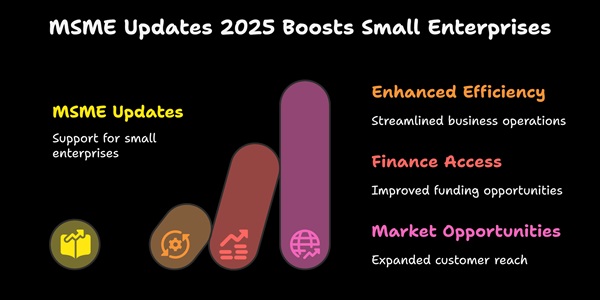
Being classified as an MSME comes with a treasure trove of benefits. Over the years, I have seen businesses transform by leveraging these incentives. Here is what is on the table in 2025:
- Collateral-Free Loans: The Credit Guarantee Fund Trust for Micro and Small Enterprises (CGTMSE) has doubled its credit guarantee cover from ₹5 crore to ₹10 crore. This means easier access to loans without pledging assets. Imagine the relief for a first-time entrepreneur
- Subsidies and Tax Breaks: MSMEs get subsidies for technology upgrades, reduced interest rates, and tax exemptions under schemes like Startup India. There is also a new scheme for 5 lakh first-time entrepreneurs, including women and SC/ST communities, offering term loans up to ₹2 crore.
- Public Procurement Preference: Government tenders reserve a chunk for MSMEs, giving you a competitive edge.
- Export Support: The Export Promotion Mission helps MSMEs tackle non-tariff barriers and access export credit, making global markets more reachable.
- Customized Credit Cards: 10 lakh micro enterprises on the Udyam portal can now get credit cards with a ₹5 lakh limit. This is a game-changer for managing working capital.
Real-world example: A small textile exporter I wrote about last year struggled with delayed payments from overseas buyers. By registering as an MSME and using the TReDS platform (Trade Receivables Discounting System), they discounted their invoices and freed up cash flow. With the 2025 export-focused initiatives, businesses like theirs can go global with more confidence.
Compliance: Stay Sharp to Avoid Penalties
With great benefits come great responsibilities. The government is tightening compliance norms to protect MSMEs, especially when it comes to timely payments. Here is what you need to know:
- Section 43B(h) of the Income Tax Act: Introduced in 2023 and effective from April 2024, this rule ensures buyers pay MSME suppliers within 45 days (or 15 days if there is no written agreement). If you do not pay on time, the expense is disallowed in the year it is incurred and only deductible when paid. This has tax implications, so track your payment cycles closely.
- Form MSME-1: If your company has outstanding dues to MSME suppliers beyond 45 days, you must file Form MSME-1 with the Registrar of Companies (ROC) every six months. Non-compliance can lead to penalties starting at ₹20,000, with an additional ₹1,000 per day up to ₹3 lakh. Even small companies are not exempt, so stay vigilant.
- Udyam Registration: While not mandatory, registering on the Udyam portal is key to accessing benefits. It is also critical for suppliers to prove their MSME status to buyers, ensuring compliance with payment rules.
- GST and TReDS Integration: MSMEs opting for quarterly GST returns can now upload invoices monthly on TReDS to speed up payments. This reduces working capital bottlenecks but adds a layer of compliance.
Case study insight: A Delhi-based trading firm I covered faced a penalty for not filing Form MSME-1. They did not realize their supplier was MSME-registered, and payments were delayed by 60 days. Lesson learned: Always verify your vendors’ MSME status and set up systems to track payment deadlines.
Pro tip: Use accounting software to automate payment tracking and flag MSME vendors. It is a small investment that saves big headaches.
Audit Norms: Transparency is Key
Tax audits for MSMEs are getting more detailed in 2025, especially with updates to Form 3CD. If your turnover exceeds ₹1 crore (or ₹10 crore with 95% digital transactions), you’re subject to a tax audit under Section 44AB. Here is what is new:
- Clause 22 of Form 3CD: You must now disclose unpaid dues to MSMEs beyond the 45-day limit, including amounts paid after the due date. This ensures compliance with Section 43B(h).
- Expenditure Disclosures: Report expenses related to regulatory violation settlements. This clamps down on businesses trying to claim deductions for penalties.
- Simplified Reporting: Clauses 28 and 29 of Form 3CD have been removed to reduce reporting burdens, but the focus on MSME payments is sharper than ever.
Why this matters: A medium-sized enterprise I studied last year got hit with a tax disallowance because they did not report delayed MSME payments in their audit. Their accountant missed the Section 43B(h) requirement, and it cost them dearly. Double-check your tax audit reports to avoid surprises.
Pro tip: Work with a chartered accountant who is up to speed on MSME-specific audit norms. They can help you navigate Form 3CD and ensure compliance.
Key Takeaways for 2025
As I reflect on the countless businesses I have written about, one thing stands out: staying informed and proactive is non-negotiable. The 2025 MSME updates are a golden opportunity, but they come with strings attached. Here is my advice to make the most of it:
- Register on Udyam: If you have not already, get your business registered. It’s your gateway to benefits and protects you in payment disputes.
- Leverage Financial Incentives: Explore collateral-free loans, credit cards, and subsidies. They are designed to fuel your growth.
- Tighten Payment Systems: Whether you are an MSME or a buyer, align your payment cycles with the 45-day rule to avoid penalties or tax disallowances.
- Stay Audit-Ready: Keep detailed records of MSME transactions and work with a savvy accountant to nail your tax audits.
- Think Big: With higher thresholds, you have got room to scale. Invest in tech, expand your team, or tap into export markets.
Final Thoughts
Writing about MSMEs over the years has shown me their resilience and grit. From a small bakery in Chennai to a tech startup in Bengaluru, these businesses are the backbone of India’s economy. The 2025 updates are a nod to their potential, offering more flexibility, financial support, and growth opportunities. But they also demand discipline in compliance and audits. My advice? Embrace these changes as a chance to level up. Stay curious, stay compliant, and keep pushing forward. You’ve got this!
Have questions about MSME compliance or want to share your own story? Drop a comment below—I would love to hear from you!