Pawan Kumar Agarwal Vs CIT (ITAT Kolkata)
Introduction: The case of “Pawan Kumar Agarwal vs CIT” revolves around the applicability of the concessional tax rate under section 115E of the Income-tax Act, 1961. The key issue was whether the rate of 10% on capital gains derived from specified assets, acquired out of convertible foreign exchange, is applicable when the money was deposited in Indian rupees and not in foreign exchange. This analysis delves into the arguments presented, the tribunal’s interpretation, and the outcome of the case.
Analysis: In this case, the assessee claimed that the concessional tax rate of 10% under section 115E should be applied to the capital gains arising from specified assets acquired out of convertible foreign exchange. However, the assessing officer (AO) observed that the money had been deposited in Indian rupees, and not in foreign exchange, which rendered the concessional tax rate inapplicable. The tribunal examined the bank account details provided by the assessee, which clearly indicated that the money had been deposited in Indian rupees.
The assessee’s argument that the assets were acquired through an NRE (Non-Residential External) account was rejected. The tribunal noted that the concessional tax rate of 10% is applicable only to assets acquired out of convertible foreign exchange, and since the funds in the bank account were in Indian rupees, the concessional rate did not apply. The tribunal also clarified that the case cited by the assessee was not relevant to the present situation.
Conclusion: The tribunal’s decision in the “Pawan Kumar Agarwal vs CIT” case reiterates the importance of adhering to the specific requirements stated in the Income-tax Act. It emphasizes that the concessional tax rate under section 115E is applicable only to assets acquired out of convertible foreign exchange. The analysis demonstrates the tribunal’s careful consideration of the bank account details and its alignment with the provisions of the Act.
FULL TEXT OF THE ORDER OF ITAT KOLKATA
This appeal by assessee is directed against order of CIT(A)-12, Bangalore for the assessment year 2012-13 dated 10.2.2022. The only ground in this appeal is with regard to invoking the provisions of 115E of the Income-tax Act,1961 [‘the Act’ for short] and charging tax at 20% instead of 10% on capital gain derived from the specified assets, which are acquired out of convertible foreign exchange.
2. The assessee had filed the return of income declaring an income of Rs.94.57,110/-. The case was selected for scrutiny. During the relevant FY the assessee had claimed relief u/s. 90/91 of the IT Act. However, the AO has noted that assessee’s AR has not produced any substantial evidence in support of the same during the assessment proceedings. This has been added back to the income of assessee. Further, the assessee has transferred unlisted shares of Indian company and offered the capital gain of Rs.64,32,000/- to tax at the rate of 10%. However, the AO has noted that the rate of taxation in respect of this transaction as per section 115E r.w.s. 115C of the Act should be 20% and has computed the taxation accordingly and passed the order assessing the taxable income amounting to Rs.97,62,867/-. Against this assessee went in appeal before ld. CIT(A) and the ld. CIT(A) confirmed the order of AO observing that long term capital gain as arisen to the assessee on sale of shares of an unlisted India company. To this extent it falls well within the definition of specified asst. However, assessee has confessed that the specified asset has not been purchased with any convertible foreign exchange. To this extent the LTCG which has arisen to the assessee does not fall within the LTCG definition given in section 115C of the Act and made applicable to section 115E of the Act. On account of this assessee failed in being eligible to the concessional 10% tax rate on his capital gains. The capital gain is liable to be taxed at regular 20% bracket only. Against this assessee is in appeal before us.
2.1 Before us the ld. A.R. submitted that as per section 115E of the Act, concessional rate of tax t 10% is appliable in respect of capital gains derived from the specified assets which are acquired out of convertible foreign exchange. According to the ld. A.R., in the present case, assessee earned the long term capital gain out of transfer of specified assets, which were acquired out of convertible foreign exchange and the said specified assets acquired from the non-resident external account with the Axis Bank bearing “Customer No.052029200, Scheme SB NRE Normal Currency INR” and it certified all the requirements of provisions o section 115E o the Act and assessee entitled for concessional rate of tax at 10% on long term capital gain earned from the specified assets. He further submitted that the ld. A.R. admitted before the lower authorities that these specified assets have not been purchased with any convertible foreign exchange which was the mistake of fact and may be verified at the end of the AO.
2.2 Further he submitted that in order to get the benefit of rate of concession u/s 115E of the Act, the asset will have to fall under the definition of foreign exchange asset which means that the asset should have been purchased or acquired by way of inward remittance of foreign exchange. According to the assessee, the assessee acquired shares through foreign exchange/NRE account and fulfills the definition of foreign exchange asset u/s 115C of the Act. Hence, the benefit of section 115E of the Act is to be provided. For this purpose, he relied on the order of the Hyderabad Tribunal in the case of Shashi Parvatha Reddy Vs. DCIT in ITA No.392/Hyd/2017 dated 31.10.2017.
3. The ld. D.R. strongly opposed the argument of ld. A.R. and submitted that the entire money into SB account cited (supra) has been deposited in Indian rupees and it is not in foreign exchange currency, as such, the concessional rate of 10% on the long term capital gain earned from specified assets is not applicable to assessee’s case.
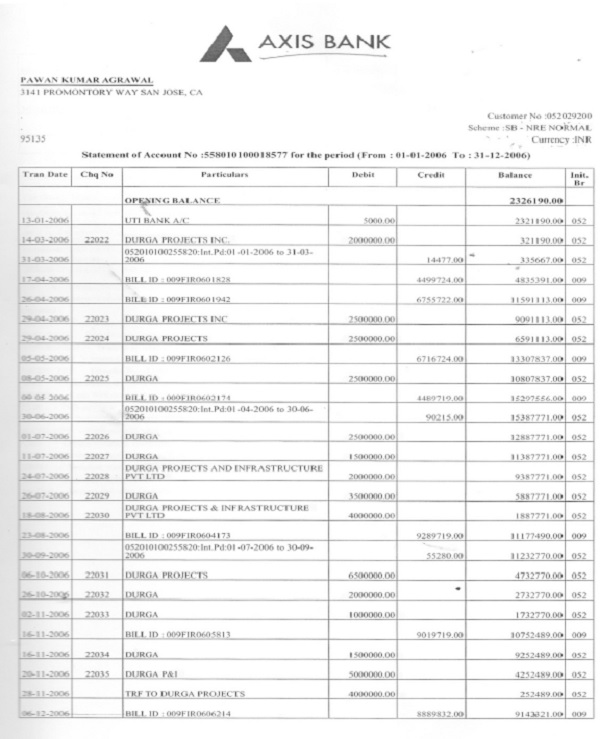
4. We have heard the rival submissions and perused the materials available on record. We have gone through the Axis Bank bearing “customer No.052029200, Scheme SB NRE Normal Currency INR” which is reproduced herein below:
–
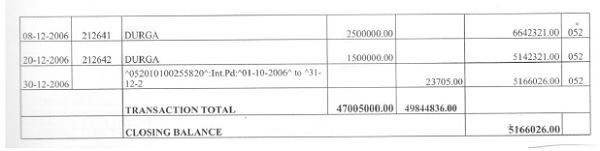
4.1 As seen from the above, the money into this bank account has been deposited in the Indian currency and from that account assessee said to be purchased specified assets. As per section 115E of the Act, the concessional rate of 10% on the capital gain derived from the specified assets, which are acquired out of convertible foreign exchange is available to the assessee. However, as seen from the above SB account, it shows that assessee has deposited Indian rupees to that account and consequently purchased the specified assets and it is not on convertible foreign exchange. It is also mentioned at the right hand top corner of the statement that the currency is in Indian rupees and it is not convertible foreign exchange account. Being so, there is no merit in the argument of ld. A.R. that the assessee has acquired the specified assets out of convertible foreign exchange.
4.2 With regard to placing reliance on the order of the Tribunal in the case of Shashi Parvatha Reddy cited (supra), which is not applicable to the facts of the present case. The issue considered in that case is applicability of concessional rate of tax u/s 115E of the Act on the sale of the bonus shares which has been acquired at free of cost from overseas though original shares were bought by assessee in convertible foreign exchange and the issue was not before the Tribunal with regard to buying of assets through NRE normal currency account in Indian rupees. Accordingly, we do not find any merit in the argument of ld. A.R. and the same is rejected. The grounds raised by the assessee are accordingly rejected.
5. In the result, the appeal of the assessee is dismissed.
Order pronounced in the open court on 14th July, 2023