The Court held that challenges to ITC blocking cannot be entertained at the show cause stage. It ruled that adjudication must first take place based on facts and evidence.
The ruling examines whether imported battery components qualify as parts based on their essential role. It clarifies that items solely used in batteries can be classified under parts of electric accumulators.
The issue involved taxability of management and incentive fees earned by an asset reconstruction company. The tribunal set aside the demand due to incorrect classification and invalid invocation of extended limitation.
The SC reinstated the original stay on CERA audit, holding that the High Court had no sufficient reason to alter long-standing interim relief. It directed expeditious disposal of the writ petitions while continuing protection.
The court held that issuing a single show cause notice for multiple financial years violates GST law. It ruled such “bunching” is impermissible and directed fresh year-wise notices.
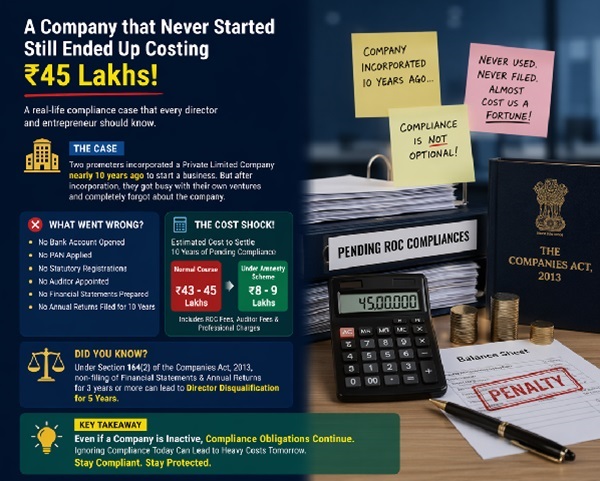
A dormant company faced massive compliance costs due to years of non-filing. The case highlights that inactivity does not eliminate statutory obligations.
The court held that the rectification order failed to satisfy the statutory requirements under Section 161 of the CGST Act. The impugned order was quashed, directing issuance of a fresh speaking order after considering the taxpayer’s reply.
The Tribunal ruled that surrender of tenancy rights occurs only upon receiving new property possession. As possession was given later, tax could not be levied in the current year. The decision ensures correct year of taxation.
The issue involved taxing capital gains from a development agreement in multiple years. The court held the same income cannot be taxed twice and set aside the addition subject to verification.
The Tribunal held that enhancement of income without issuing notice under section 251(2) is invalid. Such action violates principles of natural justice, leading to quashing of enhancement and related penalty directions.