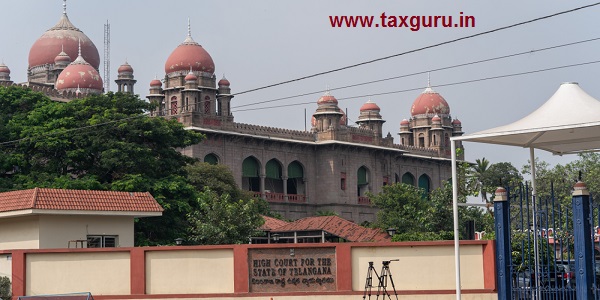
The Court found that retrospective cancellation unfairly impacted customers’ ITC eligibility. It limited the cancellation’s effect to the SCN date, noting the absence of any fraudulent ITC allegation.
The Court permitted a time-barred appeal after holding that the traveller could not be penalized for relying on incorrect legal advice. It directed that the confiscation order be heard on merits.
The Tribunal held that fraud allegations concerning the CIRP could not justify recalling a delay-condonation order. The recall application was dismissed as outside permissible grounds.
High Court upholds Tribunal order allowing re-export of restricted chemical goods without penalty or duty, as importer had no intent to distribute domestically.
The Court held that a penalty under Section 271(1)(c) could not be imposed while the quantum appeal was still pending before the ITAT. The penalty was stayed for being premature under Section 275(1)(a).
Tribunal ruled that Education Cess and Secondary & Higher Education Cess cannot be applied twice when determining duty on EOU DTA clearances. The demand was quashed as calculation method adopted by Department was inconsistent with settled law.
The Court upheld seizure proceedings after finding that goods were transported without an e-way bill. It ruled that generating the document after interception cannot cure the violation, reaffirming earlier precedents.
The Tribunal found that the Customs Broker fulfilled obligations by verifying exporter documents, and no requirement existed for deeper background checks. The suspension order was set aside.
The Court held that even though pre-deposit compliance was disputed, the appellate authority had decided the case on merits. Since the merit findings were not shown to be unreasonable, no interference was warranted.
The Court ruled that the petitioner must challenge the confiscation order through the statutory appellate process, deeming the order served on the date of the judgment and ensuring her right to a personal hearing.