The issue was whether a religious object in the trust deed bars 80G approval. The Tribunal held that where actual activities are purely charitable and no religious expenditure is incurred, approval cannot be denied.
The issue concerned treating business creditors as unexplained cash credits due to non-response to notices. The Tribunal held that corroborative balance sheets and ledger evidence warranted fresh verification, and remanded the matter to the AO.
The Tribunal held that cancellation of the earlier sale deed restored legal ownership to the assessee’s family. Consequently, compensation received on compulsory acquisition qualified for exemption under section 10(37).
The High Court ruled that tax authorities cannot ignore a binding ITAT Special Bench decision under Section 264 merely because the department has appealed it. Judicial discipline requires adherence unless the ruling is stayed or overturned.
The Tribunal examined whether delay in filing the tax audit report warranted penalty under section 271B. It held that liquidation proceedings and the illness and death of the partner constituted reasonable cause under section 273B, justifying deletion of penalty.
The Tribunal examined whether a third-party seized document could be ignored as a dumb document. It held that once cheque entries in the same document matched recorded transactions, related cash entries could not be disbelieved and addition under section 69C was justified.
The Tribunal ruled that penalty proceedings are consequential to assessment. When the assessment issue is pending before the High Court, penalty cannot be enforced.
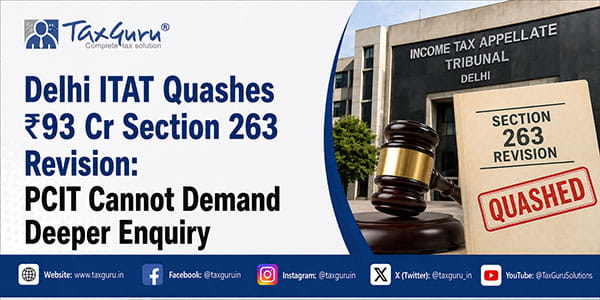
The Tribunal examined whether revision under section 263 could survive when the show-cause notice was issued to an entity that had already ceased to exist due to amalgamation. It held that proceedings against a non-existent entity are void ab initio, rendering the revision order invalid.
The Tribunal reaffirmed that reassessment cannot be based on re-appreciation of facts already scrutinized earlier. Without failure of disclosure, invoking Section 147 beyond four years was invalid.
The Tribunal held that completed assessments cannot be disturbed under section 153C without incriminating material found during search. Additions based solely on third-party data were ruled invalid.