Income Tax : Section 40A of the Income-tax Act restricts the deduction of specified business expenses where statutory conditions are not fulfil...
Income Tax : Understand nuances of claiming tax deductions on payments to relatives in business. Learn how Section 40A(2) of Income Tax Act, 19...
Income Tax : The issue under consideration in this write up is whether disallowance u/s 40(a)(ia), 40A & 43B of Income Tax Act, 1961 are at...
Income Tax : Introduction Section 40A(2) of Income Tax Act, 1961 deals with payments to relatives and associated persons. It provides that wher...
Income Tax : The ITAT held that a transfer pricing adjustment under Section 80-IA(10) cannot be sustained without proving the statutory conditi...
Income Tax : ITAT Mumbai held that disallowance under Section 14A must be computed only with reference to investments that actually yielded exe...
Income Tax : The Delhi ITAT upheld deletion of a ₹14.20 crore addition under Section 68, holding that the AO relied on old search findings an...
Income Tax : Mumbai ITAT ruled that transfer of professional fees between branches through journal entries did not attract TDS liability. The T...
Income Tax : ITAT Bangalore held that NIL taxable income disclosed by an Alternative Investment Fund does not automatically negate its creditwo...
Income Tax : Notification No. 8/2020-Income-Tax- CBDT has notified Other electronic modes by inserting New Income TAx Rule 6ABBA. It also amend...
The tribunal held that where the Assessing Officer conducted exhaustive enquiries and applied his mind in a 153C assessment, revision under section 263 is invalid. A mere change of opinion cannot justify reopening a concluded assessment.
Restoring the Assessing Officer’s findings, the Tribunal ruled that excessive salary to related directors can be disallowed when it substitutes dividend distribution. Reasonableness must be judged against comparable market remuneration.
The Tribunal considered whether disallowance under section 14A was justified merely because exempt income was earned. It ruled that without corresponding investments in the assessee’s books, section 14A cannot be invoked.
The case examined whether reassessment after four years was valid when the issues were already examined in scrutiny. The Tribunal held the reopening invalid as a mere change of opinion and quashed the reassessment.
The Tribunal ruled that AMP expenses incurred by a brand-owning trader cannot be allocated to contract manufacturers without proof of obligation or agreement. Tax incentives enjoyed by related entities alone were held insufficient.
he assessee had already offered the same project income to tax in later years. The Tribunal held that taxing it again earlier would amount to double taxation. Key takeaway: timing disputes cannot justify taxing the same income twice.
ITAT Delhi held that rebate and concession in fees to poor student claimed as donation is in accordance with object of the trust and hence deletion of disallowance of donation by CIT(A) is justifiable. Accordingly, appeal of revenue dismissed.
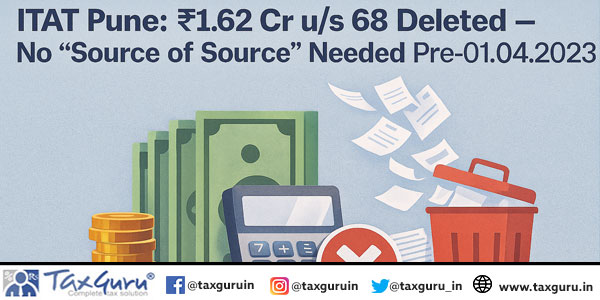
Explains how ITAT Pune held that unsecured loans prior to 01.04.2023 do not require proving the lender’s source of funds, leading to deletion of a ₹1.62 crore addition.
The Tribunal held that cash deposits during demonetisation were supported by genuine cash sales of damaged rice, verified through stock records, GST filings, and insurance assessments. The AO’s allegation of bogus sales under Section 68 was rejected for lack of evidence. The ruling confirms that suspicion cannot override documented business transactions.
The Base Metal Chemicals vs ACIT case examines the validity of large tax additions made by the AO on conversion charges, partner payments, under-invoiced sales, and stock valuation. The key issue was whether the additions were based on commercial reality or mere presumption.