Income Tax : Understand Sections 234A, 234B, 234C, and 234D of the Income Tax Act covering interest on late filing, short payment, delayed adva...
Income Tax : Understand how interest under the Income Tax Act is calculated, including Sections 234A–234D, 244A, and Rule 119A mechanics for ...
Income Tax : Due to any reason, in case the income tax department makes an excess refund to the taxpayer. Such taxpayer will have to return the...
Income Tax : Section 234D in Income Tax Act, 1961 was introduced in the act to cover those situations where the refund was issued to the assess...
Income Tax : The Tribunal allowed deduction of royalty paid for use of a logo, noting that no specific defect was found in the supporting evide...
Income Tax : Tribunal ruled that share transactions cannot be treated as loans without proof of exceptional circumstances. Notional interest ad...
Income Tax : ITAT held that where interest-free funds exceed advances, a presumption arises that such advances are made from own funds. Disallo...
Income Tax : The Tribunal ruled that section 44ADA applies only to specified professions and cannot be invoked for business income covered unde...
Income Tax : Tribunal directed allocation of common head-office expenses (and common income) to eligible industrial undertakings when computing...
ITAT Delhi emphasized that FAR analysis governs segmentation for transfer pricing purposes. Artificial aggregation without disproving segmental allocation cannot justify adjustments.
The tribunal held that every oil well constitutes an independent undertaking eligible for deduction under section 80IB(9). The key takeaway is that profits of individual wells cannot be clubbed merely because they operate under a single contract.
The Tribunal ruled that inadvertent omission of claiming advance tax does not bar interest under Section 244A. Authorities cannot withdraw interest through Section 154 rectification for such mistakes.
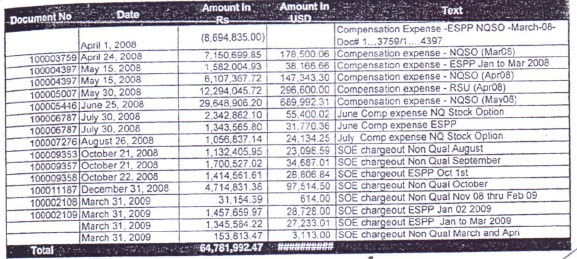
ITAT Bangalore allowed deduction of ₹55.4 crore ESOP expenses under section 37, holding it as employee compensation cost. ESOP costs may be deductible even if cross-charged from parent company.
ITAT held that the assessee had proved identity, creditworthiness, and genuineness of the lender through affidavits, ITR and audited accounts. Since the AO brought no contrary evidence, the Section 69A addition was deleted.
Madras High Court held that payment made for International Private Leased Circuits [IPLC] doesn’t constitute royalty within the expression provided under clause (iva) to Explanation 2 to section 9(1)(vi) of the Income Tax Act. Hence, disallowance u/s. 40(a)(i) of the Income Tax Act not sustained.
The Tribunal ruled that interest could not be disallowed when ample interest-free funds existed and no link was shown between overdraft borrowings and partners’ drawings. The key takeaway is that presumption of utilisation of own funds applies when mixed funds are available.
The Tribunal ruled that offshore supply receipts could not be taxed as the Revenue failed to establish any Permanent Establishment. It confirms that FOB-based offshore execution shields non-residents from Indian taxation.
ITAT held that Section 69 cannot apply when the assessee is not proved to own the cash. Unrebutted affidavits established the source, and mere suspicion cannot justify an addition.
ITAT confirmed Section 263 revision after finding that the AO wrongly allowed delayed PF/ESI contributions despite binding Supreme Court law. The reassessment was deemed erroneous and prejudicial to Revenue.