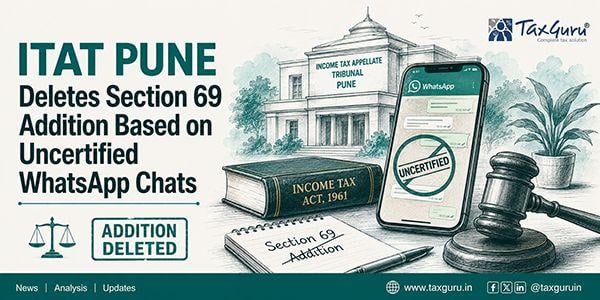
Income Tax : The ruling clarifies that unauthenticated digital chats and screenshots cannot form the sole basis of tax additions without proper...
Income Tax : Judicial rulings clarify that satisfaction for initiating action against other persons in search cases must be recorded promptly. ...
Income Tax : Section 270A penalties must specify the exact misreporting clause. Vague notices invalidate penalties and can restore immunity und...
Income Tax : Understand the three core processes of Indian Income Tax: Rectification of mistakes (Sec 154), the four types of Assessment (Summa...
Income Tax : Understand your legal rights and procedural protections during Income Tax and PMLA raids in India. Learn what to do and what to a...
CA, CS, CMA : Legal opinion sought by NFRA on auditing standards, penalties, and regulatory roles in India. Analysis of NFRA’s powers under th...
Income Tax : Learn about the new block assessment provisions for cases involving searches under section 132 and requisitions under section 132A...
Goods and Services Tax : The Ministry of Finance reports the arrest of a firm's finance head for GST evasion worth Rs 88 crore. Learn about the case and it...
Income Tax : The Central Board of Direct Taxes ( CBDT) has directed re-opening of all cases under the search and seizure label, income-escapin...
Income Tax : The Tribunal held that loan repayment cannot be treated as unexplained cash credit under section 68. The addition was deleted as i...
Income Tax : Reassessment proceedings was invalid for a notice issued beyond three years without the sanction of the prescribed higher authorit...
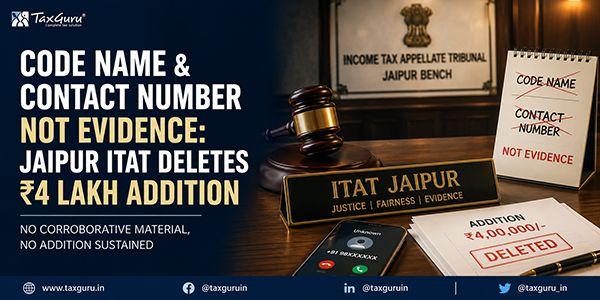
Income Tax : The Tribunal held that unsigned excel sheets without supporting evidence cannot justify additions. It ruled that absence of corrob...
Income Tax : The issue was whether addition can be made based on third-party investigation findings. The Tribunal held that without direct incr...
Income Tax : ITAT Mumbai deletes Section 69 additions holding that third-party excel sheets and statements without corroborative evidence lack ...
Income Tax : Read the order issued by the Central Board of Direct Taxes (CBDT), Ministry of Finance, specifying the scope of the e-Appeals Sche...
Income Tax : Dispute arose between the Department and the assessees with regard to adjustment of such seized/requisitioned cash against advance...
The Tribunal held that mere booking of flats and receipt of token advances do not justify revenue recognition under the Percentage Completion Method without legally enforceable agreements.
The Court ruled that an assessee cannot invoke Section 139(8A) after initiation of assessment proceedings under Section 143(2). It affirmed the disallowance of deductions and held that appeal is the proper remedy.
The Tribunal held that once satisfaction is recorded under Section 153C, assessment for covered years must proceed strictly under that provision. Framing assessment under Section 143(3) was declared jurisdictionally invalid and quashed.
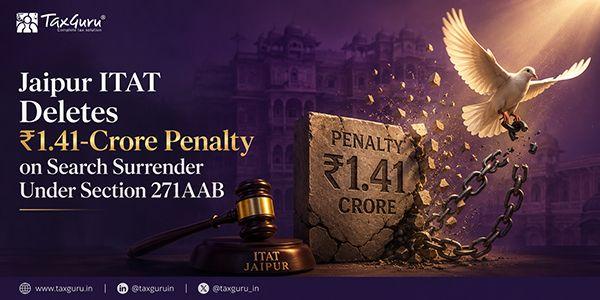
PCIT Vs Sandeep Chandak (Allahabad High Court) These income tax appeals arose from a common order dated 02.01.2017 passed by the Income Tax Appellate Tribunal (ITAT), Lucknow, for the Assessment Year 2014–15, by which penalties imposed under Section 271AAB of the Income-tax Act, 1961 were set aside. The appeals before the Allahabad High Court were […]
Calcutta High Court held that in a proceeding under Section 263 of the Income Tax Act of 1961, the PCIT is empowered to make such inquiry as he deems necessary and inspection of seized assets may very well form part of such inquiry. Accordingly, notice of inspection is duly sustainable and hence writ petition stands dismissed.
The Court held that reassessment based solely on material seized in a third-party search must proceed under Section 153C, not Section 148. Notices issued under the general reassessment provision were set aside.
The High Court ruled that penalty proceedings arising from search and initiated in assessment are governed by appeal-linked limitation rules. A penalty passed within six months from receipt of the tribunal order was held valid.
The Tribunal ruled that Section 69A applies only when the assessee is found to be the owner of money or assets. Mere suspicion or digital communication cannot replace proof of possession or ownership.
The issue was whether purchases recorded by the assessee were genuine. The Tribunal held that seized Tally data and statements proved bogus purchases, justifying full addition.
ITAT Delhi held that satisfaction note recorded before initiation of the proceedings u/s 153C of the Income Tax Act is not a valid satisfaction. Accordingly, proceedings u/s. 153C of the Income Tax Act is quashed since based on invalid satisfaction.