Follow Us:

Case Law Details

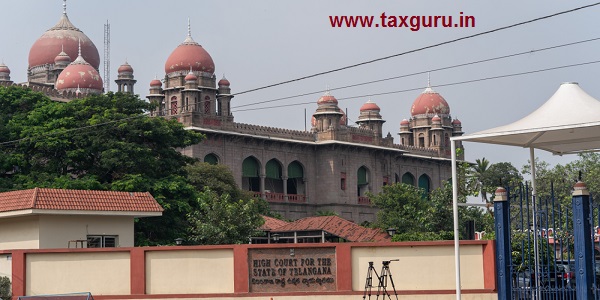
Case Name : Sunbeam Specialty Alloys Limited Vs Deputy Commissioner (Telangana High Court)
Related Assessment Year :
Become a Premium member to Download. If you are already a Premium member, Login here to access.

Sunbeam Specialty Alloys Limited Vs Deputy Commissioner (Telangana High Court)

Telangana HC permits delayed GST appeal & grants interim protection from garnishee proceedings

Introduction

In a consistent line of procedural rulings, the Telangana High Court addressed a case where the taxpayer claimed lack of awareness of the assessment order until recovery proceedings were initiated. The Court facilitated access to appellate remedy by allowing a delayed appeal while granting temporary protection from coercive action.

Case Background

  • The petitioner, M/s. Sunbeam Specialty Alloys Limited, challenged:
    • Order-in-original dated 27.04.2024, and
    • Summary order in Form GST DRC-07 dated 04.05.2024.
  • The dispute related to:
    • Tax period April 2018 to March 2019,
    • Involving tax, interest, and penalty under Section 73 of the CGST Act.
  • The petitioner contended that:
    • It became aware of the liability only upon receipt of garnishee notice (Form GST DRC-13 dated 19.01.2026).
  • Instead of filing an appeal earlier:
    • The petitioner approached the High Court and later sought liberty to file an appeal.

Key Legal Issue

Whether a taxpayer who claims delayed knowledge of GST demand due to recovery proceedings can be allowed to file a delayed statutory appeal with protection from coercive action.

Arguments Presented

Petitioner

  • Submitted that:
    • The demand came to notice only after initiation of garnishee proceedings.
  • Acknowledged:
    • There may be delay in filing appeal.
  • Sought:
    • Liberty to file appeal with condonation of delay.

Respondent (Department)

  • Contended that:
    • The petitioner had the opportunity to file an appeal earlier.
  • Submitted that:
    • The petitioner is free to approach the appellate authority, which can consider all grounds.

Court Observations

  • The Court noted that:
    • The petitioner intends to avail statutory appellate remedy.
  • It refrained from:
    • Examining the merits of the tax demand.
  • Recognized that:
    • Issues relating to delay and merits are best decided by the appellate authority.

Final Judgment

  • The writ petition was disposed of without adjudicating merits.
  • Liberty granted:
    • The petitioner may file an appeal within 2 weeks.
  • Conditions imposed:

1. Filing of delay condonation application.

2. Payment of statutory pre-deposit.
  • Directions issued:
    • The appellate authority shall:
      • Consider delay, and
      • Decide the appeal on merits if satisfied.
  • Interim protection granted:
    • No coercive action (including garnishee proceedings) for 2 weeks.
  • No order as to costs.

Author’s Analysis (Practical Takeaways)

1. Garnishee notice often triggers litigation
Many taxpayers become aware of liabilities only when bank recovery begins (DRC-13).

2. Delayed awareness can support condonation
Courts allow appeal route if delay is linked to lack of knowledge.

3. Section 107 remains the primary remedy
Even in recovery situations, taxpayers must approach appellate authority first.

4. Interim protection is time-bound
The 2-week shield is critical—failure to act can revive recovery actions.

5. Pre-deposit is unavoidable
Filing appeal requires statutory compliance, regardless of delay.

6. Merits left open intentionally
The Court ensures:

    • No prejudice to either party,
    • Full adjudication at appellate level.

7. Compliance monitoring is essential
Businesses should regularly check GST portal to avoid:

    • Surprise demands,
    • Recovery shocks.

Conclusion

This ruling reinforces a recurring theme in GST litigation—procedural discipline with equitable relief. While the Telangana High Court does not bypass statutory mechanisms, it ensures that taxpayers are not left remediless due to delayed awareness. The judgment underscores the importance of timely action while also recognizing practical challenges faced by taxpayers in GST compliance.

FULL TEXT OF THE JUDGMENT/ORDER OF TELANGANA HIGH COURT

Heard Mr. Mohammed Rafi, learned counsel for the petitioner and Mr. Dominic Fernandes, learned Senior Standing Counsel for Central Board of Indirect Taxes and Customs (CBIC) appears for respondent Nos.1 and 2.

2. The writ petition has been preferred against the order-in-original dated 27.04.2024 along with summary of order in Form GST DRC-07 dated 04.05.2024 passed under Section 73 of the Central Goods and Services Tax Act, 2017, for the tax period April, 2018 to March, 2019 imposing the tax, penalty and interest.

3. The petitioner has approached this Court alleging that it has come to know about the liability only upon the issuance of the garnishee notice in Form GST DRC-13 on 19.01.2026.

4. However, after some arguments, learned counsel for the petitioner seeks liberty to the petitioner to prefer an appeal against the order-in-original. He submits that some delay might have been occurred in approaching the appellate authority and therefore, he may be directed to consider it sympathetically.

5. Learned Senior Standing Counsel for CBIC submits that the petitioner was at liberty to prefer an appeal against the order-in-original and DRC-07 taking all the grounds as are available in law and on facts before the appellate authority in respect of the subject tax period.

6. However, upon hearing the learned counsel for the parties, since the petitioner seeks liberty to prefer an appeal, we do not wish to comment on the merits of the contentions raised by the parties.

7. We grant liberty to the petitioner to prefer an appeal within a period of two weeks with statutory pre-deposit and a delay condonation application. The petitioner may take all such grounds of law and facts in the memo of appeal as are available to it. Needless to say, the appellate authority if is satisfied on the point of delay, proceed to decide the appeal on merits in accordance with law. During the period of two weeks within which the petitioner has to file the appeal, no coercive steps be taken against the petitioner pursuant to the impugned garnishee notice.

8. The Writ Petition is disposed of with the aforesaid liberty. However, there shall be no order as to costs.

Miscellaneous applications pending, if any, shall stand closed.

Author Bio

Adv Akruti Goyal, a practicing CA handling GST compliance from 2015-2021. Qualified as a lawyer in 2019 and since 2022 enrolled as a practicing advocate with core in GST litigation and Income Tax matters . Appearing before all forums i.e., Adjudicating authorities, Appellate authorities, Appellate View Full Profile

My Published Posts

No GST Recovery for Two Weeks as Court Permits Delayed Appeal Filing: Telangana HC GST Writ Withdrawn to File Appeal, Telangana HC Allows Delay Condonation Plea GST Appeal Allowed Despite Delay, Telangana HC Grants Liberty to File Appeal Telangana HC allows delayed GST appeal despite challenge to unsigned SCN & order GST Parallel Proceedings Valid if Subject Matter Differs: Telangana HC View More Published Posts

Join Taxguru’s Network for Latest updates on Income Tax, GST, Company Law, Corporate Laws and other related subjects.

Leave a Comment

Your email address will not be published. Required fields are marked *

Ads Free tax News and Updates
Search Post by Date
May 2026
M T W T F S S
 123
45678910
11121314151617
18192021222324
25262728293031