Case Law Details
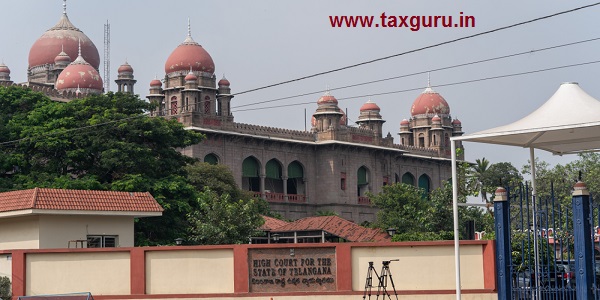
Vasavi Nirmaan Vs Joint Commissioner of Central Tax (Telangana High Court)
Telangana High Court allows withdrawal of writ with liberty to file GST appeal and seek delay condonation
Introduction
In another procedural ruling, the Telangana High Court dealt with a taxpayer who initially invoked writ jurisdiction but later chose to pursue the statutory appellate remedy. The Court permitted withdrawal of the writ petition while safeguarding the taxpayer’s right to appeal by allowing condonation of delay for time spent before the High Court.
Case Background
- The petitioner, Vasavi Nirmaan, challenged:
- Order-in-Original dated 30.07.2025, and
- Corresponding Form GST DRC-07 dated 08.08.2025.
- The petitioner alleged that the order was:
- Arbitrary, illegal, without jurisdiction, and
- In violation of principles of natural justice and constitutional provisions.
- During the course of hearing:
- The petitioner chose to withdraw the writ petition to avail the statutory appeal remedy.
- The dispute involved:
- Factual examination of a revenue-sharing arrangement between the petitioner and a developer.
Key Legal Issue
Whether a taxpayer withdrawing a writ petition should be allowed to file a statutory appeal with condonation of delay, especially when time was spent pursuing the writ remedy.
Arguments Presented
Petitioner
- Sought permission to:
- Withdraw the writ petition.
- Requested:
- Liberty to file an appeal, and
- A direction that time spent in writ proceedings be considered for condonation of delay.
Respondent (Department)
- Submitted that:
- The dispute involves factual issues, particularly revenue-sharing arrangements.
- Implied that:
- The matter is more appropriate for appellate adjudication rather than writ jurisdiction.
Court Observations
- The Court noted that:
- The petitioner voluntarily chose to withdraw the writ petition.
- It recognized that:
- The dispute requires factual investigation, which is better suited for appellate forums.
- The Court avoided:
- Any examination of merits of the case.Final Judgment
- The writ petition was disposed of as withdrawn.
- Liberty granted:
- The petitioner may file an appeal before the appellate authority.
- Directions issued:
1. Appeal must be filed within 2 weeks.
2. Statutory pre-deposit must be complied with.
3. The appellate authority may:
1. Condone delay attributable to time spent in writ proceedings.
2. The petitioner is free to:
- Raise all legal and factual grounds in appeal.
- No order as to costs.
Author’s Analysis (Practical Takeaways)
1. Writ withdrawal is a strategic reset
Taxpayers can shift to appellate remedy if they realize writ is not the ideal route.
2. Time spent in court can be protected
Courts may allow condonation of delay for bona fide litigation before the wrong forum.
3. Factual disputes belong in appeals
Issues like revenue-sharing arrangements require detailed examination, not writ intervention.
4. Act within court-granted timelines
The 2-week window is critical—missing it may weaken condonation arguments.
5. Pre-deposit remains mandatory
Even when delay is condoned, statutory deposit conditions must be met.
6. No merits = clean slate
Since the Court did not comment on merits,
- The appellate authority will examine the case independently.
7. Litigation planning matters
Choosing the correct forum at the outset can save:
- Time,
- Costs, and
- Procedural complications.
Conclusion
This ruling reinforces the importance of choosing the right procedural path in GST litigation. By allowing withdrawal with protective directions on delay condonation, the Telangana High Court ensures fairness while maintaining the hierarchy of remedies. Taxpayers should carefully assess whether their disputes involve factual complexities before invoking writ jurisdiction, and be ready to pivot strategically when required.
FULL TEXT OF THE JUDGMENT/ORDER OF TELANGANA HIGH COURT
Learned counsel Sri P.Venkata Prasad, representing M/s. P.V.Associates, appears for the petitioner.
Sri D.Raghavendar Rao, learned Senior Standing Counsel for Central Board of Indirect Taxes and Customs, appears for respondent No.1.
Sri Dominic Fernandes, learned Senior Standing Counsel for Central Board of Indirect Taxes and Customs, appears for respondent No.2.
Learned counsel Ms. Bhagyasri, representing Sri N.Bhujanga Rao, learned Deputy Solicitor General of India, appears for respondent No.3.
2. The writ petition is filed seeking the following relief:
“For all the reasons stated in the accompanying affidavit, it is prayed that this Hon’ble Court may be pleased to issue a writ, order or direction more particularly one in the nature of a Writ of Mandamus declaring that impugned Order In Original No.51/GST/2025-26Adjn. (JC) — HYD – GST dated 30-07-2025 along with Form DRC 07 bearing Ref. No.ZD3608250112897, ZD360825011297A and ZD360825011306J dated 08-08-2025 passed by the Respondent No.1 under the provisions of CGST/TGST Act, 2017 as being void, arbitrary, illegal, without jurisdiction, violative of the principles of natural justice, apart from being violative of Articles 14, 19(1)(g) and 265 of the Constitution of India, and to consequently set aside the same and pass such further or other order(s) as this Hon’ble Court may deem fit and proper in the circumstances of the case.”
3. After some arguments, learned counsel for the petitioner seeks permission of this Court to withdraw the writ petition in order to avail the remedy of appeal. He submits that an observation may be made that the time spent in prosecuting the writ petition may be condoned by the appellate authority.
4. Learned counsel for respondents No.1 and 2 also submit that the issue raised in the writ petition revolves around the factual investigation on the revenue sharing arrangement between the petitioner and the developer.
5. Be that as it may, as the petitioner seeks to withdraw the writ petition with liberty to avail the remedy of appeal, the writ petition is disposed of as withdrawn without getting into merits of the matter with liberty as prayed for. If the appeal is filed within two weeks with statutory pre-deposit, the delay, if any caused due to prosecution of the writ petition before this Court, may be condoned by the appellate authority. It would be open for the petitioner to raise all grounds on law and facts before the appellate authority. There shall be no order as to costs.
Miscellaneous applications pending, if any, shall stand closed.