
Courts: Bombay High Court
Find latest Bombay High Court judgments, orders and case laws on Income Tax, GST, Customs, Company Law, FEMA, IBC and other tax and commercial matters.

Bombay HC Grants Fresh Section 264 Hearing Subject to ₹1 Lakh Costs on ₹4.24 Crore Addition

CRS Services IGST Demand Against Singapore Airlines Requires Deeper Examination: Bombay HC

Section 144B Procedure Mandatory; Non-Compliant Assessment Is Non-Est: Bombay HC
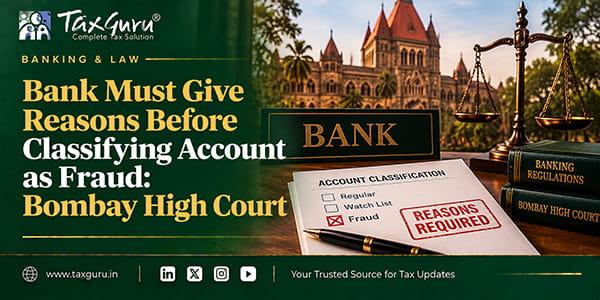
Bank Must Give Reasons Before Classifying Account as Fraud: Bombay High Court

VCF Trust Registration Covers Separate Schemes for Section 10(23FB): Bombay HC
APA-Settled Transfer Pricing Adjustment Cannot Trigger Section 270A Penalty: Bombay HC
Film Copyright Licensing Is Not IT Software; GST Orders Quashed: Bombay HC

Unexplained 12-Year Delay Makes Service Tax SCN Unsustainable: Bombay HC
Minority Cannot Seek Society Bifurcation to Frustrate Redevelopment: Bombay HC

Registrar Must Verify Independence Before Registering Two Societies: Bombay HC
Society Bifurcation Requires Clear Division of Property and Amenities: Bombay HC

Registrar Cannot Reserve Separate Society Right Contrary to Promoter’s Undertaking: Bombay HC
Six-Monthly MVAT Payment Cannot Attract Interest When Rules Permit It: Bombay HC
Parallel Scrutiny After Section 170A Modified Return Invalid: Bombay High Court
Bombay High Court judgments and orders form an important body of Indian tax, corporate and commercial jurisprudence. This TaxGuru page compiles Bombay High Court case laws concerning Income Tax, GST, Customs, Company Law, FEMA, insolvency, banking, labour and employment, reassessment, penalties and other legal matters. Taxpayers, companies, Chartered Accountants, advocates and other professionals can use this collection to research important judicial precedents and follow developments affecting taxation and business law. TaxGuru brings together recent and significant earlier Bombay High Court decisions with case summaries, analysis and important legal principles. The page provides a convenient resource for locating judgments and understanding how the Court has interpreted statutory provisions and addressed significant tax, corporate, commercial and regulatory disputes.

