
Courts: Bombay High Court
Find latest Bombay High Court judgments, orders and case laws on Income Tax, GST, Customs, Company Law, FEMA, IBC and other tax and commercial matters.

Supplies to SEZ May Qualify as Exports for CENVAT Refund: Bombay HC Remands Matter
Higher Profits Alone Cannot Invoke Section 80-IA(10) to Restrict Section 10B Deduction: Bombay HC

Bombay HC Quashes Final Assessment for Failure to Issue Draft Order Under Section 144C

Bombay HC Upholds Deletion of Section 68 Addition as Creditworthiness Was Established
Bombay HC Upholds ITAT Order Quashing Reassessment for Lack of Independent Reasons to Believe

Bombay HC Quashes Time-Barred Section 148 Reassessment for AY 2015-16
Bombay HC Restricts Bogus Purchase Addition to 8% as Sales Were Accepted
Bombay HC Quashes GST Show Cause Notice and Order for Breach of Section 73 Time Gap
Bombay HC Quashes MVAT Attachment Over Secured Asset, Upholds Bank’s Priority Under SARFAESI

Bombay HC Upholds Secured Creditor’s Priority Over Sales Tax Dues Under SARFAESI
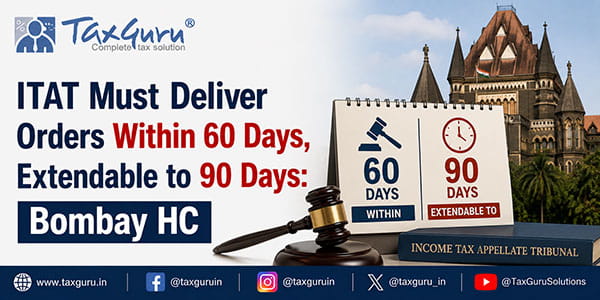
ITAT Must Deliver Orders Within 60 Days, Extendable to 90 Days: Bombay HC
Bombay HC Quashes Section 148 Reassessment for Ignoring Registered Sale Deed
Bombay HC Quashes Section 148 Reassessment for Incorrect Facts & Invalid Approval
Bombay HC Quashes Section 148 Reassessment for Incorrect Facts & Non-Application of Mind
Bombay High Court judgments and orders form an important body of Indian tax, corporate and commercial jurisprudence. This TaxGuru page compiles Bombay High Court case laws concerning Income Tax, GST, Customs, Company Law, FEMA, insolvency, banking, labour and employment, reassessment, penalties and other legal matters. Taxpayers, companies, Chartered Accountants, advocates and other professionals can use this collection to research important judicial precedents and follow developments affecting taxation and business law. TaxGuru brings together recent and significant earlier Bombay High Court decisions with case summaries, analysis and important legal principles. The page provides a convenient resource for locating judgments and understanding how the Court has interpreted statutory provisions and addressed significant tax, corporate, commercial and regulatory disputes.

