
Courts: Tamilnadu AAR
Read latest Tamilnadu AAR advance rulings on GST classification, taxability, ITC, exemptions, valuation and other GST issues.
Goods and Services Tax
Goods and Services Tax
Aquaculture Gear Boxes Taxable at 18% GST Under HSN 84834000: Tamil Nadu AAR
Goods and Services Tax
Goods and Services Tax
Weekly Market Fee Collection by Town Panchayat Not GST Supply: Tamil Nadu AAR
Goods and Services Tax
Goods and Services Tax
Semen Sorting Services Classified Under SAC 998349, Taxable at 18% GST: AAR Tamilnadu
Goods and Services Tax
Goods and Services Tax
ITC on Land Survey Charges for Golf Course Afforestation Land Denied: Tamil Nadu AAR
Goods and Services Tax
Goods and Services Tax
AAR Denies GST Exemption for Burial Ground Maintenance as Non-Composite Supply
Goods and Services Tax
Goods and Services Tax
AAR Denies GST Exemption for TNUHDB Upkeep Services as Non-Composite Supply
Goods and Services Tax
Goods and Services Tax
AAR Tamil Nadu Denies 5% GST as Compostable Bags Are Not Biodegradable
Goods and Services Tax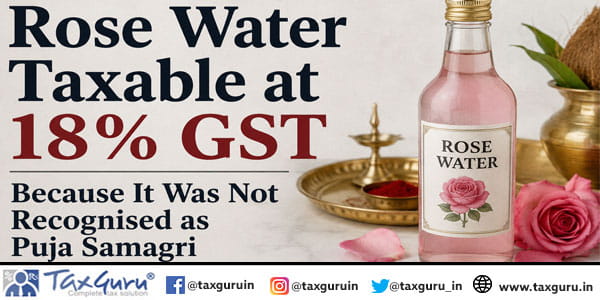
Goods and Services Tax
Rose Water Taxable at 18% GST Because It Was Not Recognised as Puja Samagri
Goods and Services Tax
Goods and Services Tax
18% GST applies on Temple Hair Collection Licence Due to Commercial Activity
Goods and Services Tax
Goods and Services Tax
Advance Ruling Application Under GST Disposed as Withdrawn on Applicant’s Request
Goods and Services Tax
Goods and Services Tax
GST Payable on Foreign Director’s Commission as Service Treated as Import of Service
Goods and Services Tax
Goods and Services Tax
Employee Transport Recovery Not Taxable as It Is Not in Course of Business: AAR Tamilnadu
Goods and Services Tax
Goods and Services Tax
GST Not Applicable on Solar Power Supply Due to Exemption for Electrical Energy: AAR Tamilnadu
Goods and Services Tax
Goods and Services Tax
Fan Drive Assembly Classifiable as Fluid Coupling Due to Functional Characteristics: AAR Tamilnadu
Tamilnadu AAR contains advance rulings of the Authority for Advance Ruling under GST in Tamil Nadu. Decisions may concern classification, taxability, GST rates, input tax credit, exemptions, valuation and other eligible questions. Taxpayers, businesses and GST professionals can use this archive to research Tamil Nadu GST advance rulings.

