
Type: Judiciary
Read latest judgments, orders and case laws from Supreme Court, High Courts, tribunals and appellate authorities on tax, corporate and commercial laws.


Ruled Paper Remains Under Heading 4802; NIL GST Depends on Actual End-Use: WBAAR
HSN 4802 Paper for Exercise Books Qualifies for GST Exemption: WBAAR

Overseas Student Recruitment Is Intermediary Service Under GST: Kerala AAR
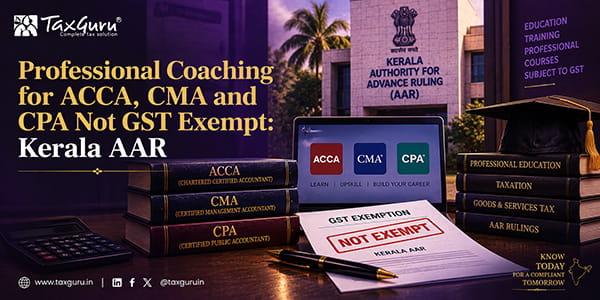
Professional Coaching for ACCA, CMA and CPA Not GST Exempt: Kerala AAR

Government-Paid MEDISEP Insurance Premium Exempt From GST: Kerala AAR
NSQF-Aligned Junior Software Developer Course Exempt From GST: Kerala AAR
Turmeric Extract Nutraceutical Taxable at 5% GST: Kerala AAR

Home Healthcare GST Advance Ruling Application Dismissed as Withdrawn: Kerala AAR

Customer-Supplied Paper Printing Is Job Work Under SAC 9988: Kerala AAR
KIIFB-Funded Project Management Services Attract 18% GST: Kerala AAR
Judiciary is TaxGuru’s extensive collection of judgments, orders and case-law analysis concerning taxation, corporate, commercial and regulatory laws. The archive includes decisions of the Supreme Court, High Courts, ITAT, CESTAT, GST appellate forums, NCLT, NCLAT and other judicial or quasi-judicial authorities covered by TaxGuru. Readers can research decisions involving Income Tax, GST, Customs, Company Law, insolvency, FEMA, SEBI and other legal subjects. Chartered Accountants, advocates, tax professionals, companies and researchers can use this category to follow judicial developments, locate relevant precedents and understand important legal principles emerging from courts and tribunals.

