The High Court ruled that refund claims arising from unconstitutional GST levies are not restricted by the limitation provisions under Section 54 of the GST Act. Interest at 6% was directed from the date of tax payment till refund.
The Punjab and Haryana High Court held that a Section 73 GST notice lacking specific details, computations, and supporting material is legally unsustainable. The ruling emphasizes that vague allegations violate principles of natural justice and deprive taxpayers of an effective opportunity to respond.
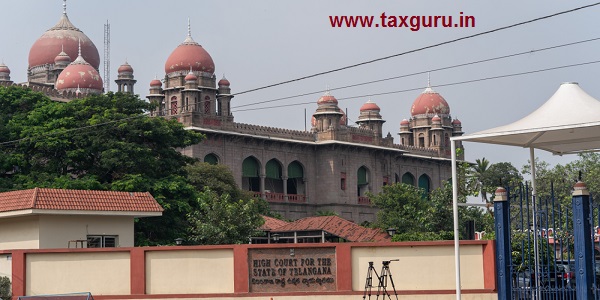
The Telangana High Court refused to interfere with a faceless income tax assessment order despite claims of medical hardship and lack of opportunity. The Court held that repeated adjournments and failure to seek video conferencing weakened the taxpayer’s natural justice argument.
The Telangana High Court set aside the appellate order rejecting the GST appeal and remanded the matter for fresh adjudication after granting an opportunity of hearing. The Court held that principles of natural justice must be followed even in GST appellate proceedings.
The Telangana High Court directed GST authorities to accept a manual application for revocation of cancelled GST registration. The Court granted relief where the GST portal did not permit online filing due to expiry of the prescribed time limit.
The Telangana High Court permitted the taxpayer to file a delayed GST appeal against the Order-in-Original and DRC-07 summary order. The Court directed the appellate authority to consider delay condonation sympathetically since the taxpayer had been pursuing writ proceedings before the High Court.
The ITAT Surat held that revision under Section 263 was invalid because the Assessing Officer had already conducted inquiries and examined relevant records. Mere discrepancies in Insight Portal GST data were held insufficient to render the assessment order erroneous.
ITAT Surat restored reassessment appeals to the CIT(A) after observing that the assessee should receive one final opportunity to present evidence. The Tribunal imposed costs due to partial compliance before the appellate authority.
Delhi ITAT directed exclusion of a comparable company engaged in video conferencing solutions after noting that the DRP had already found it functionally incomparable to the assessee’s software distribution business.
Lucknow ITAT held that disallowance under Section 14A read with Rule 8D cannot exceed the exempt dividend income earned by the assessee. The Tribunal restricted the addition to the actual exempt income amount.