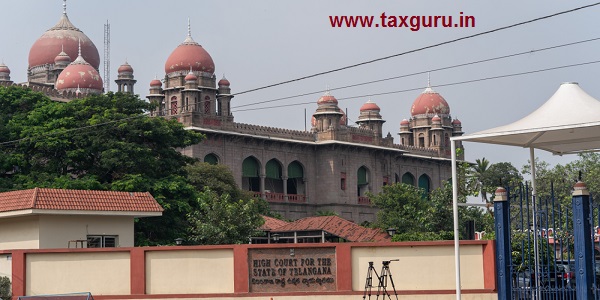
The Madras High Court held that reassessment notices required to be issued by the Faceless Assessing Officer are invalid if issued by the Jurisdictional Assessing Officer. The Court followed the Bombay High Court ruling in Hexaware Technologies.
Tribunal observed that where goods are sold on FOR destination basis, the buyer’s premises may constitute the place of removal. If established on facts, CENVAT credit on outward transportation services would be admissible.
The Madras High Court held that reassessment notices required to be issued by the Faceless Assessing Officer are invalid if issued by the Jurisdictional Assessing Officer.
The Jharkhand High Court held that retrospective insertion of Section 147A removed the jurisdictional challenge against reassessment notices issued under Sections 148 and 148A. The petition was disposed of without quashing the proceedings.
The High Court ruled that deduction of broken period interest on HTM securities was a settled legal issue and could not justify reopening of assessment. The reassessment proceedings were set aside as lacking legal basis.
Bangalore ITAT ruled that only solar days and not cumulative man-days should be considered while determining the existence of a Permanent Establishment under the India-Saudi Arabia DTAA. Since the assessee’s stay was only 90 days, no PE was held to exist in India.
Mumbai ITAT held that business receipts from an Indian associated enterprise were not taxable in India because the assessee had no Permanent Establishment under the India-UAE DTAA. The Tribunal ruled that mere provision of personnel did not automatically create a PE.
The Commission observed that patients commonly seek treatment across Delhi-NCR and therefore defined the relevant geographic market broadly rather than limiting it to Delhi alone.
Competition Commission of India held that hospital rooms provide medical infrastructure, emergency support, and trained healthcare staff, making them fundamentally different from hotel accommodations. It therefore rejected findings based on comparisons between hospital room rents and hotel tariffs.
ITAT Hyderabad held that addition of Rs. 13 lakh under Section 69A through rectification proceedings exceeded the scope of Section 154. The Tribunal ruled that issues requiring detailed factual examination cannot be treated as mistakes apparent from record.