Income Tax : Income without satisfactory explanation is taxed at a special high rate under Section 115BBE. The provisions place strict liabilit...
Income Tax : Courts have clarified that purchases cannot be disallowed without proper evidence. Genuine transactions supported by documents can...
Income Tax : ITAT held that section 69 cannot be invoked where purchases are duly recorded in books and paid through banking channels, making t...
Income Tax : Detailed overview of penalties under various sections of the Income Tax Act, covering defaults in tax payment, reporting, document...
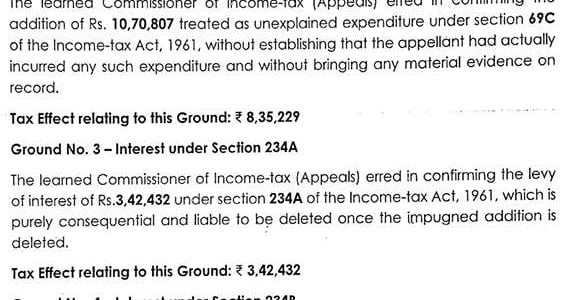
Income Tax : Delhi ITAT deleted a 69C unexplained expenditure addition for alleged bogus purchases, ruling that when corresponding sales are ac...
Income Tax : The Tribunal held that disallowance of interest cannot be finalized when the validity of underlying loans is still under appeal. I...
Income Tax : The issue was whether purchases could be treated as bogus based on investigation reports. ITAT held that when documentary evidence...
Income Tax : The Tribunal held that purchases cannot be treated as bogus when supported by invoices, bank payments, and GST records. It ruled t...
Income Tax : The issue was whether income from hybrid seed production on leased land qualifies as agricultural income. The Tribunal held that o...
Income Tax : The issue was whether reassessment is valid without proper service of notice. The Tribunal held that absence of valid service make...
The Tribunal held that remanding an assessment under the amended section 251(1)(a) is legally valid. The key takeaway is that appellate remand powers now have clear statutory backing.
The Tribunal ruled that when purchases are disallowed as non-genuine without questioning the source of payment, section 69C cannot be invoked. A plausible disallowance under section 37(1) cannot be revised under section 263 merely to change the charging provision.
CIT(A) remanded a completed scrutiny assessment even after the AO accepted additional evidence in remand. ITAT ruled this exceeded statutory powers and restored the case to CIT(A) for a merits-based decision.
The issue was whether screen-based stock exchange trades can be ignored due to alleged exit providers. The Tribunal ruled that non-response of buyers and weak financials of counterparties do not invalidate genuine exchange-routed transactions.
The Tribunal confirmed deletion of additions where the AO made no effort to verify consignees, transporters, or stock movement. Proper documentation and bank-received sale proceeds proved transaction genuineness.
The issue was whether the full value of alleged bogus purchases could be added to income. The Tribunal upheld that only the profit element embedded in such purchases is taxable, not the entire purchase value.
The case examined whether general search statements can justify additions under section 68. The Tribunal held that without a cash trail or independent enquiry, such statements cannot override documentary proof.
The Tribunal examined whether Section 153A could be applied to the search year itself. It held that invoking Section 153A for the wrong assessment year was invalid, rendering the assessment void.
The Tribunal ruled that cash deposits arising from regulated liquor sales are a normal business incident. Where bank reconciliations explain the source, Section 69A cannot be invoked.
The dispute arose from purchases made from vendors with weak tax profiles. The Tribunal held that vendor defaults do not justify section 69C when the assessee proves the source and recording of expenditure.