Income Tax : The framework outlines mandatory disclosures and timelines for opting into safe harbour. Key takeaway: strict compliance is essent...
Income Tax : The new form consolidates multiple income disclosures into one, enabling accurate TDS deduction. Key takeaway: unified reporting r...
Income Tax : A detailed overview of updated TDS provisions mapping old and new sections, rates, and thresholds. Helps taxpayers understand comp...
Income Tax : The new tax law addresses long-standing concerns over complexity by reducing provisions and simplifying language. It introduces st...
Income Tax : The case highlights how the new framework enforces stricter compliance using data analytics. It underscores that incorrect declara...
Income Tax : The issue was complexity in the existing tax law. It was clarified that the new Act simplifies structure by reducing sections and ...
Income Tax : This webinar breaks down the major structural and conceptual changes introduced in the new Income Tax Act, 2025. It helps professi...
Income Tax : The government replaced the six-decade-old law with the Income-tax Act, 2025. The reform aims to simplify compliance through clear...
Income Tax : A free live workshop will discuss the structure and practical implications of the proposed Income-tax Act, 2025 and amendments und...
Income Tax : The amendments focus on reassessment timelines, electronic communication, and procedural clarity. The changes aim to reduce litiga...
Income Tax : The Supreme Court set aside the NCLAT order for relying on a non-existent quasi-judicial income tax order. The key takeaway is tha...
Income Tax : Rule 81 prescribes dataset construction, weighted averages, and a 35th–65th percentile arm’s length range when multiple compar...
Income Tax : The latest amendment excludes income arising from transfer of pre-2017 investments from GAAR scrutiny. It reinforces the protectio...
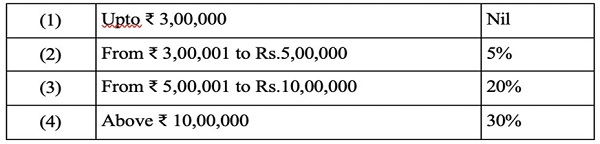
Income Tax : The Finance Act, 2026 prescribes income-tax rates, surcharge, and cess for the assessment year 2026–27. It establishes the legal...
Income Tax : The circular introduces mandatory Form I and Form II for SWFs to claim tax exemptions. The ruling ensures structured application a...
Income Tax : The notification requires payers to generate UINs and file quarterly details of declarations even where no tax is deducted. It enh...
Income Tax : CBDT introduced Income-tax Rules, 2026 to operationalize the Income-tax Act, 2025. The rules standardize procedures on valuation, ...
If activities have already commenced, Form 104 becomes non-est and is not processed. The ruling enforces strict eligibility criteria for provisional registration. This prevents misuse of simplified registration provisions.
The revised Form 103 incorporates digital payment mechanisms for settling tax demands. The ruling reflects modernization of tax administration. This enhances ease of compliance and transparency in payment processes.
Form 102 provides a mechanism to claim TDS credit where deduction and income reporting occur in different years. It ensures taxpayers do not lose legitimate credit.
The new Form 100 replaces outdated audit reporting formats to improve compliance and clarity. It standardizes reporting for special audits directed by tax authorities.
The new law mandates filing appeals within 30 days, with delay allowed only upon justified condonation. The ruling emphasizes timely compliance and procedural discipline. This ensures faster resolution of tax disputes.
The government introduced new PAN forms to simplify application procedures and reduce errors. The update ensures better user experience and improved verification processes.
Form 130 becomes the new TDS certificate from April 2026 under the 2025 Act. The key takeaway is that the format changes, but the core purpose remains the same.
The law defines business broadly to include trade, commerce, and even single transactions. The key takeaway is that intent and nature of activity determine tax treatment.
The requirement mandates specified funds and brokers to report non-resident investor details quarterly. It ensures transparency and enables monitoring of cross-border transactions.
The issue relates to refusal of taxpayer information requested by an authorised authority. The framework allows rejection where disclosure is not in public interest, ensuring confidentiality safeguards.