Case Law Details
Smt. Devabhaktuni Vijaya Lakshmi Vs Assessing Officer (Telangana High Court)
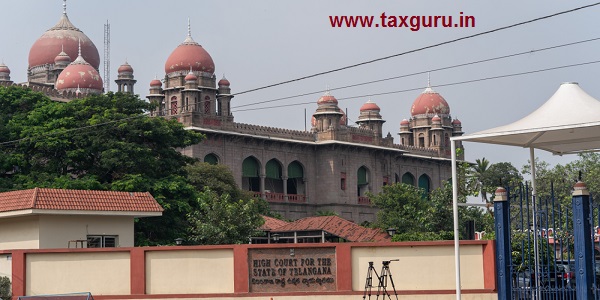
High Court of Telangana Dismisses Writ Petition for Lack of Territorial Jurisdiction in CGST Matter
The High Court for the State of Telangana recently addressed a Writ Petition involving an Order-in-Original issued by the CGST authorities in Ajmer. The court’s decision highlights the critical importance of filing legal challenges within the appropriate territorial jurisdiction.
Case Overview: Smt. Devabhaktuni Vijaya Lakshmi vs. Assessing Officer, CGST Division
The petitioner, Smt. Devabhaktuni Vijaya Lakshmi, filed a Writ of Certiorari-cum-Mandamus seeking to quash an Order-in-Original dated September 18, 2024. This order, passed by CGST Respondents 1 and 2, fastened tax liability upon the petitioner regarding transactions she claimed she had no involvement in or benefit from.
Key reliefs sought by the petitioner included:
- Quashing the tax liability as arbitrary and violative of Articles 14 and 21 of the Constitution.
- Directing coordination between the Telangana Cyber Crime Police and CGST authorities to identify the actual perpetrators.
- Restraining authorities from initiating coercive recovery or penal actions pending a full investigation.
The Jurisdictional Hurdle
During the proceedings before the Bench comprising Chief Justice Sri Aparesh Kumar Singh and Justice G.M. Mohiuddin, a fundamental issue of jurisdiction arose.

The court observed that:
- The Order-in-Original was passed by the Central Goods and Services Tax, Division-J, Ajmer.
- Crucially, the court found that no part of the cause of action arose within the territorial jurisdiction of the Telangana High Court.
The Court’s Ruling
Following arguments on the matter of jurisdiction, the petitioner’s counsel requested permission to withdraw the petition to approach the appropriate legal forum.
The High Court ordered the following:
- Dismissal as Withdrawn: The writ petition was dismissed as withdrawn.
- Liberty to File Elsewhere: The court granted the petitioner liberty to approach the appropriate authority or court of law that holds jurisdiction over the subject matter.
- Closure of Applications: All pending miscellaneous applications were closed.
Key Takeaways for Tax Practitioners
1. Territorial Jurisdiction is Paramount: Even if a petitioner is based in one state (e.g., Telangana), they cannot challenge a tax order in their local High Court if the issuing authority and the cause of action are located entirely in another state (e.g., Rajasthan).
2. Order-in-Original Challenges: Challenges to CGST orders must be filed in the forum where the order was adjudicated or where the underlying tax events occurred.
3. Constitutional Remedies: While Writ Petitions under Article 226 are powerful tools against “arbitrary” tax liabilities, they must still satisfy the basic procedural requirement of forum conveniens.
Case Details:
- Court: High Court for the State of Telangana
- Case No: Writ Petition No. 11370 of 2026
Date of order: April 16, 2026
FULL TEXT OF THE JUDGMENT/ORDER OF TELANGANA HIGH COURT
Sri K.B. Narasimhulu, learned counsel represents Sri G. Venkata Reddy, learned counsel for the petitioner.
Sri D. Raghavendar Rao, learned Senior Standing Counsel for Central Goods and Services Tax appears for respondent Nos.1 and 2.
Sri Mahesh Raje, learned Government Pleader for Home appears for respondent No.3.
2. This writ petition is filed with the following relief:
“For the aforesaid facts and circumstances, it is most respectfully prayed that this Hon’ble Court may be pleased to issue an appropriate writ, order or direction, particularly a Writ of Certiorari-cum-Mandamus calling for the entire records pertaining to the Order-in-Original dated 18.09.2024 passed by Respondents 1 and 2 and quash the same as being illegal, arbitrary, without jurisdiction and violative of the principles of natural justice and Articles 14 and 21 of the Constitution of India. It is further prayed that this Hon’ble Court may declare that fastening tax liabilityupon the Petitioner, without any material establishing her involvement, participation, control or benefit in the alleged transactions, is unconstitutional and unsustainable in law. It is further prayed that this Hon’ble Court may direct coordination between Respondents 1 to 3 the Telangana Cyber Crime Police and CGST authorities to identify and prosecute the actual perpetrators and restrain Respondents 1 and 2 from initiating or continuing any coercive recovery, attachment, prosecution or penal action against the Petitioner pending completion of investigation and pass such other order or orders as this Hon’ble Court may deem fit and proper in the interests of justice.”
3. Apparently the relief prayed for is against the order-in-original, dated 18.09.2024 imposing tax liability on the petitioner and consequential proceedings for realization of the same by adjudicating authorities under the Central Goods and Services Tax, Division-J, Ajmer. No part of cause of action arises within the jurisdiction of this Court. Therefore, after some arguments, learned counsel for the petitioner seeks permission to withdraw this writ petition in order to approach the appropriate authority or Court of law having jurisdiction over the subject matter.
4. Accordingly, the writ petition is dismissed as withdrawn. The petitioner may have the liberty as permissible in law.
Miscellaneous applications pending, if any, shall stand closed.