Case Law Details
Yadagiri Building Material Suppliers Vs Superintendent of Central Tax (Telangana High Court)
Telangana High Court Grants Liberty to File GST Appeal Despite Delay – Relief to Taxpayer Who Approached Writ Jurisdiction- Order passed without considering the reply filed
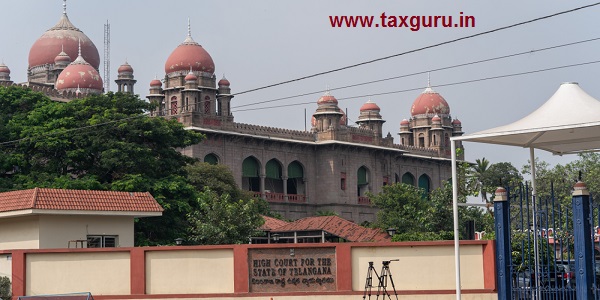
The Hon’ble High Court for the State of Telangana, in W.P. No. 9400 of 2026, has provided important relief to taxpayers who may have approached the writ court instead of immediately availing the statutory appellate remedy under the GST law.
In its order dated 31.03.2026, the Court permitted the petitioner to file an appeal before the appellate authority, even though there was likely a delay in doing so, and directed that such delay be considered sympathetically in accordance with law.
Facts of the Case
The writ petition was filed by Yadagiri Building Material Suppliers challenging:
- Form GST DRC-07 dated 25.02.2025, and
- Order-in-Original dated 13.02.2025
passed under the provisions of the CGST Act, 2017 and SGST Act, 2017 for the tax period 2020-21, whereby tax and penalty were imposed.
The petitioner contended that the adjudicating authority had passed the order without considering the reply submitted by the taxpayer.
However, during the course of hearing, the petitioner sought liberty from the Court to prefer a statutory appeal before the appellate authority.
Submissions Before the Court
The petitioner submitted that:
- the adjudication order was passed without considering its reply;
- the taxpayer now intended to pursue the appellate remedy;
- some delay may have occurred in approaching the appellate authority; and
- the appellate authority may be directed to consider the delay sympathetically.
On behalf of the department, the learned Senior Standing Counsel submitted that the petitioner was at liberty to file an appeal and raise all grounds available in law and on facts.
Observations of the High Court
The Hon’ble Court, without commenting on the merits of the dispute, observed that since the petitioner wished to pursue the statutory remedy, liberty ought to be granted.
The Court specifically directed that:
if the appeal is filed within two weeks along with the statutory pre-deposit and an application for condonation of delay, the appellate authority shall consider the same in accordance with law.
The Court further observed that while considering delay, the appellate authority must take into account that the petitioner had been bona fide pursuing the writ remedy before the High Court during the intervening period.
This is a significant observation, as it recognizes that time spent in bona fide litigation before the High Court may be a relevant factor in condoning delay.
Key Takeaway for Taxpayers
This order reiterates an important principle in GST litigation:
where a taxpayer has bona fide approached the writ court, the time spent in such proceedings can be a relevant ground for seeking condonation of delay before the appellate authority.

Taxpayers who have missed the appeal limitation period due to pursuing writ remedies may rely on this order while seeking condonation, particularly where there is a genuine explanation for delay.
At the same time, it is advisable to:
- file the appeal at the earliest,
- ensure payment of statutory pre-deposit under Section 107(6),
- file a detailed delay condonation application, and
- explain the period during which writ proceedings remained pending.
Practical Significance
This ruling is especially relevant in cases where:
- orders are challenged on procedural violations, such as non-consideration of replies;
- taxpayers initially invoke writ jurisdiction due to urgency or violation of natural justice; and
- the limitation period for appeal expires during pendency of the writ petition.
The order offers practical guidance that such matters can still be considered on merits if delay is satisfactorily explained.
FULL TEXT OF THE JUDGMENT/ORDER OF TELANGANA HIGH COURT
Heard Mr. Jai Kishan Solanki, learned counsel for the petitioner and Mr. Dominic Fernandes, learned Senior Standing Counsel for Central Board of Indirect Taxes and Customs (CBIC) appearing for respondent Nos.1 to 3.
2. The instant writ petition has been preferred against the summary of the order in Form GST DRC-07 dated 25.02.2025 along with Order-In-Original dated 13.02.2025 passed under the provisions of the Central Goods and Services Tax Act, 2017 and the State Goods and Services Tax Act, 2017, for the tax period 2020-21, imposing the tax and penalty.
3. Learned counsel for the petitioner submits that respondent No.1 without taking into account the reply filed by the petitioner has passed the impugned order-in-original. However, after some arguments, learned counsel for the petitioner seeks liberty to the petitioner to prefer an appeal against the impugned Order-In-Original. He submits that some delay might have been occurred in approaching the appellate authority and therefore, he may be directed to consider it sympathetically.
4. Learned Senior Standing Counsel for CBIC submits that the petitioner is at liberty to prefer an appeal against the impugned Order-In-Original taking all the grounds as are available in law and on facts before the appellate authority in respect of the subject tax period.
5. Upon hearing the learned counsel for the parties and having regard to the aforesaid facts and circumstances, since the petitioner seeks liberty to prefer an appeal, we do not wish to make any comment on the merits of the contentions raised by the parties.
6. If the petitioner prefers an appeal within a period of two weeks with statutory pre-deposit along with a delay condonation application, the learned appellate authority would consider it in accordance with law by taking into consideration that the petitioner has been pursuing the writ remedy before this Court in the meantime as well. The petitioner will be at liberty to take all the grounds in law and on facts before the appellate authority. If the appellate authority is satisfied that the delay is explained, he would entertain the appeal on merits.

7. The instant Writ Petition is disposed of with the aforesaid liberty. There shall be no order as to costs.
Miscellaneous applications, if any pending, shall stand closed.