Introduction
India’s taxation landscape underwent a historic transformation with the introduction of GST. While GST simplified indirect taxation structurally, it also introduced a highly data-driven and compliance-intensive ecosystem. Businesses today must regularly reconcile returns, validate input tax credit and respond to automated scrutiny by tax authorities.
For many enterprises, especially MSMEs, GST compliance has evolved from a periodic obligation into a persistent operational challenge. Traditional audit mechanisms, which rely on annual reviews, are no longer sufficient in an environment where discrepancies can trigger notices within months or even weeks.
This shift has paved the way for a new model—GST Audit-as-a-Service (AaaS)—a continuous, technology-enabled approach that redefines compliance as an ongoing, proactive process rather than a retrospective activity.
Understanding GST Audit-as-a-Service
GST Audit-as-a-Service is a subscription-based model in which businesses outsource their GST audit, reconciliation, and compliance monitoring to specialized service providers. Unlike conventional audits that occur once a year, this model focuses on continuous oversight through monthly or quarterly checks.
At its core, GST AaaS combines automation, analytics, and expert advisory to ensure that financial data reported in GST returns remains accurate, consistent, and compliant at all times. It integrates directly with accounting systems and GST filings to identify mismatches, flag risks, and recommend corrective actions in real time.
This approach transforms GST from a compliance burden into a strategic function that supports financial discipline and operational efficiency.
Limitations of Traditional GST Audits
Traditional GST audits are largely reactive. By the time discrepancies are identified during a year-end audit, the damage is often already done—incorrect ITC may have been claimed, liabilities may have been underreported, or vendor mismatches may have accumulated over months.
Manual reconciliation processes, often dependent on spreadsheets, are prone to errors and inefficiencies. Businesses also face challenges due to a lack of in-house expertise, especially when dealing with evolving regulations and frequent amendments.
Moreover, the GST system itself has become increasingly data-driven, with authorities using analytics to detect inconsistencies between filings such as GSTR-1, GSTR-3B, and GSTR-2B. This has led to a rise in automated notices and scrutiny, making delayed audits inadequate for risk management.
Core Components of GST Audit-as-a-Service
A robust GST AaaS solution is built on multiple integrated components that work together to ensure compliance and efficiency.
The first component is automated data integration, where financial data is pulled from ERP systems such as Tally, SAP, or cloud accounting platforms. This integration eliminates manual data entry and ensures accuracy in reporting.
The second component is a continuous reconciliation engine. This system compares sales and purchase data across GST returns and internal records, identifying mismatches in output tax, ITC claims, and invoice reporting. It ensures that businesses claim only eligible credits and avoid discrepancies that could trigger notices.
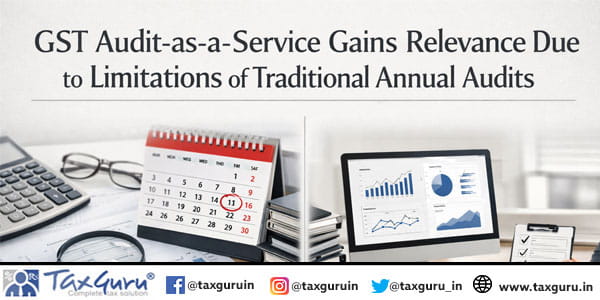
Another key element is the compliance dashboard, which provides a real-time overview of GST health. Businesses can monitor ITC utilization, track filing accuracy, and assess vendor compliance. This visibility allows decision-makers to take timely corrective actions.
GST AaaS also includes a litigation readiness layer, where documentation and audit trails are maintained systematically. In case of a notice from tax authorities, businesses are better prepared with structured data and response templates.
Finally, the advisory layer adds strategic value. Service providers offer insights on tax optimization, working capital improvement, and compliance structuring, turning GST into a tool for financial planning rather than just regulatory adherence.
Business Model and Market Potential
From a service provider’s perspective, GST Audit-as-a-Service represents a highly scalable and recurring revenue model. Instead of one-time audit fees, providers can charge monthly or quarterly subscriptions based on the size and complexity of the client’s operations.
The target market is vast. India has over 1.4 crore GST-registered entities, the majority of which are MSMEs with limited access to structured compliance systems. These businesses often rely on external accountants and lack real-time visibility into their GST position.
With increasing digitization and regulatory scrutiny, the demand for continuous compliance solutions is expected to grow significantly. GST AaaS providers can also expand their offerings to include related services such as income tax compliance, virtual CFO services, and financial analytics, creating multiple revenue streams.
Technology as the Backbone
Technology plays a central role in enabling GST Audit-as-a-Service. Modern platforms leverage artificial intelligence and machine learning to detect anomalies in large datasets, identify unusual patterns, and predict potential compliance risks.
Cloud-based dashboards provide real-time access to compliance metrics, while API integrations with GST systems ensure seamless data flow. Optical Character Recognition (OCR) tools can extract data from invoices, reducing manual effort and improving accuracy.
Data visualization tools further enhance decision-making by presenting complex information in an intuitive format. Together, these technologies create a powerful ecosystem that supports continuous monitoring and proactive compliance.
Benefits for Businesses
The adoption of GST Audit-as-a-Service offers several tangible benefits. One of the most significant advantages is the reduction in compliance risks. By identifying discrepancies early, businesses can avoid penalties, interest costs, and legal complications.
Improved ITC management is another key benefit. Accurate reconciliation ensures that businesses claim eligible credits while avoiding ineligible claims that could lead to disputes. This directly impacts working capital, as efficient ITC utilization reduces tax outflows.
Real-time visibility into GST data enhances financial control and transparency. Business owners and finance teams can make informed decisions based on accurate and up-to-date information.
Additionally, continuous compliance builds credibility with stakeholders, including investors, lenders, and regulatory authorities.
Implementation Strategy
For professionals and startups looking to enter this space, the implementation of GST Audit-as-a-Service can be approached in phases.
The initial phase involves setting up a standardized audit framework and onboarding pilot clients. This stage focuses on building processes and understanding client requirements.
The next phase emphasizes automation, where reconciliation tools, dashboards, and reporting systems are developed. This improves efficiency and scalability.
In the final phase, providers can transition to a full SaaS model, offering standardized solutions to a larger client base. Partnerships with accounting firms and consultants can further accelerate growth.
Challenges and Risk Mitigation
Despite its advantages, GST AaaS also presents certain challenges. Data security is a critical concern, as sensitive financial information is handled on digital platforms. Providers must invest in secure cloud infrastructure and compliance with data protection standards.
Client adoption can also be a hurdle, particularly among small businesses that are accustomed to traditional practices. Offering trial services or initial GST health checks can help demonstrate value and build trust.
Regulatory changes remain an ongoing challenge in the GST ecosystem. Service providers must stay updated with legal developments and continuously adapt their systems to ensure compliance.
Future Outlook
The future of GST compliance lies in automation and intelligence. As the GST ecosystem continues to evolve, the role of technology will become even more prominent. Real-time reporting, e-invoicing integration, and predictive analytics will redefine how businesses manage taxes.
GST Audit-as-a-Service is expected to evolve into a comprehensive compliance platform that not only ensures accuracy but also provides strategic insights. Businesses will increasingly rely on such services to navigate complexity and maintain competitiveness.
Conclusion
GST Audit-as-a-Service represents a fundamental shift in the approach to tax compliance. By moving from periodic audits to continuous monitoring, it enables businesses to stay ahead of risks, optimize financial performance, and build a culture of transparency.
For service providers, it offers a compelling opportunity to create scalable, technology-driven solutions in a rapidly growing market. As India’s digital tax ecosystem matures, GST AaaS is poised to become an essential component of modern business operations—transforming compliance from a reactive obligation into a proactive advantage.