
Courts: ITAT Rajkot
Find latest ITAT Rajkot judgments, orders and case laws on income tax covering assessments, additions, deductions, exemptions, capital gains, reassessment and penalties.

ITAT Rajkot Deletes ₹5.83 Lakh Section 56 Addition Applying Co-Owner Parity
Opening Cash From Earlier Years Cannot Be Taxed as Current Income: ITAT Rajkot

High Court No-TDS Order Shields SBI From Section 201 Default on LFC: ITAT Rajkot
₹4.30 Crore Section 69A Addition Restored as CIT(A) Did Not Decide Merits: ITAT Rajkot
High Court No-TDS Direction Protects SBI From Section 201 Default: ITAT Rajkot
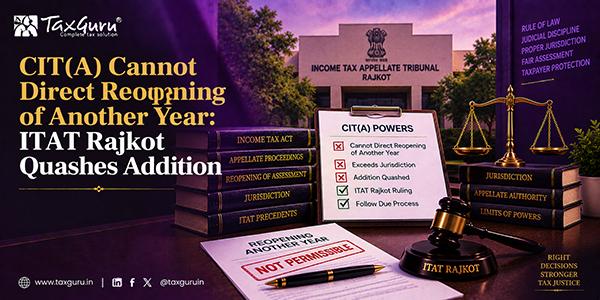
CIT(A) Cannot Direct Reopening of Another Year: ITAT Rajkot Quashes Addition
ITR-7 Reporting Error Requires Fresh Examination of Section 11 Claim: ITAT Rajkot
ITAT Rajkot Quashes Reassessment Where Joint Property Investment Was Not Properly Attributed
Political Donation Deduction Disallowance Does Not Automatically Mean Misreporting u/s 270A: ITAT Rajkot
Section 151 Approval After Section 148 Notice Invalidates Reassessment: ITAT Rajkot
Section 80GGC Deduction Cannot Be Denied for Political Party’s Misconduct: ITAT Rajkot
ITAT Rajkot Deletes GP Addition Without Section 145(3) Rejection and Limited Scrutiny Conversion
Section 28 Interest Part of Compensation, Eligible for Section 10(37) Exemption: ITAT Rajkot
ITAT Rajkot Deletes SBI TDS Demand for Foreign-Leg LFC Under HC Order
ITAT Rajkot judgments and orders cover various disputes arising under the Income-tax Act. This TaxGuru page collects Tribunal decisions concerning assessments, additions, deductions, exemptions, business income, capital gains, unexplained income, reassessment, TDS, penalties, limitation and procedural matters. Taxpayers, businesses, Chartered Accountants, advocates and tax professionals can use the category to identify ITAT Rajkot precedents relevant to their matters and follow appellate developments. The collection includes recent and significant earlier Tribunal decisions published on TaxGuru for convenient income-tax research.

