
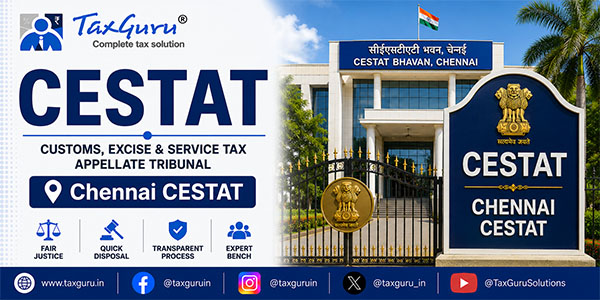
Courts: CESTAT Chennai
Find latest CESTAT Chennai judgments and orders on Customs, Central Excise and Service Tax covering imports, classification, valuation, CENVAT credit, refunds, demands and penalties.
Amortised Value of Moulds Includible in Assessable Value as Additional Consideration: CESTAT Chennai
Amounts Paid During Investigation Treated as Excise Duty After Adjudication, Refund Denied
Excise Duty Demand Quashed Due to Failure to Prove Price Influence in Related Party Sales
SAD Refund Allowed as Invoice Format Differences Held Procedural, Not Substantive
Wheelchairs with Toileting Feature Eligible for Custom duty Exemption Due to Mobility Function: CESTAT Chennai
Service Tax Refund Cannot Be Denied on Car Parking and Rent-a-Cab Credits: CESTAT Chennai
No Service Tax Demand of ₹2.7 Crore on ocean freight margins in Multimodal Transport Operations
SCN Invalid as Issued Under Wrong Provision for GTO Services, Demand Set Aside
No Customs Duty Notification Benefit for Chicken Sausages; CESTAT Chennai Rejected Appeal
Service Tax Demand Quashed as Composite Contracts Not Taxable Before 01.06.2007
Imported Natural Rubber Liable for Additional Duty Due to Binding Precedents: CESTAT Chennai
CESTAT allowed CENVAT Credit to Job Worker Due to Valid Consignee Documentation
CESTAT Allowed Home Consumption for Confiscated Goods Due to Beneficial Notification Amendment
Cum-Tax Benefit Allowable Where Service Tax Not Separately Collected: CESTAT Chennai
CESTAT Chennai judgments and orders constitute an important body of case law on Customs, Central Excise and Service Tax. This page brings together CESTAT Chennai decisions dealing with imports and exports, customs classification and valuation, exemption notifications, CENVAT credit, refunds, service tax liability, duty demands, limitation, interest, penalties, confiscation and other indirect tax matters. Importers, exporters, manufacturers, service providers, businesses, Chartered Accountants, advocates and tax professionals can use this collection to locate Tribunal decisions relevant to their disputes and research. The page covers recent orders as well as significant earlier decisions published on TaxGuru, including legacy Central Excise and Service Tax cases that remain relevant to pending proceedings. This dedicated CESTAT Chennai resource makes it easier to research Tribunal precedents and follow developments in Customs and indirect tax jurisprudence.

