

Articles by this Author
Income Tax
Income Tax
Gujarat HC Quashed Section 148 Notice as Seized Material Had No Link With Assessee
Goods and Services Tax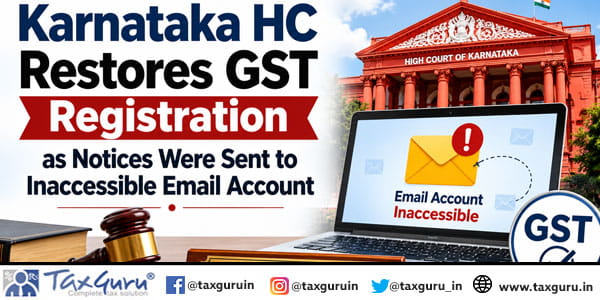
Goods and Services Tax
Karnataka HC Restores GST Registration as Notices Were Sent to Inaccessible Email Account
Income Tax
Income Tax
Karnataka HC Remands Reassessment as Petitioner Failed to Participate Due to Auditor’s Lapse
Income Tax
Income Tax
ITAT Deletes MAT Adjustment as Section 115JB Not Permit Exclusion of Alleged Bogus Loss
Service Tax
Service Tax
Service Tax Demand Set Aside for reliance on Form 26AS & TDS Data Without Proper Examination
Income Tax
Income Tax
ITAT Reduces Profit Estimation as Assessee Acted Only as Pass-Through Entity Earning Thin Commission Margins
Income Tax
Income Tax
12A Registration Cannot Be Rejected Solely for Wrong Clause Selection in Form 10AB: ITAT Nagpur
Goods and Services Tax
Goods and Services Tax
Polypropylene Leno Taxable as Plastic Products as Raw Material Was Plastic Granules: Calcutta HC
Goods and Services Tax
Goods and Services Tax
P&H HC Sets Aside Retrospective GST Cancellation Due to Absence of Specific Notice
Income Tax
Income Tax
Gujarat HC Quashes Reassessment as Reopening Was Based on Unverified Complaint
Income Tax
Income Tax
Transfer of leasehold property with constructed building attracted Section 50C
Income Tax
Income Tax
Section 154 Rectification Valid as DSIR Form 3CL Determined Eligible R&D Deduction
Goods and Services Tax
Goods and Services Tax
Orissa High Court Quashes GST Demand Due to Denial of Personal Hearing
Goods and Services Tax
Goods and Services Tax

