This article explains how Section 137 of the Central Goods and Services Tax (CGST) Act, 2017 deals with offences committed by companies and other organisations under the GST law. It describes how the section holds not only the company but also those in charge of running it such as directors, partners, and key managerial personnel responsible for violations of the law. At the same time, it protects those who can prove that they acted honestly and took all reasonable care to prevent the offence. The discussion connects this provision with similar rules under the Companies Act, 2013, showing how corporate responsibility and personal accountability are balanced. It also highlights key Supreme Court judgments explaining that liability under GST is not automatic and must be based on proof of involvement or negligence. The article underlines that Section 137 promotes responsible management, fair enforcement, and a culture of compliance within the GST system.
A company is treated in law as a separate legal person, different from its shareholders and management. This idea, first recognised in Salomon v. Salomon & Co. Ltd., means that the company itself is normally responsible for its actions. However, since a company can act only through human beings, the law often holds its directors and key officers responsible when they are the ones who control or manage its affairs. The reasoning is simple, those who have the power to make decisions should also bear responsibility if something goes wrong, especially when their role or neglect has caused the problem. Directors and key managerial personnel act in a statutory and fiduciary capacity, which means they must act honestly, carefully, and in the best interest of the company.
Even so, there is an important difference between the company’s liability and that of its directors. Criminal intent, or mensrea, is personal, and no one should be punished just because they hold a particular office. The Supreme Court in Sunil Bharti Mittal v. CBI (2015)1 made it clear that vicarious liability, i.e. holding someone responsible for the acts of another arises only when the law specifically provides for it. The intent or actions of a company cannot automatically be treated as those of its directors unless there is clear proof that they played a role in the offence. Similarly, in SMS Pharmaceuticals v. Neeta Bhalla (2005) 2, the Court said that a complaint must show specific facts explaining how a director was actually in charge of and responsible for running the business at the time of the offence. Merely being a director, chairman, or managing director is not enough to attract criminal liability.
This approach forms the basis of Indian company law. A company can be prosecuted and punished as a separate entity, but its directors or officers can be held personally liable only when the statute clearly says so and when evidence proves their direct involvement, consent, or negligence. Section 2(60) of the Companies Act, 2013 defines an “officer in default” to identify those who may be held responsible for violations. Section 149(12) adds that independent and non-executive directors are liable only when the offence happened with their knowledge, consent, or connivance, or when it was caused by their failure to exercise proper care. In National Small Industries Corporation Ltd. v. Harmeet Singh Paintal (2010)3, the Supreme Court again clarified that non-executive directors who are not involved in daily management cannot be held liable without clear evidence of their participation in the wrongdoing.
Indian criminal law is cautious about extending vicarious liability. The courts try to strike a balance between ensuring accountability and preventing misuse. On one hand, directors cannot escape responsibility if they knowingly take part in fraud, approve false statements, or ignore warning signs. On the other hand, they cannot be punished automatically just because they hold a certain post. This balanced approach protects independent and nominee directors who mainly perform supervisory or advisory roles. Personal criminal liability arises only when there is real fault or clear negligence. It is therefore important to determine what part of a company’s activities a director was involved in whether financial management, compliance, or daily operations because this helps decide whether he or she can be held liable.
The same reasoning applies under tax laws, including the Goods and Services Tax regime. Section 137 of the Central Goods and Services Tax Act, 2017 deals with vicarious criminal liability. It means that when a company or firm commits an offence, the people responsible for running it can also be punished. The section says that if a company, partnership, or association breaks the law, everyone in charge of its affairs at that time is deemed guilty along with the company itself. However, it also gives protection to officers who can prove that the offence happened without their knowledge or that they took all reasonable care to prevent it. In this way, the provision balances punishment for those truly responsible with protection for those who acted honestly and carefully.
Earlier tax laws viewed offences as personal wrongs of individuals, but modern laws recognise that business decisions are often collective. Section 137 reflects this change. It allows authorities to look beyond the company, to identify individuals actually at fault, while shielding management that has acted in good faith and shown due diligence. It works as both a sword and a shield. It punishes those who intentionally break the law and protects those who have done their duty sincerely.
Under this provision, if a company commits an offence, everyone who was in charge of and responsible for its business can be treated as guilty. The word “company” covers not only companies under the Companies Act but also firms, LLPs, and associations of individuals. In the case of a partnership, a “director” means a partner. The section also states that if the offence was committed with the consent, connivance, or negligence of any director, manager, secretary, or officer, that person is also guilty. The inclusion of “negligence” shows that even carelessness can lead to liability if it causes a legal breach. The law extends the same rule to partnerships, LLPs, Hindu Undivided Families, and trusts, fixing responsibility on partners, kartas, or managing trustees.
The section also contains an important safeguard. It says that no person shall be punished if he proves that the offence happened without his knowledge or that he exercised all due diligence to prevent it. This makes the law fair because even the most sincere officer cannot control every action in a large organisation. The saving clause changes the character of Section 137 from a harsh rule to a balanced one. It ensures that only those who are truly at fault are punished.
The Companies Act, 2013 helps in identifying who is responsible for the conduct of business. Under Section 2(51), Key Managerial Personnel (KMP) include the Chief Executive Officer, Managing Director, Company Secretary, Whole-Time Director, and Chief Financial Officer. These are generally the people who handle the company’s daily affairs and fall within the scope of Section 137. In an LLP, the designated partners perform that role, while in a Hindu Undivided Family or trust, the Karta or managing trustee would be considered responsible. Liability, therefore, depends on actual control, not just on one’s title.
The courts have explained how Section 137 and similar laws should be applied. In Sheoratan Agarwal v. State of Madhya Pradesh (1984) 4, the Supreme Court held that once it is shown that a person was in charge of and responsible for the business, the burden shifts to that person to prove that the offence occurred without his knowledge or despite his due diligence. In Ravindranatha Bajpe v. Mangalore Special Economic Zone Ltd. (2021)5, the Court said that being a director or chairman by itself does not make one guilty, there must be clear facts showing how that person was involved in the offence. In Union of India v. Shantanu Sanjay Hundekari (2025)6, a GST case, the Court emphasised that Sections 122(1A) and 137 cannot be used blindly. Employees or authorised signatories cannot be prosecuted just because the company is accused. There must be evidence that they had control over or knowingly participated in the wrongdoing. These decisions make it clear that liability under Section 137 is not automatic and depends on real proof of involvement, consent, or negligence.
The saving clause in sub-section (4) plays a key role in keeping the law fair. It accepts that officers cannot predict or prevent every error or fraud in a complex organisation. To claim this defence, a person must show that he did not know about the offence and that he took all reasonable steps to prevent it. Due diligence means taking all the care that a careful manager would take to make sure the company follows the law. Courts look for evidence such as compliance manuals, audit reports, control systems, training records, or board meeting minutes showing that the officer was actively supervising compliance. For example, if a finance director can show that a subordinate filed false returns despite a proper system of internal checks and regular audits, he would be protected under this provision.
This approach promotes better governance and accountability. Section 137 indirectly encourages every company or firm to maintain a proper compliance structure. It is not enough to claim honesty; officers must be able to prove it with records. Boards should assign clear responsibilities for GST compliance, hold regular reviews, and maintain evidence of supervision. Internal audits, training, and written instructions not only improve efficiency but also serve as protection if something goes wrong. Tax officers, on their part, should use Section 137 carefully and only when there is genuine evidence of involvement or negligence. The object of the law is to prevent deliberate evasion, not to punish unintentional errors.
When a director or officer faces proceedings under Section 137, there are two main defences available. The first is to show that he was not in charge of or responsible for the business when the offence occurred. The second is to prove that he took all reasonable care and acted diligently. Both require proper documents and evidence. Providing such information early can sometimes stop prosecution before it starts. If the case reaches court, the judge looks at whether the officer’s explanation appears reasonable and supported by facts. The law does not require proof that prevention was impossible only that reasonable precautions were taken in good faith.
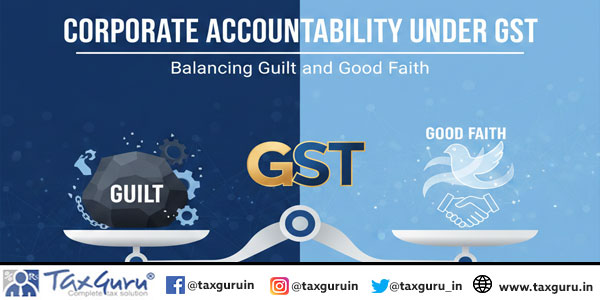
Section 137, therefore, keeps a fine balance between responsibility and fairness. It prevents guilty persons from hiding behind the company while protecting those who acted honestly and carefully. It ensures that punishment is based on real fault, not on official title or position. It shows that corporate liability must go hand in hand with fairness and evidence. The larger message is that tax compliance is part of good corporate conduct. Directors who maintain proper systems, records, and transparency protect both themselves and their companies. The purpose of the provision is not to create fear but to build trust in honest and disciplined business practices. At the same time, authorities must avoid using criminal law as a tool for recovery and must act only when there is genuine proof of fraud or gross negligence. Section 137, like similar provisions in other laws, is strong enough to punish wrongdoing but fair enough to protect integrity.
References:
-
Sunil Bharti Mittal v. Central Bureau of Investigation, Supreme Court Cases 609.
-
S.M.S. Pharmaceuticals Ltd. v. Neeta Bhalla & Anr., (2005) 8 Supreme Court Cases 89.
-
National Small Industries Corporation Ltd. v. Harmeet Singh Paintal & Anr., (2010) 3 Supreme Court Cases 330.
-
Sheoratan Agarwal & Anr. v. State of Madhya Pradesh, (1984) 4 Supreme Court Cases 352.
-
Union of India & Ors. v. Shantanu Sanjay Hundekari & Anr., [2025] 142 GSTR 173 (SC).