Income Tax : The framework outlines mandatory disclosures and timelines for opting into safe harbour. Key takeaway: strict compliance is essent...
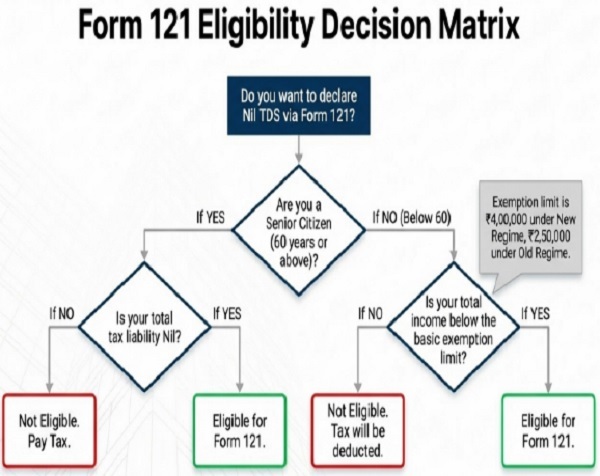
Income Tax : The new form consolidates multiple income disclosures into one, enabling accurate TDS deduction. Key takeaway: unified reporting r...
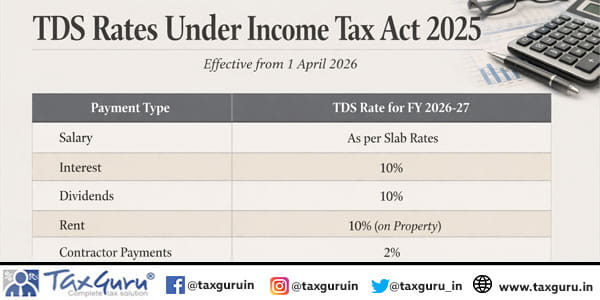
Income Tax : A detailed overview of updated TDS provisions mapping old and new sections, rates, and thresholds. Helps taxpayers understand comp...
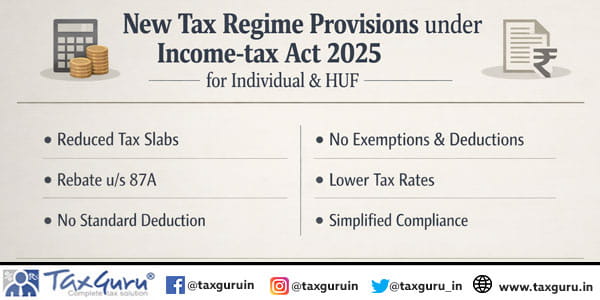
Income Tax : The new tax law addresses long-standing concerns over complexity by reducing provisions and simplifying language. It introduces st...
Income Tax : The case highlights how the new framework enforces stricter compliance using data analytics. It underscores that incorrect declara...
Income Tax : The issue was complexity in the existing tax law. It was clarified that the new Act simplifies structure by reducing sections and ...
Income Tax : This webinar breaks down the major structural and conceptual changes introduced in the new Income Tax Act, 2025. It helps professi...
Income Tax : The government replaced the six-decade-old law with the Income-tax Act, 2025. The reform aims to simplify compliance through clear...
Income Tax : A free live workshop will discuss the structure and practical implications of the proposed Income-tax Act, 2025 and amendments und...
Income Tax : The amendments focus on reassessment timelines, electronic communication, and procedural clarity. The changes aim to reduce litiga...
Income Tax : The Supreme Court set aside the NCLAT order for relying on a non-existent quasi-judicial income tax order. The key takeaway is tha...
Income Tax : Rule 81 prescribes dataset construction, weighted averages, and a 35th–65th percentile arm’s length range when multiple compar...
Income Tax : The latest amendment excludes income arising from transfer of pre-2017 investments from GAAR scrutiny. It reinforces the protectio...
Income Tax : The Finance Act, 2026 prescribes income-tax rates, surcharge, and cess for the assessment year 2026–27. It establishes the legal...
Income Tax : The circular introduces mandatory Form I and Form II for SWFs to claim tax exemptions. The ruling ensures structured application a...
Income Tax : The notification requires payers to generate UINs and file quarterly details of declarations even where no tax is deducted. It enh...
Income Tax : CBDT introduced Income-tax Rules, 2026 to operationalize the Income-tax Act, 2025. The rules standardize procedures on valuation, ...
Draft Rules 252 and 253 specify the educational qualifications required for authorised income-tax practitioners and define “business relationship” to avoid conflicts of interest.
Draft Rules 250 and 251 of the Income-tax Rules 2026 define key terms related to income-tax practitioners and recognise specific accountancy examinations for eligibility under Section 515.
Draft Rules 248 and 249 under the Income-tax Rules 2026 prescribe the maximum fee structure that registered valuers can charge and mandate a standard valuation report format (Form No. 170).
Draft Rule 247 under the Income-tax Rules 2026 prescribes qualifications and eligibility conditions for registration as valuers for different asset classes. It aims to ensure professional expertise and uniform standards in tax-related asset valuations.
Rules 245–246 of the Draft Income-tax Rules, 2026 require the Income-tax Department to upload Annual Information Statements and prescribe procedures for valuer registration to strengthen tax transparency and compliance.
Rule 244 of the Draft Income-tax Rules, 2026 requires crypto-asset service providers to perform detailed due diligence and obtain self-certifications to identify reportable users and ensure accurate tax reporting.
Rule 243 of the Draft Income-tax Rules, 2026 mandates detailed reporting of crypto-asset users and transactions by service providers to ensure transparency and tax compliance.
Rule 242 of the Draft Income-tax Rules, 2026 mandates crypto-asset reporting and due diligence for service providers connected to India while allowing exemptions where equivalent compliance is completed in partner jurisdictions.
Rule 241 of the Draft Income-tax Rules, 2026 introduces detailed definitions for crypto-asset transactions, reporting crypto-asset service providers, and reportable users. The rule aims to strengthen AML and KYC compliance while enabling cross-border tax transparency through clear reporting obligations for crypto-asset activities.
Draft Rules 290–292 of the Income-tax Rules, 2026 specify audit report formats under Schedules IX and X and prescribe the mandatory investment pattern for provident fund contributions.