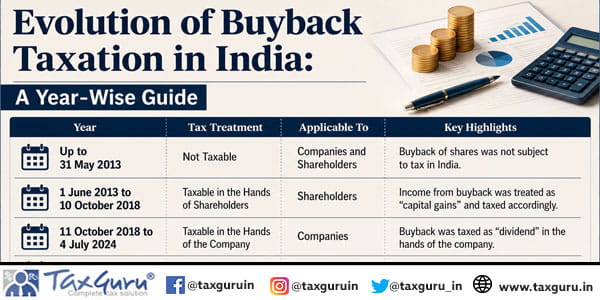
Income Tax : The Income-tax Act, 2025 replaces the dividend-based taxation of buy-backs with capital gains taxation for ordinary shareholders, ...
Income Tax : This guide explains when NRIs should use Form 128 and when payers should use Form 129 to reduce or eliminate excess TDS. It also c...
Income Tax : Sections 356-374 restructure appellate provisions with clearer drafting while retaining the existing appeal hierarchy and taxpayer...
Income Tax : Section 270 of the Income-tax Act, 2025 consolidates return processing and scrutiny assessment into one framework while introducin...
Income Tax : The law permits reassessment only where the Assessing Officer has information indicating escaped income and follows the prescribed...
Finance : The Government has exempted interest and capital gains earned by FPIs on Government securities from income tax with effect from 1 ...
Income Tax : A representation has urged CBDT to merge TDS return codes 1023 and 1024, arguing that both apply to the same contract payments wit...
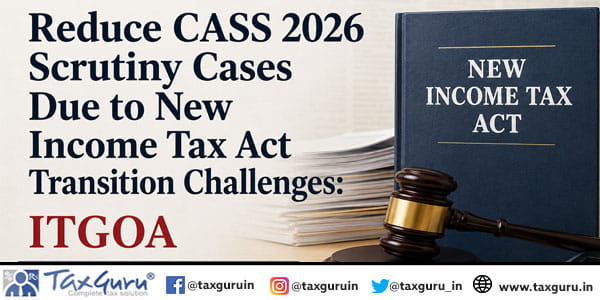
Income Tax : Association requested CBDT to rationalize CASS 2026 case selection considering the administrative burden caused by implementation ...
Income Tax : The updated TDS challan system reportedly displays incorrect interest-related options under the Company Deductee category. Taxpaye...
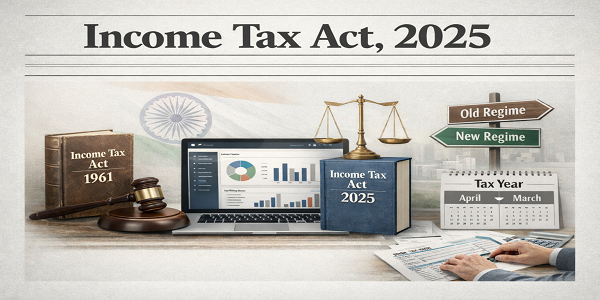
Income Tax : The issue was complexity in the existing tax law. It was clarified that the new Act simplifies structure by reducing sections and ...
Income Tax : The Supreme Court set aside the NCLAT order for relying on a non-existent quasi-judicial income tax order. The key takeaway is tha...
Income Tax : Rule 81 prescribes dataset construction, weighted averages, and a 35th–65th percentile arm’s length range when multiple compar...
Income Tax : The latest amendment excludes income arising from transfer of pre-2017 investments from GAAR scrutiny. It reinforces the protectio...
Income Tax : The Finance Act, 2026 prescribes income-tax rates, surcharge, and cess for the assessment year 2026–27. It establishes the legal...
Income Tax : The circular introduces mandatory Form I and Form II for SWFs to claim tax exemptions. The ruling ensures structured application a...
Income Tax : The notification requires payers to generate UINs and file quarterly details of declarations even where no tax is deducted. It enh...
Income Tax : CBDT introduced Income-tax Rules, 2026 to operationalize the Income-tax Act, 2025. The rules standardize procedures on valuation, ...
The issue was complexity in the existing tax law. It was clarified that the new Act simplifies structure by reducing sections and removing redundancies without changing core policies.
The issue is the replacement of Form 30C under the new tax regime. The update introduces Form 156 with revised procedures and compliance requirements. The key takeaway is that taxpayers must follow the new format for NOC applications from 2026 onwards.
The issue was the complex and scattered TDS/TCS provisions under the old law. The new Act consolidates multiple sections into a simplified structure, making compliance easier and more transparent. The key takeaway is a streamlined, digital-first framework reducing confusion for taxpayers.
The issue is complexity and duplication in old tax forms. The new system simplifies compliance through consolidation and structured mapping.
The article explains how safe harbour rules simplify transfer pricing compliance. It highlights that eligible transactions are accepted without scrutiny if conditions are met.
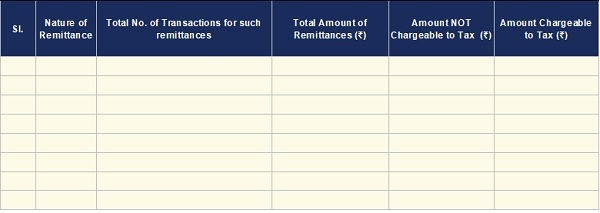
This update outlines revised TCS rates under Section 394(1). It highlights rate hikes on certain goods and relief in remittances and tour packages.
The shift replaces multiple filings with a single consolidated form for buyers. The key takeaway is that compliance is now simpler, faster, and less prone to errors.
The new law introduces audit requirements for businesses declaring profits below presumptive rates. It removes the earlier flexibility of avoiding audit without opting for presumptive taxation.
The new tax regime shifts loan approval to verified financial data like ITR and GST. Clean records now determine eligibility instead of physical assets.
The issue is whether high-income earners can reduce tax liability under the old regime. The analysis shows that structured allowances and deductions can bring taxable income to zero.