

Articles by this Author
Income Tax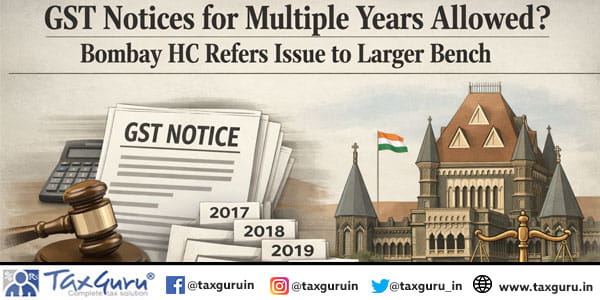
Income Tax
GST Notices for Multiple Years Allowed? Bombay HC Refers Issue to Larger Bench
Income Tax
Income Tax
Bombay Quashed Section 148 Notice Due to Issuance by Wrong Authority
Corporate Law
Corporate Law
CIRP Initiated as Financial Debt and Default Established with Documentary Evidence: NCLT Mumbai
Income Tax
Income Tax
No Addition for Cessation of Liability if no Evidence of Remission: ITAT Mumbai
Service Tax
Service Tax
No Service Tax Liability as Individual Truck Operators Not Covered Under GTA: CESTAT Bangalore
Goods and Services Tax
Goods and Services Tax
GST Registration Cancellation Set Aside Due to Non-Consideration of Illness Reason: Bombay HC
Custom Duty
Custom Duty
SAD Refund Allowed as Invoice Format Differences Held Procedural, Not Substantive
Goods and Services Tax
Goods and Services Tax
ITC Blocking Not Interfered With as SCNs Require Individual Adjudication: Bombay HC
Custom Duty
Custom Duty
Battery Components Classified as Parts Due to Essential Function: CAAR Delhi
Custom Duty
Custom Duty
Customs Appeal Dismissed as Iron Ore Export Issue Attained Finality After SC Decision
Corporate Law
Corporate Law
NCLAT Dismisses Appeal Filed Beyond 45 Days as Delay Not Condonable Under IBC: NCLAT Chennai
Custom Duty
Custom Duty
CESTAT Quashes Confiscation & Penalty on Imported Computer Cabinets due to No Misdeclaration
Custom Duty
Custom Duty
Wheelchairs with Toileting Feature Eligible for Custom duty Exemption Due to Mobility Function: CESTAT Chennai
Custom Duty
Custom Duty

