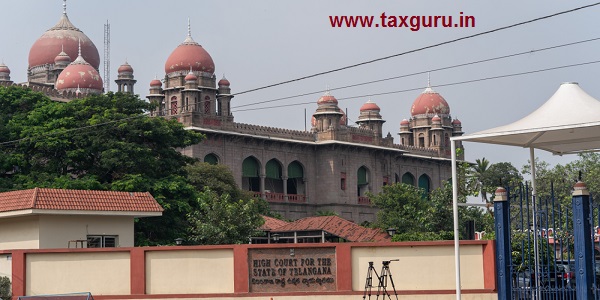
Jai Balaji Industries Limited & Anr. Vs Assistant Commissiioner of Sale Tax & Ors. (Calcutta High Court)
In Jai Balaji Industries Limited & Anr. v. Assistant Commissioner of Sales Tax & Ors., the Calcutta High Court held that funds mistakenly transferred due to a clerical RTGS error cannot be treated as tax recoverable from a third party under Section 79 of the CGST/WBGST Act. Jai Balaji Industries had intended to remit ₹20 lakh to a vendor but, due to a typographical error in the account number (ending “8025” instead of “8005”), transferred the amount—along with a subsequent ₹5 lakh—to the account of Sai Fertilizers Pvt. Ltd., an unrelated entity that happened to be a tax defaulter. Upon discovery, the bank froze the funds, but GST authorities sought to appropriate them toward the defaulter’s dues by invoking Section 79(1)(c), which permits recovery from third parties holding money “due” to a defaulter. The Court rejected this, noting that the recipient filed an affidavit admitting no business relationship and disclaiming any right to the funds. Justice Krishna Rao ruled that Section 79 applies only where money legally belongs to the defaulter; mistaken transfers do not create a debtor–creditor relationship. The bank was directed to return the full ₹25 lakh to the petitioner.
Here is a detailed analysis of the Calcutta High Court judgment, specifically focusing on the interpretation of Section 79 of the CGST Act.
1. The Core Dispute: A Typographical Error vs. Tax Recovery
The case arose from a simple clerical mistake. On December 23, 2024, Jai Balaji Industries (the Petitioner) intended to transfer ₹20,00,000 to a vendor, M/s. Mortex International. Due to a typographical error, they entered an account number ending in “8025” instead of “8005”. A subsequent transfer of ₹5,00,000 was also erroneously made to the same incorrect account.
The recipient of these funds (the “Added Respondent”) was a tax defaulter. Upon noticing the error, the bank placed the funds on hold. However, the GST authorities intervened, attempting to recover this money under the third-party recovery provisions of the GST Act.
2. The Legal Flashpoint: Understanding Section 79
The tax authorities invoked Section 79(1)(c) of the CGST/WBGST Act, 2017. This section is a powerful tool for the Revenue, but the Court found its application in this context to be legally flawed.
What does Section 79(1)(c) say?
(1) Where any amount payable by a person to the Government under any of the provisions of this Act or the rules made thereunder is not paid, the proper officer shall proceed to recover the amount by one or more of the following modes, namely:-
(c) (i) the proper officer may, by a notice in writing, require any other person from whom money is due or may become due to such person or who holds or may subsequently hold money for or on account of such person, to pay to the Government either forthwith upon the money becoming due or being held, or within the time specified in the notice not being before the money becomes due or is held, so much of the money as is sufficient to pay the amount due from such person or the whole of the money when it is equal to or less than that amount;
The Revenue’s Logic: Since the money was sitting in the defaulter’s account (or held by the bank for that account), it was “money held on account of the defaulter” and could be seized to satisfy the defaulter’s tax arrears.
3. The Evidence: Disclaiming the “Debt”
The High Court’s decision pivoted on the factual evidence that destroyed the “debtor-creditor” relationship required by Section 79: