In December 2025, India witnessed one of the most chaotic aviation disruptions in recent memory when IndiGo—India’s largest airline by market share—suddenly plunged into operational disorder. What began as a set of minor delays quickly escalated into a full-blown national aviation crisis, with more than 1,000 flights cancelled, thousands stranded across airports, regulatory intervention, political criticism, and a widespread debate about safety, crew welfare, and airline planning.
What follows is a detailed, easy-to-understand breakdown of what really went wrong, why it happened, and what it means for the aviation ecosystem in India.
- 🔹 How the Crisis Unfolded: From Delays to Nationwide Meltdown
- 🔹 The Root Cause: New Duty-Time Rules & IndiGo’s Miscalculation
- 🔹 What IndiGo Claimed vs. What Staff Allegedly Said
- 🔹 DGCA Steps In: Regulatory Action and Temporary Rule Rollback
- 1. Review of FDTL Implementation
- 2. Temporary Suspension of Certain FDTL Provisions
- 3. Inquiry Into Passenger Handling
- 🔹 Political Fallout: Opposition Seizes the Moment
- 🔹 Passenger Experience: The Real Human Cost
- 🔹 How IndiGo Responded: Apology + Gradual Recovery Plan
- 🔹 Why Did This Happen to IndiGo? (A Strategic Perspective)
- 1. Lean Staffing = No Shock Absorption
- 2. Rapid Growth = Lagging Crew Infrastructure
- 3. Pilot Fatigue Already Rising
- 4. Seasonal Peak + Rule Change = Perfect Storm
- 🔹 What This Crisis Means for India’s Aviation Future
- 1. Safety vs Operational Efficiency Debate Will Intensify
- 2. Airlines May Need Mandatory Crew Buffers
- 3. Passenger Compensation Norms May Tighten
- 4. Competition May Increase
- 5. Systemic Reforms Are Likely
- 🔹 A Lighter Moment: The IndiGo Meme Era
🔹 How the Crisis Unfolded: From Delays to Nationwide Meltdown
The disruption started subtly—late-night delays, pilots reporting fatigue, and some last-minute cancellations. But within 48 hours, the issue exploded. IndiGo’s on-time performance reportedly fell to below 10%, a level unheard of for an airline known for efficiency and punctuality.
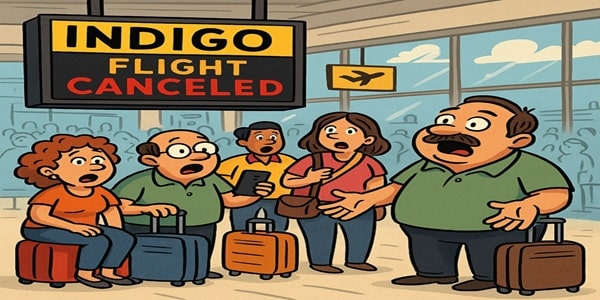
Passengers at major airports—Delhi, Mumbai, Bengaluru, Hyderabad—were left confused, angry, and in many cases, stranded without information or assistance. Images and videos showed queue-stuffed terminals, sleeping passengers, and chaotic boarding gates.
By Day 3, social media was flooded with complaints, screenshots, and videos, making the meltdown impossible for the airline or regulators to ignore.
🔹 The Root Cause: New Duty-Time Rules & IndiGo’s Miscalculation
The tipping point was the implementation of new Flight Duty Time Limitations (FDTL)—rules issued to prevent pilot fatigue by prescribing stricter rest periods, limiting night-duty hours, and mandating longer breaks between flights.
These rules had been announced long ago, and the aviation sector knew they were coming. However, IndiGo appears to have:
-
Underestimated the impact of reduced flying hours
-
Failed to expand pilot manpower at the right pace
-
Relied historically on tight, efficiency-driven crew schedules with limited buffer
-
Not created contingency plans for peak travel season
As the new rules kicked in, pilots who previously could operate certain sequences were suddenly “out of hours”—legally barred from flying further.
This caused a domino effect:
Pilots unavailable → flights grounded → rotations disrupted → crews stranded → more cancellations.
Insiders described the situation as “a scheduling collapse” rather than a one-off glitch.
🔹 What IndiGo Claimed vs. What Staff Allegedly Said
The airline stated that the disruptions were due to:
-
Crew shortages
-
Technical issues
-
Unexpected operational challenges
However, internal letters allegedly written by pilots and staff painted a different picture. The letters suggested:
-
The crisis was foreseeable
-
Internal warnings were ignored
-
Rosters were stretched too thin to comply with the new rules
-
Fatigue levels were already high even before FDTL changes
One viral letter claimed the crisis was “allowed to escalate due to poor planning,” raising questions about corporate decision-making.
🔹 DGCA Steps In: Regulatory Action and Temporary Rule Rollback
Given the scale of the meltdown, the Directorate General of Civil Aviation (DGCA) launched a high-level investigation.
Key interventions included:
1. Review of FDTL Implementation
DGCA scrutinised IndiGo’s rostering practices and planning models, questioning whether they complied with safety norms even before the rule change.
2. Temporary Suspension of Certain FDTL Provisions
In an extraordinary step, the government temporarily relaxed night-duty restrictions for IndiGo alone, allowing crews to fly under the old norms to stabilise operations.
This unusual move sparked a larger debate:
Does operational convenience override safety reforms meant to prevent pilot fatigue?
3. Inquiry Into Passenger Handling
Multiple passenger complaints highlighted:
-
Lack of communication
-
Changing flight times
-
Long queues
-
Uncoordinated ground staff
DGCA sought explanations from IndiGo on whether minimum passenger-service standards were violated.
🔹 Political Fallout: Opposition Seizes the Moment
The IndiGo fiasco did not remain a mere aviation issue—it quickly spilled into the political arena.
Critics argued:
-
Over-reliance on a few large carriers makes the system fragile
-
Aviation policies favour certain airlines
-
Regulatory oversight is reactive rather than preventive
Political leaders pointed to the crisis as a symptom of deeper structural weaknesses, including monopolistic tendencies and inadequate safety-first planning.
🔹 Passenger Experience: The Real Human Cost
At the heart of the crisis were thousands of passengers, many of whom suffered:
-
Missed weddings, business meetings, exams
-
6–12 hour airport waits
-
Expensive last-minute rebooking on other carriers
-
Overnight stays on terminal chairs due to cancelled red-eye flights
Real-time videos showed children sleeping on floors, senior citizens stranded without assistance, and passengers arguing with ground staff who had little information themselves.
For a brand that built its reputation on reliability, this was reputational damage of historic proportions.
🔹 How IndiGo Responded: Apology + Gradual Recovery Plan
IndiGo’s CEO publicly apologised and announced a recovery roadmap:
-
Gradual restoration of flights
-
Full normalisation expected by mid-December
-
Increased temporary pilot availability due to rule relaxation
-
Fresh hiring and accelerated training of cadet pilots
However, many industry observers noted that trust rebuilding would take longer than operational recovery.
🔹 Why Did This Happen to IndiGo? (A Strategic Perspective)
IndiGo has historically operated on a high-efficiency, low-cost, high-utilisation model. This model works brilliantly in stable conditions but has vulnerabilities:
1. Lean Staffing = No Shock Absorption
Airlines that keep minimal surplus staff face disproportionate disruption during rule changes.
2. Rapid Growth = Lagging Crew Infrastructure
IndiGo expanded aggressively post-pandemic, but training pipelines and crew numbers did not scale at the same pace.
3. Pilot Fatigue Already Rising
Several reports had flagged tightening rosters and rising stress among aircrew even before FDTL 2.0.
4. Seasonal Peak + Rule Change = Perfect Storm
December is peak travel season. The timing worsened the impact dramatically.
🔹 What This Crisis Means for India’s Aviation Future
1. Safety vs Operational Efficiency Debate Will Intensify
FDTL rules exist to save lives. Any rollbacks raise questions about aviation governance.
2. Airlines May Need Mandatory Crew Buffers
Regulators may push for minimum staffing ratios.
3. Passenger Compensation Norms May Tighten
India may move toward EU-style rules mandating compensation for long delays and cancellations.
4. Competition May Increase
Rivals may capitalise on IndiGo’s misstep, affecting market share.
5. Systemic Reforms Are Likely
From crew planning audits to fatigue tracking systems, aviation oversight may become more proactive.
🔹 A Lighter Moment: The IndiGo Meme Era
Even in chaos, Indians found humour.
Popular joke formats included:
-
“IndiGo: On Time Since Yesterday (Not Today)”
-
“IndiGo pilots after new duty rules: Bye, I’m going home.”
-
“Passengers at the airport: IndiGone.”