Gujarat High Court held that post approval of resolution plan, there could be no occasion whatsoever for department to issue notices. Accordingly, GST notices issued alleging wrong claim of ITC quashed and set aside.
NCLAT Delhi held that termination of concession agreement has no relation with default in repayment of dues of the Financial creditor. Accordingly, application u/s. 7 of IBC rightly admitted against Supreme Manor Wada Bhiwandi Infrastructure Pvt. Ltd. [Corporate Debtor] as debt and default established.
Tribunal noted that the assessee received Form 3 under the Direct Tax Vivad Se Vishwas Act, 2020, and accordingly dismissed the pending appeal as withdrawn.
Madras High Court held that inquiry report under Regulation 17 of the Customs Brokers Licensing Regulation, 2018 [CBLR] submitted beyond the period of 90 days is against mandate provided under sub-Regulation (5) of Regulation 17 hence inquiry report is illegal, arbitrary and barred by limitation.
Madras High Court held that time limit of six years is reasonable time for passing of order under section 201 of the Income Tax Act in respect of non-residents. Accordingly, order impugning assessment years beyond six years is set aside.
ITAT Mumbai held the disallowance on basis that the ESOP expenses is contingent in nature cannot be sustained. However, amount claimed as expenditure, the basis of allocation of ESOP cost by GSGI etc., needs to be factually examined. Hence, matter remanded.
Section 16(2)(c) of the CGST Act makes Input Tax Credit (ITC) conditional on the supplier actually paying the tax to the government. Judicial precedents from High Courts emphasize that a buyer’s bona fide claim can’t be denied solely due to the supplier’s default, especially without proving fraud or collusion.
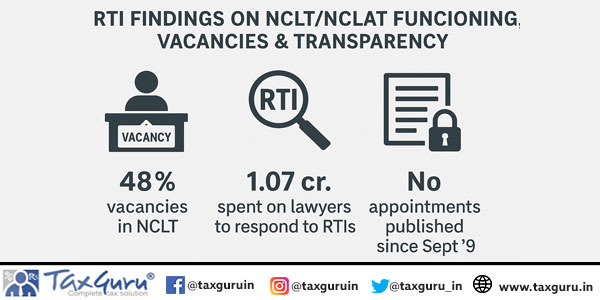
RTI inquiry into NCLT/NCLAT reveals member vacancies, lack of consolidated case data, and opaque appointments, highlighting need for tribunal reforms.
Delhi High Court, in granting bail to Hamid Raza, highlights conflict between personal laws and criminal law, urging need for Uniform Civil Code in India.
GST 2.0 cuts tax on packaged food to 5% and exempts staples like bread, milk, and paneer from Sep 22, 2025, aiming for price reductions and demand volume growth in the FMCG sector.