
Courts: CESTAT Ahmedabad
Find latest CESTAT Ahmedabad judgments and orders on Customs, Central Excise and Service Tax covering classification, valuation, exemptions, refunds, demands and penalties.

CESTAT Rejects Chapter 78 Classification of Imported Lead-Bearing Material
Security Guards’ Salary, PF & ESI Cannot Be Deducted from Taxable Service Value: CESTAT Ahmedabad
CESTAT Allows CENVAT Credit on Reverse Charge Service Tax: Ahmedabad
CESTAT Ahmedabad Allows CENVAT Refund for Ocean Freight Service Tax Paid During GST Transition
Audit-Prompted RCM Payment Does Not Bar Cenvat Credit: CESTAT Ahmedabad
CESTAT Remands Customs Broker Licence Revocation for Denial of Statements
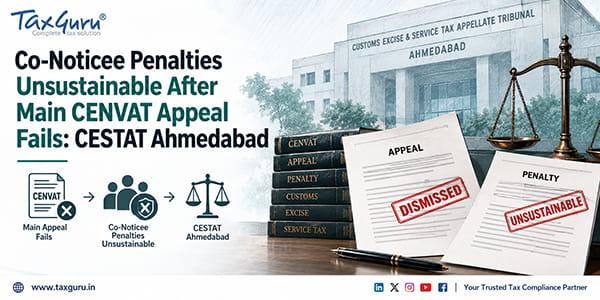
Co-Noticee Penalties Unsustainable After Main CENVAT Appeal Fails: CESTAT Ahmedabad
CESTAT Sets Aside Chapter 78 Classification for Imported Lead-Bearing Material
CESTAT Ahmedabad Sets Aside Excise Recovery Beyond Five-Year Limitation
CESTAT New Delhi Rejects Extended Limitation Amid Divergent Views on Sub-Contractor Tax Liability
CESTAT Allows CENVAT Refund of Service Tax Paid Under Reverse Charge
RMC Transportation Is GTA Service, Not Tangible Goods Supply: CESTAT Ahmedabad
67% Abatement Allowed on Composite Construction Services: CESTAT Ahmedabad
Factory Setup Services Eligible for CENVAT Credit Unless Specifically Excluded: CESTAT Ahmedabad
CESTAT Ahmedabad judgments and orders cover appellate disputes relating to Customs, Central Excise and Service Tax. This TaxGuru page brings together CESTAT Ahmedabad case laws dealing with classification, valuation, exemption notifications, CENVAT credit, refunds, demands, recovery, limitation, interest, penalties, confiscation and other indirect tax issues. The Customs, Excise and Service Tax Appellate Tribunal considers appeals arising from orders passed by departmental and appellate authorities under the applicable indirect tax laws. Chartered Accountants, advocates, tax professionals, businesses, importers, exporters and other readers can use this page to research CESTAT Ahmedabad decisions relevant to their matters. The collection includes recent as well as important earlier Tribunal decisions published on TaxGuru, helping readers follow judicial developments and locate precedents concerning Customs, Central Excise and legacy Service Tax disputes.

