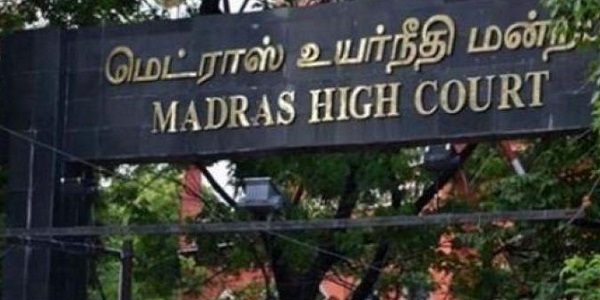
Rajagopal and Co. Vs Assistant Commissioner and Central Excise GST and Central Excise (Madras High Court)
The case before the Madras High Court concerned a writ petition filed by a taxpayer registered under the Central Goods and Services Tax Act, 2017 challenging orders passed by the tax department that reversed the petitioner’s claim of Input Tax Credit (ITC) and directed payment of tax, penalty, and interest. The petitioner sought to set aside these orders.
During the hearing, both the petitioner and the respondent submitted that the issue involved in the case had already been addressed by a prior common order of the court dated 17.10.2024 in a batch of writ petitions. In those cases, the petitioners were registered dealers who had filed GSTR-1 returns on time but could not file GSTR-3B returns within the prescribed period due to circumstances such as financial constraints during the COVID-19 lockdown, health issues, and fire accidents. Because of the delay in filing GSTR-3B returns, the petitioners were unable to claim ITC within the original time limit. The tax department issued show cause notices proposing reversal of ITC and subsequently confirmed the proposals through assessment orders directing payment of tax, penalty, and interest.
The court observed that after the filing of those writ petitions, important legislative developments had taken place. The 53rd GST Council Meeting held on 22.06.2024 recommended extending the deadline for availing ITC on invoices or debit notes under Section 16(4) of the CGST Act. The recommendation provided that the deadline for claiming ITC relating to financial years 2017-18, 2018-19, 2019-20, and 2020-21 would be deemed to be 30.11.2021 for GSTR-3B returns. This recommendation subsequently received Presidential assent through the Finance Act (No.2) of 2024. Following this amendment, the Ministry of Finance through the Central Board of Indirect Taxes and Customs issued Notification No.17/2024-Central Tax dated 27.09.2024 and Circular No.237/31/2024-GST clarifying the implementation of newly inserted provisions in Section 16.
The amendment inserted sub-sections (5) and (6) to Section 16 of the CGST Act. Under Section 16(4), a registered person is generally not entitled to take ITC after the thirtieth day of November following the end of the financial year to which the invoice pertains or after filing the annual return, whichever is earlier. However, Section 16(5) introduced a special provision stating that notwithstanding the restriction under sub-section (4), registered persons would be entitled to take ITC for invoices or debit notes relating to financial years 2017-18 to 2020-21 in any return filed under Section 39 up to 30.11.2021.
The court noted that this amendment applied retrospectively from 01.07.2017. As a result, ITC claims filed through GSTR-3B returns for the specified financial years on or before 30.11.2021 were considered valid under the amended statutory framework. Since the earlier assessment orders had disallowed ITC solely on the ground of limitation under Section 16(4), those orders were rendered unsustainable in view of the amendment introducing Section 16(5).
In the earlier batch decision, the court therefore quashed the impugned orders relating to denial of ITC based on limitation. The department was restrained from initiating further proceedings on that ground. The court also directed that bank accounts frozen pursuant to those orders should be de-frozen and that any recovery proceedings initiated during the pendency of the writ petitions should be dropped. If any tax amounts had been collected from the petitioners’ cash or credit ledgers based on the impugned orders, such amounts were to be refunded or permitted to be utilized or adjusted toward future tax liabilities.
At the same time, the court clarified that if the impugned orders involved other issues such as discrepancies in availing ITC, excess or wrong claims, fake ITC claims, or similar matters unrelated to limitation, the department would remain free to proceed against the taxpayers in accordance with law.
In the present writ petition, both parties agreed that the issue was identical to the earlier batch of cases and that the same reasoning should apply. Accepting this position, the court quashed the impugned order dated 23.04.2024 insofar as it related to denial of ITC on the ground of limitation under Section 16(4) when the claim was within the period allowed under Section 16(5).
The court restrained the department from initiating proceedings against the petitioner based on the limitation issue. The petitioner was granted liberty to file a separate application seeking refund, which the department was directed to consider in accordance with law. The court also directed the department to de-freeze any bank accounts frozen pursuant to the impugned order and to drop recovery actions initiated during the pendency of the writ petition.
Additionally, if any tax amounts had been recovered from the petitioner based on the impugned assessment order, such amounts were to be refunded or permitted to be adjusted toward future tax liabilities. However, the department retained liberty to proceed in accordance with law if the case involved issues such as discrepancies, wrong availment, excess claims, or fake ITC.
With these directions, the writ petition was allowed and the connected miscellaneous petitions were closed.
FULL TEXT OF THE JUDGMENT/ORDER OF MADRAS HIGH COURT
This Writ petition has been filed by the petitioner/taxpayer, who is registered dealer on the files of the respondent-Department under the provisions of the Goods and Service Tax Act, 2017 (GST Act)/ Central Goods and Services Tax Act ( CGST Act) as the case may be, challenging the orders passed by the respondent-Department, whereby, their claim of ITC was reversed/negatived and consequently, the petitioners have been directed to pay tax/penalty/interest.
2. When this Writ Petition is taken up for hearing, the respective learned counsel for the petitioner and learned counsel for the respondent, would submit that the issue involved in the present Writ Petition, has been squarely covered by the common order of this Court, dated 17.10.2024 passed in W.P.Nos.25081 of 2023, etc., batch, wherein, this Court has categorically held in paragraphs 9 to 12 as under:
“9. The petitioners in all these Writ Petitions are registered dealers on the files of the respondent-Department under the provisions of the Goods and Service Tax Act, 2017/CGST Act 2017. Though the petitioners have filed GSTR-1 returns in time, however, insofar as claim of ITC is concerned, since the petitioners were faced with certain difficulties, such as Financial constraints (as there was complete lock down due to outbreak Covid-19) health related ailments, fire accidents, they were unable to file GSTR-3B returns, which prompted them not raising their claim ITC in time before the prescribed date. Whereas, the respondent-Department without considering such vital aspects and that reasons for the delay is not deliberate, issued the show cause notices to the petitioners, proposing to reverse the ITC availed and went to the extreme level of confirming the proposals contained in the show cause notices by passing the impugned orders, whereby, the claim made by the petitioners for ITC was reversed and the petitioners have been directed to tax/penalty/interest. Aggrieved against the impugned orders, the petitioners are before this Court by way of present Writ Petitions seeking for setting aside the impugned orders.
10. After the filing of these Writ Petitions, certain development took place, i.e. that 53rdGST Council Meeting was held on 22.06.2024, and during the said Meeting, the GST Council recommended for extension of the deadline for availing ITC on any invoice or debit note under Section 16(4) of the CGST Act and this extension would be applicable to any GSTR-3B returns filed for the Fys 2017-18, 2018-19, 2019-20 and 2020-21 with a new deadline deemed to be as “30.11.2021”, to which, the Presidential Assent was also obtained by the Government of India on 16.08.2024, whereby, the financial proposals of the Central Government for the Financial Year 2024-25 was given effect to vide Finance Act, (No.2) of 2024, and in view of the aforesaid enactment, the Ministry of Finance (Department of Revenue) Central Board of Indirect Taxes and Customs, issued a Notification, bearing No.17 of 2024-Central Tax, dated 27.09.2024, pursuant to which, a Circular No.237/31/2024-GST was issued by the Central Board of Indirect Taxes and Customs, which was addressed to all the Principal Chief Commissioners /Chief Commissioners/Principal Commissioners/Commissioners of Central Tax (All), thereby, clarifying the issues regarding implementation of provision of sub-section (5) and sub-section (6) in Section 16 of CGST Act, 2017, the impugned orders are no longer sustainable and liable to be quashed. In this context, it would be apposite to refer to both Section 16(4) of the CGST Act, 2017, as well as amendment made to Section 16 (4) by interpolations of sub-sections 16 (5) and (6), and by insertion of sub-section (5) to Section 16, which are extracted herein under:-
Section 16 (4)
”A registered person shall not be entitled to take input tax credit in respect of any invoice or debit note for supply of goods or services or both after the thirtieth day of November following the end of financial year to which such invoice or debit note pertains or furnishing of the relevant annual return, whichever is earlier.” Section 16 (5) :-
”Notwithstanding anything contained in sub-section (4), in respect of an invoice or debit note for supply of goods or services or both pertaining to the Financial Years 2017-18, 2018-19, 2019-20 and 2020-21, the registered persons shall be entitled to take input tax credit in any return under section 39 which is filed upto the thirtieth day of November, 2021.“
10.1 Thus, a perusal of above Section 16 (5) makes it clear that ‘notwithstanding anything contained in sub-section 4, referred to above, in respect of any invoice or debit note for supply of goods or services or both pertaining to the Fys 2017-18 to 2020-21, the registered persons shall be entitled to take ITC in any return under section 39 which is filed upto the 30th day of November, 2021.
10.2 Thus, this Court considering the fact that the issue involved in all these Writ Petitions is only with regard to the availment of ITC, which is barred by limitation in terms of Section 16 (4) of the CGST Act, and in the light of the subsequent developments took place, whereby, Section 16 of the CGST Act was amended and sub-section (5) was inserted to Section 16, which came into force with retrospective effect from 01.07.2017, the petitioners are entitled to avail ITC in respect of GSTR-3B filed in respect of FYs 2017-18, 2018-19, 2019-20 and 2020-21 as the case may be, on or before 30.11.2021, is inclined to quash the impugned orders.
11. Accordingly, this Court passes the following orders.
i) The orders impugned in all Writ Petitions are quashed insofar as it relates to the claim made by the petitioners for ITC which is barred by limitation in terms of Section 16 (4) of the CGST Act, 2017 but, within the period prescribed in terms of Section 16 (5) of the said Act.
ii) Therefore, the respondent-Department is restrained from initiating any proceedings against the petitioners by virtue of the impugned orders based on the issue of limitation.
iii) In view of the fact that the impugned orders are quashed, the respondent-Department is directed to take immediate steps towards de-freezure of the concerned petitioners bank accounts, which have been freezed in furtherance of the impugned orders, by sending intimation to the concerned bankers.
iv) In the event, in the interregnum, i.e. during the pendency of these Writ Petitions, if any orders are proposed to be passed towards recovery, same shall be dropped immediately upon production of the order copy by the petitioners, in whichever case, where, there is no interim order.
v) It is also made clear that if at all, if there is any tax amounts were collected from the petitioners based on the impugned assessment orders from the cash ledgers/credit ledgers of the petitioners concerned, the same shall be refunded to them or by means of orders of this Court or even in the absence of any order from this Court, if any amount is deposited either in the cash ledgers/credit ledgers of the petitioners concerned, the same is permitted to be utilized/adjusted by the petitioners towards payment of future tax.
iv) Insofar as the apprehension expressed by the learned Additional Advocate General for the respondent-Department that in certain Writ Petition apart from the issue on limitation, challenges have also been made to the order related to issues such as discrepancies in availing the ITC/wrong availment of ITC/excess claim of ITC/Fake ITC claim, as the case may be, or such other issues, liberty is be granted to the respondent-Department to proceed against the assessees/petitioners in furtherance of the impugned orders in accordance with law.
12.In the result, all the Writ Petitions are allowed on the aforesaid terms. No costs. Consequently, connected Miscellaneous Petitions are closed.”
4. Therefore, the learned counsel for the petitioner would submit that the above said order will hold good for the present Writ Petition also and hence, prayed to dispose of the Writ Petition. The learned counsel appearing for the respondent would fairly accede to the same.
5. In view of the above, this Court passes the following:
i) The impugned original order dated 23.04.2024 is quashed insofar as it relates to the claim made by the petitioner for ITC which is barred by limitation in terms of Section 16 (4) of the CGST Act, 2017 but, within the period prescribed in terms of Section 16 (5) of the said Act.
ii) Therefore, the respondent-Department is restrained from initiating any proceedings against the petitioners by virtue of the impugned order based on the issue of limitation.
iii) The liberty is granted to the petitioner to move a separate application for refund, if any, and the respondent-Department shall consider and decide the same on its own merits and in accordance with law.
iv) In view of the fact that the impugned order is quashed, the respondent-Department is directed to de-freezure of the concerned petitioner bank account, if any, which have been freezed in furtherance of the impugned order, by sending intimation to the concerned bankers.
v) In the event, in the interregnum, i.e. during the pendency of this Writ Petition, if any orders are proposed to be passed towards recovery, same shall be dropped immediately upon production of the order copy by the petitioners, in whichever case, where, there is no interim order.
vi) It is also made clear that if at all, if there is any tax amounts collected from the petitioner based on the impugned assessment order from the cash ledgers/credit ledgers of the petitioner concerned, the same shall be refunded to them or by means of orders of this Court or even in the absence of any order from this Court, if any amount is deposited either in the cash ledgers/credit ledgers of the petitioner concerned, the same is permitted to be utilized/adjusted by the petitioners towards payment of future tax.
vii) If there is any challenge related to issues such as discrepancies in availing the ITC/wrong availment of ITC/excess claim of ITC/Fake ITC claim, as the case may be, or such other issues, liberty is be granted to the respondent-Department to proceed against the assessee/petitioner in furtherance of the impugned order in accordance with law.
6. Accordingly, the present Writ Petition is allowed on the aforesaid terms. No costs. Consequently, connected Miscellaneous Petitions are closed.