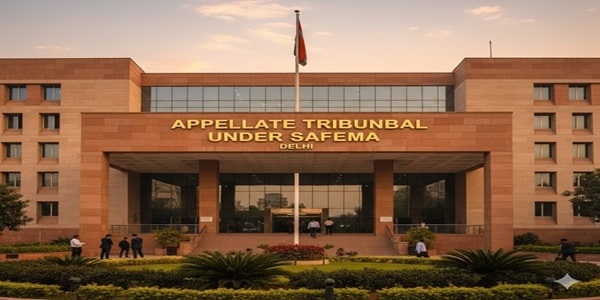
Paragraph 27AA of the Employees’ Provident Fund (EPF) Scheme could not be automatically imposed on establishments exempted under Section 17 of the EPF Act unless the Appropriate Government issued a specific official notification modifying the conditions of such exemption.
Extended period of limitation could not be invoked in the absence of fraud, suppression or wilful misstatement with intent to evade tax and accordingly, set aside the entire demand as time barred.
The ruling held that concessional GST rate applies only if bags qualify as biodegradable under the notification. It clarified that authorities cannot determine biodegradability and classification depends on material.
The issue was whether online coaching qualifies as OIDAR services. The ruling held it does not, as significant human involvement makes it commercial training, taxable under CGST and SGST.
The case examined whether reassessment approval beyond three years was issued by the competent authority. The court held that approval by an unauthorized officer invalidates the proceedings and set aside the notice.
The case examined whether interest earned on temporarily parked funds is taxable. The court held that funds earmarked for asset acquisition are not surplus, and interest must be treated as capital receipt.
The issue involves technical failures in the Professional Tax portal preventing payments. A request has been made to fix glitches and extend the due date to avoid penalties.
The issue was classification of bundled hotel services under GST. It is clarified that naturally bundled services are taxed as composite supply, while others attract the highest rate as mixed supply.
The draft rules introduce simplified forms, reduced documentation, and digital processes to ease company incorporation. Key changes aim to cut compliance burden and improve efficiency for businesses.
The scheme allows companies to file pending annual returns with just 10% additional fees. It offers a cost-effective opportunity to regularise compliance and avoid penalties.