Delhi High Court held that GST SCN based on documents, statements, evidence seized passed on by Income Tax Department cannot be held to be baseless and vague. High Court warns GST Department and other departments to be careful while citing judicial precedents specifically if the same has been produced or accessed through Artificial Intelligence [AI] software.
Andhra Pradesh High Court held that notices issued under Sections 148-A and 148 outside the faceless assessment scheme are illegal, emphasizing strict compliance with Section 151(A) and E-Assessment Scheme, 2022.
The Tribunal held that failure to conduct the mandatory admission and denial of documents required rectification before issuing the final order. The ruling allows only the procedural step to be completed while rejecting all other requests.
The Tribunal held that Section 263 cannot be invoked when the PCIT himself does not conduct the verification he insists was missing. It reaffirms that revision requires demonstrated lack of inquiry, not assumptions.
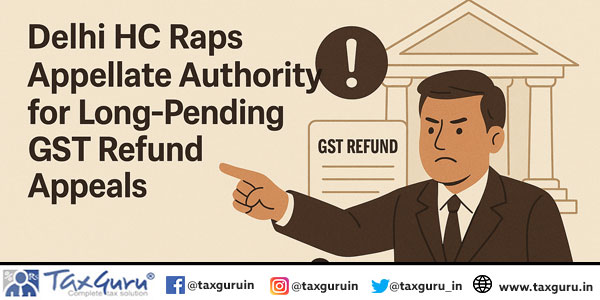
The Court held that refund appeals pending for years must be decided within the statutory one-year period under the CGST Act. It directed the Appellate Authority to issue orders by January 2026.
The Court held that the penalty could not stand because the goods were accompanied by genuine documents and the e-way bill failure was due to a technical glitch. It ruled that no intention to evade tax existed and quashed the proceedings.
The case concerns a tender for sand quarries stalled despite receiving required clarifications on ITR and VAT issues. The Court held that authorities must act promptly once clarifications are issued and directed transmission of records for immediate decision-making.
The ITAT held that without a condonation petition, a 300-day delay cannot be excused. The ruling underscores that delay must be justified before merits—including Section 80P—can be considered.
Rising medical costs and low coverage make health insurance critical. Learn how modern plans protect your finances while offering tax benefits under Section 80D.
The Tribunal allowed withdrawal after noting that the case was already remanded under section 251(1)(a). The once a matter is reopened before the AO, the assessee may abandon the pending appeal.