The Hyderabad tribunal clarified that section 144C provisions are procedural and cannot extend the statutory limitation under section 153. The AO passed the final assessment order after the permissible period, leading to quashing. The ruling strengthens the principle that statutory deadlines are paramount in tax proceedings.
Filing requirements are based on company status as on 31 March 2025, not the revised definition taking effect later. Companies crossing ₹4 crore capital or ₹40 crore turnover must file MGT-7.
Companies falling under revised small company thresholds can choose whether to maintain dematerialization compliance. Non-filing of PAS-6 is legally acceptable.
The Court held that the Petitioner misrepresented the date of receiving the provisional attachment notice. Bank accounts cannot be freely operated, subject to a minimum balance of ₹1 crore.
After the revised Small Company definition takes effect, private companies that fall under the new limits are no longer bound by Rule 9B. Their ISIN becomes optional, and PAS-6 filing is not required.
The Telangana High Court held that a Section 148 notice issued for AY 2017-18 was invalid and barred by the six-year limitation under the first proviso to Section 149. Reopening assessments beyond the prescribed period is impermissible.
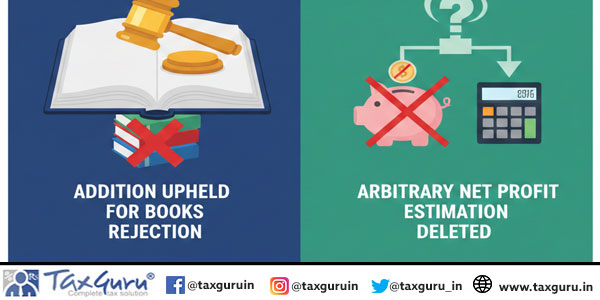
The Tribunal upheld the rejection of unreliable books but ruled that the AO could not estimate net profit at 12% without justification, vacating ₹65.08 lakh addition.
Explore why annual GST returns and reconciliation statements may not deliver practical value despite being mandatory, and how taxpayers are impacted.
Exemption under Entry 13 applies when rented properties are used as residences, irrespective of sub-leasing. The ruling ensures that GST is not unfairly levied on hostel and student accommodations.
The Gujarat High Court held a notice issued under section 148 of the Income Tax Act invalid as it was issued beyond the permissible “surviving time” defined by the Supreme Court.