Income Tax : PGBP governs the computation of business and professional income. It defines chargeable income (Sec. 28, 41) including statutory a...
Goods and Services Tax : Learn about the scope of GST on commission income. Understand the invoice test, registration thresholds, and key rulings that clar...
Income Tax : Understand the penalties, interest, and disallowance of expenditure under Section 201 for failure to comply with TDS provisions in...
Income Tax : Understand whether director remuneration is taxed as salary or business income. Learn about tax implications, employer-employee re...
Income Tax : Explore the discussion between CA Micky and CA Mini on Sections 68 & 44AD of the Income Tax Act. Learn about unexplained cash cred...
Income Tax : Consistency over technicalities: ITAT Mumbai allowed actuarial pension provision as an ascertained liability, rejected mechanical ...
Service Tax : Extended period of limitation could not be invoked in the absence of fraud, suppression or wilful misstatement with intent to evad...
Custom Duty : The case addressed whether a custodian could be held liable for duty when container contents differed from declared goods. The Tri...
Income Tax : ITAT Bangalore held that interest on bank deposits from operational funds of a co-operative credit society is eligible for deducti...
Income Tax : The Tribunal held that omission of taxable foreign exchange gain in the return attracts penalty. It noted that disclosure during a...
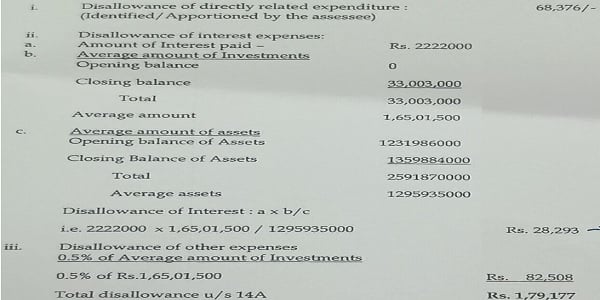
The Tribunal affirmed restricting Section 14A disallowance to the actual exempt income earned. It also held the Finance Act, 2022 explanation to be prospective, protecting taxpayers for earlier years.
Relying on precedents including rulings of the Delhi High Court, the Tribunal held that extrapolation across years is impermissible. The addition was struck down as being based on assumption rather than evidence.
The Tribunal held that once business receipts are taxed on an estimated basis, separate additions for payments and assets from the same receipts are impermissible. Only a net-profit estimation was sustained, deleting multiple cascading additions.
Where updated cash books explained the cash found and no defects were pointed out, additions under section 69A were held unsustainable. Substantiation with regular books prevailed over search-time snapshots.
The assessee relied on deemed payment after transferring employee dues to another entity. The Tribunal ruled that section 43B recognises only real payment and set aside the relief granted by the appellate authority.
The issue was whether revision under section 263 could be invoked when the Assessing Officer had accepted a legally possible view. The Tribunal held that where two views exist and the AO adopts one, the order is neither erroneous nor prejudicial.
The Tribunal held that search-based reassessments issued beyond six assessment years are barred by limitation. Revenue appeals were dismissed as the statutory time limits could not be extended.
The ITAT ruled that taxing section 28 interest as income from other sources through rectification was invalid. Where the issue is debatable and supported by binding precedent, section 154 cannot be invoked.
The tribunal held that revision under Section 263 is invalid where the Assessing Officer has examined the issue and adopted a plausible legal view. The PCIT cannot substitute his opinion merely because another interpretation is possible.
It was ruled that under-reported revenue cannot be inferred solely from service tax data when no defects are found in regularly maintained books. Income must be assessed on real income principles supported by enquiry and evidence.